


A convention center, sports stadium and performing arts complex are among the big projects planned for a new-look downtown Christchurch after the New Zealand city was reduced to rubble by an earthquake last year.
Essentially given a blank slate, government planners on Monday unveiled a blueprint for the city that replaces office towers with green spaces, urban apartments and innovation “hubs” they say will give the city the feel of a college campus. Under the plan, the city will be smaller, the buildings lower in height and constructed to higher earthquake standards.
The plan has been eagerly awaited. It has been nearly 18 months since the magnitude 6.1 quake struck, killing 185 people and irreparably damaging 1,400 downtown buildings, including the century-old Anglican cathedral in the city center.
“It will be safe, modern, green and will leave a legacy that makes Christchurch one of the best places in the world to live and work for many generations to come,” Christchurch Mayor Bob Parker said in a statement.
Many residents have become frustrated at the slow pace of recovery in Christchurch. Hundreds of substantial aftershocks have hampered progress and made insurers skittish, while government and city officials, including Mayor Parker, have been accused of dithering and bickering. Even before the plan was released, some wondered if they would end up footing a chunk of the bill through rate hikes.
Yet for many, the plan is a welcome step forward. Some see it as a unique chance to correct problems in the city, such as an excess of older-style office space that was evident even before the earthquake. The plan also comes as the aftershocks appear to be finally abating.
The city would be broken into a series of hubs featuring related activities. For instance, there would be a health precinct anchored by a hospital, a justice precinct with courts and a police station and a retail precinct with stores.
The plan identifies sites for big infrastructure projects, including a prominent library and a convention center with the capacity to hold 2,000 people that would overlook the river. There would also be a covered sports stadium seating up to 35,000 people built in the city’s southeast and an indoor aquatic and recreation center built in the southwest.
In a release, New Zealand Prime Minister John Key, who grew up in Christchurch, said it was important to identify sites for the major new projects so that private developers could begin planning hotels, restaurants and stores to complement them.
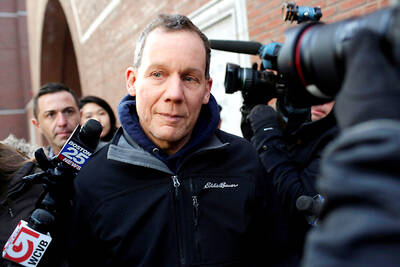
An American scientist convicted of lying to US authorities about payments from China while he was at Harvard University has rebuilt his research lab in Shenzhen, China, to pursue technology the Chinese government has identified as a national priority: embedding electronics into the human brain. Charles Lieber, 67, is among the world’s leading researchers in brain-computer interfaces. The technology has shown promise in treating conditions such as amyotrophic lateral sclerosis and restoring movement in paralyzed people. It also has potential military applications: Scientists at the Chinese People’s Liberation Army have investigated brain interfaces as a way to engineer super soldiers by boosting
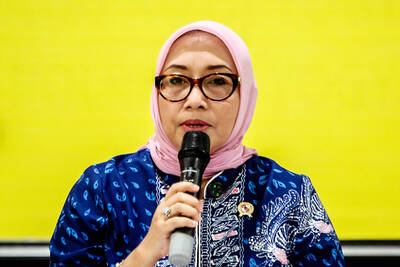
Indonesian police have arrested 13 people after shocking images of alleged abuse against small children at a daycare center went viral, sparking outrage across the nation, officials said on Monday. Police on Friday last week raided Little Aresha, a daycare center in Yogyakarta on Java island, following a report from a former employee. CCTV footage circulating on social media showed children, most younger than two, lying on the floor wearing only diapers, their hands and feet bound with rags. The police have confirmed that the footage is authentic. Police said they also found 20 children crammed into a room just 3m by 3m. “So
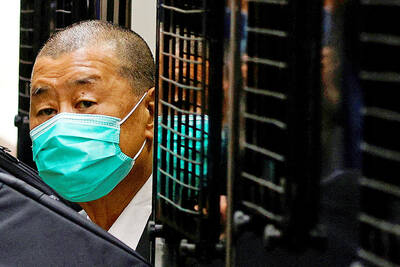
Jailed media entrepreneur Jimmy Lai (黎智英) has been awarded Deutsche Welle’s (DW) freedom of speech award for his contribution to Hong Kong’s pro-democracy movement. The German public broadcaster on Thursday said Lai would be presented in absentia with the 12th iteration of the award on June 23 at the DW Global Media Forum in Bonn. Deutsche Welle director-general Barbara Massing praised the 78-year-old founder of the now-shuttered news outlet Apple Daily for standing “unwaveringly for press freedom in Hong Kong at great personal risk.” “With Apple Daily, he gave journalists a platform for free reporting and a voice to the democracy movement in
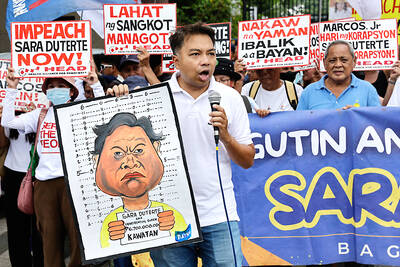
PHILIPPINE COMMITTEE: The head of the committee that made the decision said: ‘If there is nothing to hide, there is no reason to hide, there is no reason to obstruct’ A Philippine congressional committee on Wednesday ruled that there was “probable cause” to impeach Philippine Vice President Sara Duterte after hearing allegations of unexplained wealth, misuse of state funds and threats to have the president assassinated. The unanimous decision of the 53-member committee in the Philippine House of Representatives sends the two impeachment complaints to deliberations and voting by the entire lower chamber, which has more than 300 lawmakers. The complaints centered on Duterte’s alleged illegal use and mishandling of intelligence funds from the vice president’s office, and from her time as education secretary under Philippine President Ferdinand Marcos Jr. Duterte and the


 RSS
RSS