


Iraq’s Sunni vice president, wanted for allegedly running a hit squad in Iraq, has accused Shiite Iraqi Prime Minister Nouri al--Maliki of waging a campaign against Sunnis and pushing the country toward sectarian war.
In an interview on Friday, Iraqi Vice President Tariq al-Hashemi said al-Maliki wants to get rid of all political rivals and run Iraq like a “one-man show.”
The comments by Iraq’s -highest-level Sunni political figure reflect mounting sectarian tensions surrounding the confrontation between him and the prime minister that have hiked fears Iraq could be thrown into new violence following the exit of US troops.
The political crisis taps into the resentments that have remained raw in the country despite years of effort to overcome them, with minority Sunnis fearing the Shiite majority is squeezing them out of any political say, and Shiites suspecting Sunnis of links to -insurgency and terrorism.
“He’s pushing the things to a catastrophe. And I’m not sure what’s going to happen after that,” al--Hashemi, who denies the accusations, said of the prime minister.
He spoke at a guesthouse of Iraqi President Jalal Talabani in the mountains overlooking the northern Kurdish city of Sulaimaniyah, 260km northeast of Baghdad.
Al-Hashemi arrived here last Sunday with a small suitcase and two suits to discuss the growing conflict with al-Maliki’s government.
However, what was supposed to be a two-day trip has stretched nearly a week after the Iraqi government on Monday issued an arrest warrant against him on what he says are trumped-up charges. He has refused to go back to Baghdad, where he says he cannot get a fair trial. The central government’s security forces do not operate in the northern autonomous Kurdish zone, so he is safe from arrest there.
The Iraqi government says al-Hashemi orchestrated a campaign of assassinations carried out by his bodyguards. Earlier this week, they aired televised confessions of the bodyguards detailing how al--Hashemi gave them money for the hits.
The confessions have aired repeatedly since then, including on state TV, when al-Hashemi earlier this week held a press conference defending himself.
Fears the situation could spiral out of control were heightened by devastating bombings that tore through mostly Shiite neighborhoods of Baghdad on Thursday and killed at least 69 people. Many fear Iraq could fall back into the vicious sectarian bloodshed that reached its height in 2006 and 2007 and nearly threw the country into civil war.
Al-Hashemi is one of the leaders of the Iraqiya party, a Sunni-backed political bloc that has constantly clashed with al-Maliki’s Shiite coalition and accused him of hoarding power. Al-Maliki is also seeking a vote of no-confidence against the Sunni Iraqi Deputy Prime Minister Saleh al-Mutlaq. Security forces have also launched a wave of arrests against former members of the Sunni-dominated Baath Party, which ruled Iraq under former Iraqi president Saddam Hussein.
In Sunnis’ eyes, the moves show al-Maliki is out to get them.
“Definitely, he is going to concentrate on the Sunni community because they are the society, the community of Tariq al-Hashemi, so they are going to suffer,” the vice president said.
He said other sectors of Iraqi society could also be targeted in the future, but for now, it is the Sunnis.
“He is trying to escalate the tension, making life very, very difficult for our provinces, to our people,” he said.
Al-Hashemi warned that after Thursday’s violence, the prime minister might crack down even more. He called on “sensible people” in al-Maliki’s alliance of Shiite parties to stop his policies.
“He doesn’t believe in compromises. He doesn’t believe in peaceful solutions to the problems. He’s going to use the Iraqi army and the security for more repression,” he said.
Iraqiya says al-Maliki is trying to hoard power, saying, for example, that more than a year after the government was formed, he has still not appointed permanent ministers of the defense or interior.
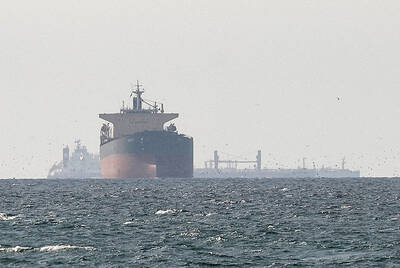
A ship that appears to be taking on the identity of a scrapped gas carrier exited the Strait of Hormuz on Friday, showing how strategies to get through the waterway are evolving as the Middle East war progresses. The vessel identifying as liquefied natural gas (LNG) carrier Jamal left the Strait on Friday morning, ship-tracking data show. However, the same tanker was also recorded as having beached at an Indian demolition yard in October last year, where it is being broken up, according to market participants and port agent’s reports. The ship claiming to be Jamal is likely a zombie vessel that
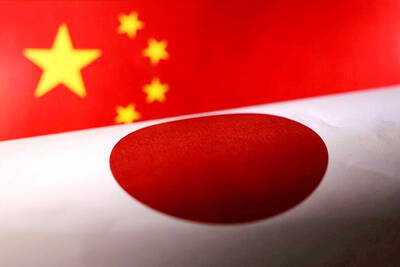
Japan is to downgrade its description of ties with China from “one of its most important” in an annual diplomatic report, according to a draft reviewed by Reuters, as relations with Beijing worsen. This year’s Diplomatic Bluebook, which Japanese Prime Minister Sanae Takaichi’s government is expected to approve next month, would instead describe China as an important neighbor and the relationship as “strategic” and “mutually beneficial.” The draft cites a series of confrontations with Beijing over the past year, including export controls on rare earths, radar lock-ons targeting Japanese military aircraft and increased pressure around Taiwan. The shift in tone underscores a deterioration
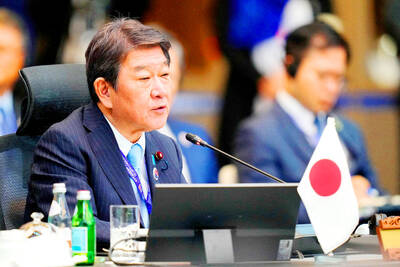
LAW CONSTRAINTS: The US has been pressing allies to send warships to open the Strait, but Tokyo’s military actions are limited under its postwar pacifist constitution Japan could consider deploying its military for minesweeping in the Strait of Hormuz if a ceasefire is reached in the war on Iran, Japanese Minister of Foreign Affairs Toshimitsu Motegi said yesterday. “If there were to be a complete ceasefire, hypothetically speaking, then things like minesweeping could come up,” Motegi said. “This is purely hypothetical, but if a ceasefire were established and naval mines were creating an obstacle, then I think that would be something to consider.” Japan’s military actions are limited under its postwar pacifist constitution, but 2015 security legislation allows Tokyo to use its Self-Defense Forces overseas if an attack,

German Chancellor Friedrich Merz’s conservative Christian Democratic Union (CDU) yesterday faced a regional election battle in Rhineland-Palatinate, now held by the center-left Social Democratic Party (SPD). Merz’s CDU has enjoyed a narrow poll lead over the SPD — their coalition partners at the national level — who have ruled the mid-sized state for 35 years. Polling third is the far-right Alternative for Germany (AfD), which spells a greater threat to the two centrist parties in several state elections in September in the country’s ex-communist east. The picturesque state of Rhineland-Palatinate, bordering France, Belgium and Luxembourg and with a population of about 4 million,


 RSS
RSS