


Bahrain’s security forces used excessive force to suppress pro--democracy protests earlier this year, torturing detainees to get confessions, an inquiry panel charged with investigating abuses said on Wednesday.
The government-commissioned report, designed to help heal sectarian divisions between the island kingdom’s Sunni rulers and majority Shiites, acknowledged five people had been tortured to death, but said the abuses were isolated incidents.
However, the panel, led by Egyptian-American international law expert Cherif Bassiouni, dismissed Bahrain’s allegation of Iranian interference in fomenting unrest, saying that was not supported by any evidence.
“In many cases security agencies in the government of Bahrain resorted to excessive and unnecessary force,” Bassiouni said at the king’s palace, adding that some detainees suffered electric shocks and beatings with rubber hoses and wires.
Bahrain’s Shiite-led opposition reacted cooly to the report, some saying it did not go far enough, while others complained that those responsible for the abuses remained in office.
Sheikh Ali Salman, head of the Shiite Wefaq bloc which quit parliament over the unrest, said: “We cannot say Bahrain is turning a new leaf yet ... because the government that carried out all those abuses is definitely not fit to be given the responsibility of implementing recommendations.”
The US urged its ally Bahrain, home to the US Fifth Fleet, to quickly address abuses laid out in the report.
Washington, which has been faulted by rights activists for not criticizing Bahrain more sharply for the crackdown, appeared to carefully balance its demand for the abuses to be addressed with praise for its Gulf ally.
“We are deeply concerned about the abuses identified in the report and urge the Government and all elements of Bahraini society to address them in a prompt and systematic manner,” US Secretary of State Hillary Rodham Clinton said in a statement.
“We believe the ... report offers a historic opportunity for all Bahrainis to participate in a healing process that will address long-standing grievances and move the nation onto a path of genuine, sustained reform,” Clinton added.
Bahrain’s Shiite majority, inspired by uprisings that toppled the leaders of Tunisia and Egypt, took to the streets in February and March to demand political reforms, but their protests quickly escalated into the worst sectarian political violence since the mid-1990s.
The ruling Al Khalifa family responded by declaring martial law and called in troops from fellow Sunni Saudi Arabia and the United Arab Emirates as it set about crushing the protests.
The inquiry panel said there was no official policy of abuse during the widespread unrest, led by Bahrain’s majority Shiite population demanding an end to sectarian discrimination and demanding a greater say in government. A few Shiite groups called for the abolition of the monarchy altogether.
The panel — which said 35 people were killed, including five security personnel — urged a review of sentences handed down on people arrested following the protests, when more than 2,000 state employees were also sacked, according to Bassiouni.
King Hamad bin Isa Al Khalifa, speaking after Bassiouni delivered his report, repeated the accusations against Iran, but said laws would be reviewed and if necessary revised in light of the unrest.
“We do not want, ever again, to see our country paralyzed by intimidation and sabotage ... nor do we want, ever again, to discover that any of our law enforcement personnel have mistreated anyone,” he said.
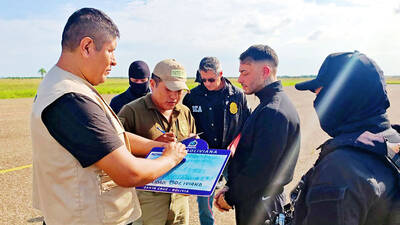
KINGPIN: Marset allegedly laundered the proceeds of his drug enterprise by purchasing and sponsoring professional soccer teams and even put himself in the starting lineups Notorious Latin American narco trafficker Sebastian Marset, who eluded police for years, was handed over to US authorities after his arrest on Friday in Bolivia. Marset, a Uruguayan national who was on the US most-wanted list, was passed to agents of the US Drug Enforcement Administration at Santa Cruz airport in Bolivia, then put on a US airplane, Bolivian state television showed. “The arrest and deportation were carried out pursuant to a court order issued by the US justice system,” Bolivian Minister of Government Marco Antonio Oviedo told reporters. The alleged kingpin was arrested in an upscale neighborhood of Santa
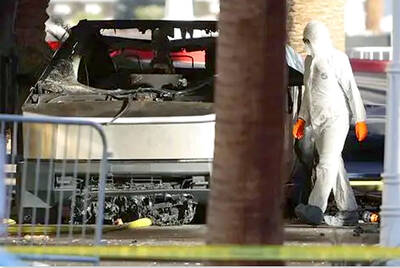
ACTIONABLE ADVICE: The majority of chatbots tested provided guidance on weapons, tactics and target selections, with Perplexity and Meta AI deemed to be the least safe From school shootings to synagogue bombings, leading artificial intelligence (AI) chatbots helped researchers plot violent attacks, according to a study published on Wednesday that highlighted the technology’s potential for real-world harm. Researchers from the nonprofit watchdog Center for Countering Digital Hate and CNN posed as 13-year-old boys in the US and Ireland to test 10 chatbots, including ChatGPT, Google Gemini, Perplexity, Deepseek and Meta AI. Eight of the chatbots assisted the make-believe attackers in more than half the responses, providing advice on “locations to target” and “weapons to use” in an attack, the study said. The chatbots had become a “powerful accelerant for
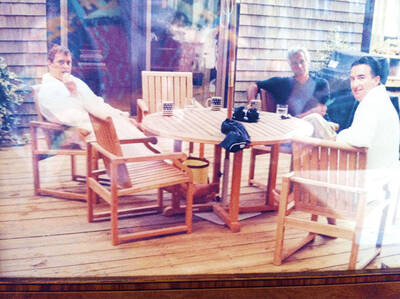
SCANDAL: Other images discovered earlier show Andrew bent over a female and lying across the laps of a number of women, while Mandelson is pictured in his underpants A photograph of former British prince Andrew and veteran politician Peter Mandelson sitting in bathrobes alongside late sex offender Jeffrey Epstein was unearthed on Friday in previously published documents. The image is believed to be the first known photograph of the two men with Epstein. They are currently engulfed in scandal in the UK over their ties to their mutual friend. The undated photograph, first reported by ITV News, shows King Charles III’s disgraced brother and former British ambassador to the US sitting barefoot outside on a wooden deck. They appear to have mugs with a US flag on them
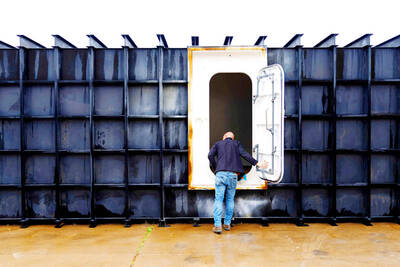
Since the war in the Middle East began nearly two weeks ago, the telephone at Ron Hubbard’s bomb shelter company in Texas has not stopped ringing. Foreign and US clients are rushing to buy his bunkers, seeking refuge in case of air raids, nuclear fallout or apocalypse. With the US and Israel pounding Iran, and Tehran retaliating with strikes across the region, Hubbard has seen demand for his product soar, mostly from Gulf nation customers in Bahrain, Qatar, Kuwait and the United Arab Emirates. “You can imagine how many people are thinking: ‘I wish I had a bomb shelter,’” Hubbard, 63, said in


 RSS
RSS