


British and US forces freed an Italian cargo ship hijacked by Somali pirates in a dramatic rescue after retrieving a message in a bottle tossed by hostages from a porthole alerting ships nearby that the crew was safely sealed inside an armored area.
All 23 crew members of the MV Montecristo cargo ship were brought to safety on Tuesday, the Italian Foreign Ministry said. The 11 pirates were taken into custody.
The crew — seven Italians, six Ukrainians and 10 Indians — locked themselves inside an armored area of the vessel when the pirates boarded the ship on Monday, Italian Defense Minister Ignazio La Russa said. Safe from the pirates’ threats, the crew continued to navigate the ship.
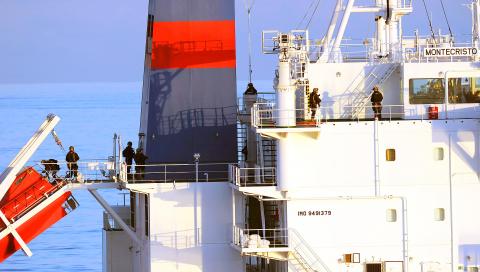
Photo: EPA
“The criminals managed to cut off all means of communication, but the ‘prisoners’ tossed a bottle with a message through a porthole explaining the situation,” La Russa told a news conference.
At that point, other ships in the area were aware that the Italian vessel had been boarded by pirates. The message in the bottle gave an important signal that the crew of the Italian ship was out of harm’s way and that a rescue operation could be launched without risking injury.
“Rubber boats circled the Montecristo, while a helicopter hovered above. The pirates surrendered right away, some throwing their weapons in the sea, and were arrested,” he said.
One crew member sustained a light hand injury, La Russa said.
The pirates attacked the ship on Monday 1,000km off Somalia as the crew was hauling scrap iron to Vietnam on a journey that had begun on Sept. 20 in Liverpool, England.
The father of one of the crew members, Pietro Raimondo, said Italian officials had told him that his son was in good shape.
“We are happy. We are celebrating the liberation,” said Antonio Raimondo from Sardinia, the Italian news agency ANSA reported.
The operation was carried out by two navy ships — one British and one from the US — and coordinated by Italian Admiral Gualtiero Mattesi as part of NATO’s Ocean Shield anti-piracy force, according to the Italian Foreign Ministry.
Britain’s Defense Ministry said the RFA Fort Victoria “responded to calls to assist a pirated Italian merchant ship, the MV Montecristo, along with an American Navy frigate.”
Because of the presence of warships, the pirates on board surrendered without force, it said.
Earlier on Tuesday, La Russa said security forces — groups of six armed marines — can be used as security guards on Italian ships sailing in perilous waters, noting that “the danger of piracy has increased.”
International militaries are increasingly tasking assault teams with boarding ships and battling pirates in order to win the release of hostages.
In April this year, a Danish assault team freed 18 hostages after boarding a vessel off Somalia’s coast. Three pirates were wounded.
Only 10 days later South Korean commandos stormed a container ships and freed the 21 crew members on board. In May, Indonesian forces killed four pirates after the hostage-takers were paid a ransom and freed hostages.
However, for every successful attack against hostage-taking pirates, far more pirates and seized vessels make it back to Somalia with their hostages in hand.
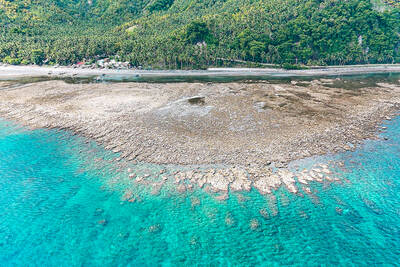
Arsenio Butil Jr fell to his knees and began to pray when last week’s deadly magnitude 7.8 earthquake began shaking his home on the coast of the southern Philippines. When he opened his eyes, he saw a once-familiar shoreline changing in real time, with swathes of previously submerged coral suddenly pushing above the waterline. The June 8 quake, driven by a shifting of the nearby Cotabato Trench, toppled buildings, triggered landslides and killed at least 76 people on the southern island of Mindanao. The tectonic forces at work also thrust chunks of the island’s coastline upward in a phenomenon known as “coastal uplift,”
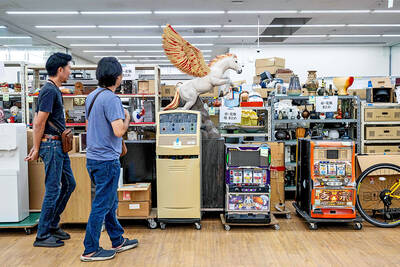
YUCK OR YUM? While it is difficult to sell second-hand goods that are more than seven years old in Japan, they are still popular in foreign markets, an executive said Under a scorching sun in a Bangkok suburb, a whistle blew, and shouts filled the air as dozens of shoppers rushed into a warehouse bearing the sign “Japanese Second-Hand Store.” From bags and bicycles to surfboards and suitcases, the Japanese second-hand market is booming, with quality-conscious buyers in other Asian countries increasingly tapping into the circular economy trend. “What is considered garbage for them can still be useful in Thailand,” said 36-year-old Lookpoo Sathitpanyapon, who runs an online store selling toy keychains. “That bag, that bag,” one shopper shouted while racing through the warehouse, filled with everything from colorful toys
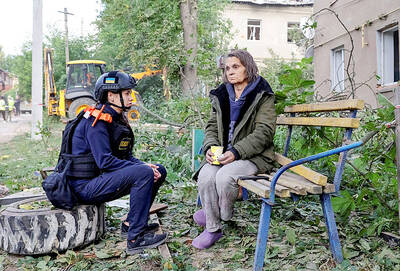
President Volodymyr Zelenskiy on Saturday said that Russian forces were preparing an impending massive attack on Ukraine and warned residents to take special care as Russian strikes in different regions killed at least six people. “Tonight and in the coming hours, it is especially important to pay close attention to air raid warnings,” Zelenskiy said in his nightly video address. “The Russians have prepared for a massive attack. Please take care of yourselves.” Russian forces have staged a series of heavy attacks on Kyiv in the past few weeks and in other major cities. Strikes on Monday last week killed
Growing up in Tahiti, Anna-Bella Failloux saw first-hand the threat posed by mosquitoes: Nearly one-third of adults on the picturesque island once had swollen limbs from elephantiasis caused by their bites. She has since dedicated her life to studying mosquitoes and the diseases they transmit — a concern that looms ever larger as climate change expands the area where the insects roam. “You have to accept being bitten by a mosquito from time to time,” the 63-year-old entomologist at France’s Pasteur Institute said. “But we have to avoid too many people getting sick and dying from the infections,” Failloux said, as she observed


 RSS
RSS