


A visit by a senior Chinese leader meant to spread goodwill has instead left Hong Kong fuming over the smothering security that locals fear was aimed at muffling the media and protesters.
In the two weeks since the visit, journalists have taken to the street in protest. Professors have taken out newspaper ads and students demanded the police chief resign. Police and local leaders have been raked over in the legislature.
The uproar is the latest clash of cultures between the -controlling, authoritarian government in Beijing and Hong Kong.
“People are very concerned that their freedoms are being undermined. The whole city is angry,” pro-democracy legislator Emily Lau (劉慧卿) said at a heated special meeting of the Legislative Council’s security panel this week.
Sparking the outrage were the security arrangements put on for Chinese Vice Premier Li Keqiang (李克強), a rising star in the Chinese leadership. Hong Kong’s vigorous press complained they were kept far away from Li during the few events they were allowed to cover and had to compile their reports from government handouts. A few protesters who dared to get close say they were treated roughly by police officers.
While such tactics are standard procedure in China, Chinese leaders are usually more careful not to alienate freewheeling Hong Kong. Li’s visit was intended to bolster his image — he is expected to become premier in 2013 or sooner — and to show the government’s concern for Hong Kong. He announced measures to give local companies better access to the Chinese market and to promote the territory as a trading center for Chinese yuan.
However, the heavy-handed security has served to heighten concern in Hong Kong that its autonomy is being eroded by a mainland government that does not value the territory’s more freewheeling ways.
“I can understand why people feel unhappy or even angry with the way some of the situations were handled,” Jasper Tsang (曾鈺成), a pro-Beijing legislator and president of the Legislative Council, said on a television talk show on Sunday. “I would say this storm you refer to once again tells us that there’s still a difference between the values held by Hong Kong people and the conceptions, the beliefs of our central government.”
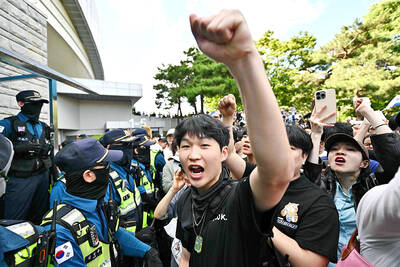
‘ABSURD MISTAKE’: The election commission said that there had been a failure to anticipate turnout after 14 polling stations ran short of ballot papers South Korean riot police yesterday cleared protesters from a Seoul polling station after a 35-hour blockade sparked by a shortage of ballot papers during local elections earlier this week. Wednesday’s election was the first nationwide vote since South Korean President Lee Jae-myung took office following the ouster of Yoon Suk-yeol over his short-lived martial law declaration. Lee’s ruling Democratic Party swept most races, but failed to flip the crucial Seoul mayoral seat. The South Korean National Election Commission apologized, blaming a failure to anticipate turnout after 14 polling stations in Seoul ran short of ballot papers. Some polling stations stayed open until 10pm to

France experienced its hottest spring on record, the French weather service said on Tuesday, after an exceptional early heat wave that also broke highs for the season in England and Wales. Meteo-France said the average nationwide temperature over March to May was 13.8°C — about 1.7°C above the norm, and surpassing records set in 2011 and 2020. “The warmest spring since records began in 1900,” it said in a bulletin. All three months were warmer than average, but the onset of an “unprecedented heatwave” late last month pushed the mercury to highs typically seen at the height of the summer. “Our country had never

A Sherpa guide was found crawling to base camp on Mount Everest a week after he went missing and was reunited with his family, who had given up hope he would return. Dawa Sherpa was last seen on Friday last week descending the mountain, but he did not reach base camp even though his client did. The pair were among the last climbers on the mountain as the climbing season came to an end and the route was dismantled. Dawa was located by a cleaning crew on Thursday morning as he was crawling down the snowy slopes around the Khumbu Icefall, just above
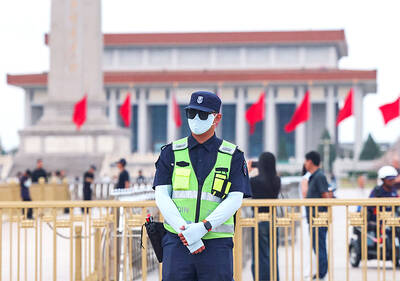
Chinese authorities are snuffing out any remembrance of the deadly 1989 military crackdown on student-led pro-democracy protests in Tiananmen Square, which happened 37 years ago yesterday, in a further tightening of a years-long campaign to erase what happened from public memory. Police told relatives of the victims they would not be allowed to visit a cemetery in Beijing on the anniversary of the crackdown, a person with knowledge of the matter said. Relatives of the victims visited the cemetery on the anniversary for more than 30 years to read memorial statements with police keeping watch, Amnesty International said. Hundreds of people,


 RSS
RSS