


Global production of opium fell 38 percent last year as plant disease hit crops in top producer Afghanistan, but output in No. 2 producer Myanmar rose sharply, the UN said on Thursday.
In its annual World Drug Report, the UN Office on Drugs and Crime (UNODC) said heroin consumption has stabilized in Europe, while cocaine consumption has declined in North America, which it described as “the most lucrative markets” for those drugs.
However, there were worrying trends: a big increase in cocaine use in Europe and South America over the past decade, the recent expansion of heroin use in Africa and the increased abuse of synthetic “designer drugs” and prescription drugs in places.
Yury Fedotov, UNODC’s executive director, said in the report there had been some progress in preventing drug use and said more should be done to promote “healthy and fulfilling alternatives” so that drug use was not accepted as a way of life.
“On the demand side, there is growing recognition that we must draw a line between criminals [drug traffickers] and their victims [drug users], and that treatment for drug use offers a far more effective cure than punishment,” he added.
UN Secretary-General Ban Ki-moon said in a speech at the report’s launch in New York that drug addicts should not face discrimination, but should receive medical aid and counseling.
“Drug addiction is a disease, not a crime,” he said.
Various plant diseases combined to cut Afghanistan’s opium production in half last year and UNODC said production could fall a little further this year.
The country accounted for 74 percent of global opium production last year, down from 88 percent in 2009.
Meanwhile, Myanmar’s share of global output hit 12 percent, up from 5 percent in 2007. The area under cultivation there fell by 21 percent to 185,900 hectares between 2007 and 2009, but it rose to 195,700 hectares last year, UNODC said.
The military rulers of the country formerly called Burma said in March that nearly one-sixth of the country’s illicit opium crop had been destroyed.
A nominally civilian government has taken over since, but the army still pulls the strings behind the scenes. Analysts say several top generals enjoy close ties with Burmese businesspeople linked to the opium trade.
The global area under coca cultivation shrank last year, declining 6 percent to 149,100 hectares. UNODC said cocaine production had fallen sharply in Colombia since 2007, which offset increases in Peru and Bolivia.

PHISHING: The con might appear convincing, as the scam e-mails can coincide with genuine messages from Apple saying you have run out of storage For a while you have been getting messages from Apple saying “your iCloud storage is full.” They say you have exceeded your storage plan, so documents are no longer being backed up, and photos you take are not being uploaded. You have been resisting Apple’s efforts to get you to pay a minimum of £0.99 (US$1.33) a month for more storage, but it seems that you cannot keep putting off the inevitable: You have received an e-mail which says your iCloud account has been blocked, and your photos and videos would be deleted very soon. To keep them you need
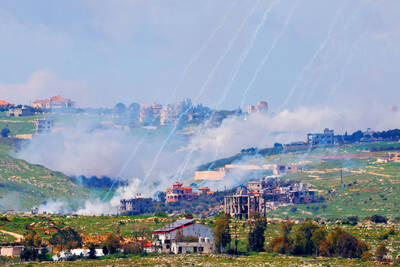
The Israeli military has demolished entire villages as part of its invasion of south Lebanon, rigging homes with explosives and razing them to the ground in massive remote detonations. The Guardian reviewed three videos posted by the Israeli military and on social media, which showed Israel carrying out mass detonations in the villages of Taybeh, Naqoura and Deir Seryan along the Israel-Lebanon border. Lebanese media has reported more mass detonations in other border villages, but satellite imagery was not readily available to verify these claims. The demolitions came after Israeli Minister of Defense Israel Katz called for the destruction of

A US YouTuber who caused outrage for filming himself kissing a statue commemorating Korean wartime sex slaves has been sentenced to six months in prison, a court in Seoul said yesterday. Johnny Somali, 25, gained notoriety several years ago for recording himself doing a series of provocative stunts in South Korea and Japan, and streaming them on platforms such as YouTube and Twitch. South Korean authorities indicted Somali — whose real name is Ramsey Khalid Ismael — in 2024 on public order violations and obstruction of business, and banned him from leaving the country. “The court has sentenced him to six months in
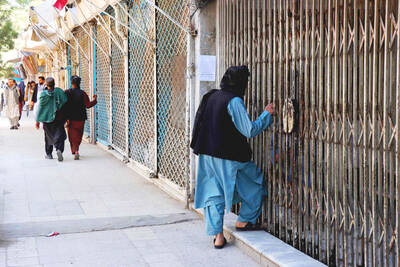
The death toll from a shooting in western Afghanistan rose to 11 on Saturday, after gunmen targeted civilians at a picnic spot in Herat, the provincial authority said. Bullet marks were visible on a wall of the Sayed Mohammad Agha Shia shrine, while bloodstains marked a blanket abandoned at the scene. “Eleven people have been recorded dead and eight others wounded from Friday’s incident, with the condition of two of the wounded reported as critical,” Herat’s information office said in a statement. The update raises a toll of seven killed provided on Friday by the Afghan Ministry of Interior Affairs


 RSS
RSS