


The operator of the nuclear power plant at the center of a radiation scare after being disabled by Japan’s March 11 earthquake and tsunami confirmed yesterday that there had been meltdowns of fuel rods at three of its reactors.
Tokyo Electric Power Co (TEPCO) said meltdowns of fuel rods at three reactors at the Fukushima Dai-ichi plant occurred early in the crisis triggered by the earthquake.
The government and outside experts had said previously that fuel rods at three of the plant’s six reactors had likely melted early in the crisis, but the utility, also known as TEPCO, had only confirmed a meltdown at the No. 1 reactor.
TEPCO officials said a review since early this month of data from the plant concluded the same happened to reactors No. 2 and No. 3.
The preliminary finding, which was reported to Japan’s nuclear safety agency, represents part of an initial effort to explain how events at Fukushima spiraled out of control early in the crisis.
Also yesterday, the government appointed Yotaro Hatamura, a Tokyo University professor of engineering who has studied how complex systems and designs fail, to head a committee that will investigate the cause and handling of the nuclear crisis.
The moves came as a team of investigators from the International Atomic Energy Agency began a two-week visit to Japan to prepare a report on the accident to be submitted to the UN agency next month.
Some analysts said the delay in confirming the meltdowns at -Fukushima suggested the utility feared touching off a panic by disclosing the severity of the accident earlier.
“Now people are used to the situation. Nothing is resolved, but normal business has resumed in places like Tokyo,” said Koichi Nakano, a political science professor at Tokyo’s Sophia University.
Nakano said that by confirming the meltdowns now, TEPCO might be hoping the news will have less impact. The word “meltdown” has such a strong connotation that when the situation was more uncertain more people would likely have fled Tokyo, he said.
Engineers are battling to plug radiation leaks and bring the plant 240km northeast of Tokyo under control more than two months after the magnitude 9.0 earthquake and deadly tsunami that devastated a vast swathe of Japan’s northeast coastline and tipped the economy into recession.
The disaster has triggered a drop of more than 80 percent in TEPCO’s share price and forced the company to seek government aid as it faces compensation liabilities that some analysts say could top US$100 billion.
Japanese Minister of Economy, Trade and Industry Banri Kaieda said the government would approve the formation of a committee later yesterday that would make sure TEPCO follows through with restructuring plans.
TEPCO officials said damage to the No. 2 reactor fuel rods had begun three days after the quake, with much of the fuel rods eventually melting and collecting at the bottom of the pressure vessel containing them.
Fuel rods in the No. 3 reactor were damaged by the afternoon of March 13, they said.
The TEPCO officials repeated that the tsunami had disabled power to the reactors and knocked out their cooling capability.
Hidehiko Nishiyama, a spokesman for the government’s Nuclear and Industrial Safety Agency, expressed a similar view.
“We don’t think the quake affected the important parts of the plant, such as its cooling capacity,” Nishiyama told reporters yesterday, although he added there were still some aspects that needed to be clarified by inspecting the site directly.
That process is likely to take months because of the high radiation readings in areas of the plant, experts have said.
“It could very well be that TEPCO is rushing to conclude that the tsunami is to blame to prevent further questions and give more momentum to the nuclear camp. It’s not just TEPCO, it’s the whole nuclear industry, maybe business circles as a whole. It’s highly -political,” Nakano said.
Others said that from a very early stage the tsunami, not the quake, was the likely cause of the overheating and subsequent damage of the reactors.
“As with the other nuclear reactors, such as Onagawa [in northeastern Japan], those at Dai-ichi deactivated after the quake. It is our belief that it was the tsunami that knocked out power and took out the systems and pumps that cool the reactors, resulting in their damage and radiation leakage,” said Kazuhiko Kudo, a Kyushu University professor who specializes in nuclear engineering.
Despite a steady flow of information on how the clean-up is proceeding — TEPCO and the government’s nuclear watchdog hold news conferences twice a day on most weekdays — the authorities have faced criticism for what some have said is a lack of timely disclosure.
“I am very sorry that the public is mistrustful of the various disclosures made by the government on the accident,” Japanese Prime Minister Naoto Kan said in parliament on Monday.
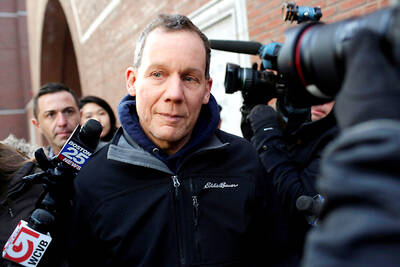
An American scientist convicted of lying to US authorities about payments from China while he was at Harvard University has rebuilt his research lab in Shenzhen, China, to pursue technology the Chinese government has identified as a national priority: embedding electronics into the human brain. Charles Lieber, 67, is among the world’s leading researchers in brain-computer interfaces. The technology has shown promise in treating conditions such as amyotrophic lateral sclerosis and restoring movement in paralyzed people. It also has potential military applications: Scientists at the Chinese People’s Liberation Army have investigated brain interfaces as a way to engineer super soldiers by boosting
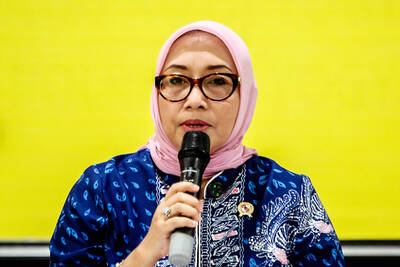
Indonesian police have arrested 13 people after shocking images of alleged abuse against small children at a daycare center went viral, sparking outrage across the nation, officials said on Monday. Police on Friday last week raided Little Aresha, a daycare center in Yogyakarta on Java island, following a report from a former employee. CCTV footage circulating on social media showed children, most younger than two, lying on the floor wearing only diapers, their hands and feet bound with rags. The police have confirmed that the footage is authentic. Police said they also found 20 children crammed into a room just 3m by 3m. “So
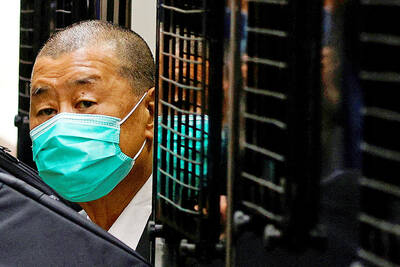
Jailed media entrepreneur Jimmy Lai (黎智英) has been awarded Deutsche Welle’s (DW) freedom of speech award for his contribution to Hong Kong’s pro-democracy movement. The German public broadcaster on Thursday said Lai would be presented in absentia with the 12th iteration of the award on June 23 at the DW Global Media Forum in Bonn. Deutsche Welle director-general Barbara Massing praised the 78-year-old founder of the now-shuttered news outlet Apple Daily for standing “unwaveringly for press freedom in Hong Kong at great personal risk.” “With Apple Daily, he gave journalists a platform for free reporting and a voice to the democracy movement in
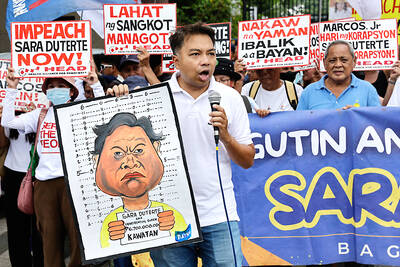
PHILIPPINE COMMITTEE: The head of the committee that made the decision said: ‘If there is nothing to hide, there is no reason to hide, there is no reason to obstruct’ A Philippine congressional committee on Wednesday ruled that there was “probable cause” to impeach Philippine Vice President Sara Duterte after hearing allegations of unexplained wealth, misuse of state funds and threats to have the president assassinated. The unanimous decision of the 53-member committee in the Philippine House of Representatives sends the two impeachment complaints to deliberations and voting by the entire lower chamber, which has more than 300 lawmakers. The complaints centered on Duterte’s alleged illegal use and mishandling of intelligence funds from the vice president’s office, and from her time as education secretary under Philippine President Ferdinand Marcos Jr. Duterte and the


 RSS
RSS