


Honeymoons aren’t always easy for newlyweds, but six natural disasters?
When Stefan and Erika Svanstrom of Stockholm set out on their four-month-long honeymoon with their baby girl on Dec. 6, they say they got more than they bargained for.
Immediately they were stranded in Munich, Germany, because of one of Europe’s worst snowstorms, Stefan Svanstrom said. However, that was just the beginning.
After that they experienced the devastation of a cyclone in Cairns, Australia, and the flooding in Brisbane, and narrowly escaped the bush fires in Perth.
“We escaped by the skin of our teeth,” Svanstrom said, recalling how they were evacuated in Cairns and forced to spend 24 hours on the floor of a shopping center with 2,500 others.
“Trees were being knocked over and big branches were scattered across the streets,” he said.
Just before they arrived in New Zealand, a deadly earthquake hit Christchurch, and in Tokyo, they felt Japan’s largest temblor since records began.
“The trembling was horrible and we saw roof tiles fly off the buildings. It was like the buildings were swaying back and forth,” said Svanstrom, who also said he survived the tsunami that hit southeast Asia in 2004.
On March 29, the family returned to Stockholm after a much calmer visit to their last destination, China. Their story was first reported in Stockholm’s Expressen newspaper.
“I know marriages have to endure some trials, but I think we have been through most of them,” Sven Svanstrom said.
“We’ve certainly experienced more than our fair share of catastrophes in a marriage, but the most important thing is that we’re still going strong,” he said.
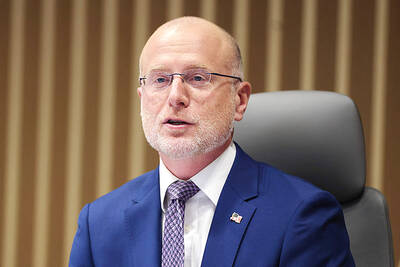
FAKE NEWS? ‘When the government demands the press become a state mouthpiece under the threat of punishment, something has gone very wrong,’ a civic group said The top US broadcast regulator on Saturday threatened media outlets over negative coverage of the Middle East war, after US President Donald Trump slammed critical headlines from the “Fake News Media.” The US president since his first term has derided mainstream media as “fake news” and has sued major outlets over what he sees as unfair coverage. Brendan Carr, head of the US Federal Communications Commission — which oversees the nation’s radio, television and Internet media — said broadcasters risked losing their licenses over news coverage. “The law is clear. Broadcasters must operate in the public interest, and they will
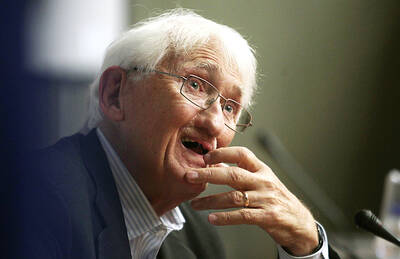
INFLUTENTIAL THEORIST: Habermas was particularly critical of the ‘limited interest’ shown by German politicians in ‘shaping a politically effective Europe Jurgen Habermas, whose work on communication, rationality and sociology made him one of the world’s most influential philosophers and a key intellectual figure in his native Germany, has died. He was 96. Habermas’ publisher, Suhrkamp, said he died on Saturday in Starnberg, near Munich. Habermas frequently weighed in on political matters over several decades. His extensive writing crossed the boundaries of academic and philosophical disciplines, providing a vision of modern society and social interaction. His best-known works included the two-volume Theory of Communicative Action. Habermas, who was 15 at the time of Nazi Germany’s defeat, later recalled the dawn of
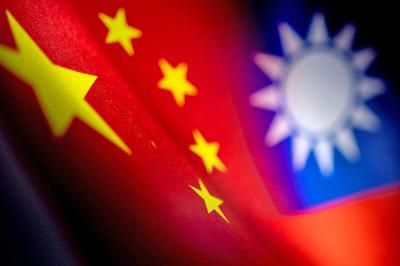
The Chinese public maintains relatively warm sentiments toward Taiwan and strongly prefers non-military paths to improving cross-strait relations, a recent survey conducted by the Atlanta, Georgia-based Carter Center and Emory University showed. The “China Pulse” research project, which polled 2,506 adults between Oct. 27 last year and Jan. 1 this year, found that 86 percent of respondents support strengthening cultural ties, while 81 percent favor deepening economic interaction. The report, co-authored by political scientists at Emory University and advisors at the Carter Center, indicates that the Chinese public views Taiwan’s importance through a lens of shared history and culture rather than geopolitical

Cannabis-based medicines have shown little evidence of effectiveness for treating most mental health and substance-use disorders, according to a large review of past studies published in a major medical journal on Monday. Medical use of cannabinoids has been expanding, including in the US, Canada and Australia, where many patients report using cannabis products to manage conditions such as anxiety, post-traumatic stress disorder and sleep problems. Researchers reviewed data from 54 randomized clinical trials conducted between 1980 and May last year involving 2,477 participants for their analysis published in The Lancet. The studies assessed cannabinoids as a primary treatment for mental disorders or substance-use


 RSS
RSS