


In daily games and quizzes with his children, Hardimansyah slips in these questions: Where’s your rucksack? What can you do with a candle? Where do you run to if I’m not with you when a tsunami is closing in?
Hardimansyah’s family lives on the small Mentawai islands off Indonesia’s Sumatra, which experts predict will see an earthquake sometime in the next decade followed by a tsunami just seven minutes later, even faster than the one that hit Japan last month.
“I didn’t know what a tsunami looked like until I saw it on TV. All of a sudden I felt like I was there, I almost couldn’t bear to witness it,” Hardimansyah said.
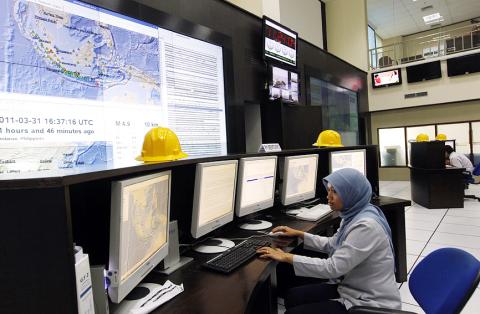
Photo: Reuters
He works on the beach in the fishing industry, but was away from the coast last year when a giant wave killed hundreds in Mentawai.
In 2004 a tsunami as high as 30m swept away 160,000 lives in the Sumatran province of Aceh alone, plus more than 60,000 from Thailand to Africa.
Sumatran residents found TV footage of Japan’s tsunami horrendous, but also inspiring because of the composure of the Japanese people. This has led Indonesia to reassess its own preparedness.
“Japan is very prepared, and looking at Japan, I know we have a lot of homework to do,” said Wisnu Wijaya, a director at the National Disaster Mitigation Agency.
The Indonesian government started to prepare for a tsunami after 2004, but by contrast, Japan started building awareness and relevant technology in the 1960s and yet still struggled to cope with the devastating impact of the wave that struck last month.
The areas at risk in the Indonesian archipelago are mostly not industrialized, in contrast to Japan.
The UN has told governments in Asia’s most catastrophe-prone areas that they should set aside 10 percent of their development funds to limit the risk of disaster, but Indonesia struggles to fund basic infrastructure normally.
The government is spending 13 trillion rupiah (US$1.49 billion) on disaster mitigation this year, or just 1 percent of this year’s budget. This was also only about 5 percent of what Japan spent in 2007, the disaster agency said.
Aceh has been rebuilt after funds poured in for reconstruction from around the world, and the national economy and stock market grew strongly in early 2005.
While there is a rule to build away from the Aceh coast, protective mangroves have not been planted and some residents want to return to live on the beach.
“The Japan tsunami has become a sobering reminder for me that my biggest fear right now is if we are still not ready when a tsunami comes again,” Aceh resident Rony Muchtar said. “Our knowledge is very low on the risks and I’m not confident we have learned enough lessons from the 2004 tsunami.”
Japan’s March 11 tsunami reached eastern Indonesia as a fast-moving 1m wave, but despite hours of warning, a man in Papua was killed, apparently drowned. Days later a false alarm in Aceh led people to flee to the hills and two people died in the panic.
In terms of monitoring earthquakes and detecting the possibility of a tsunami, Indonesia now has about 150 seismographs, versus 50 before the 2004 tsunami, but compared with Japan’s 1,000.
In recent years, an early warning system has been wired to sirens in public places and mosques, a few tsunami-proof escape buildings have been built, and the government has designed maps showing the areas most at risk in Sumatra.
However, other islands such as Java and Bali also run along a faultline between plates in the earth’s crust in the Pacific Ring of Fire, and so are also tsunami-prone, but lag behind in terms of preparedness.
These areas, including the traffic-logged capital Jakarta with 10 million people, do not yet have equivalent detailed disaster maps to understand the threats, nor evacuation schemes, a spokesman for the national disaster agency said.
The country also lacks the national disaster mitigation laws of Japan and cannot match the mental preparedness of the Japanese, where the topic is part of the school curriculum and has become ingrained in the population.
Danny Hilman Natawidjaja of the Indonesia Science Institutes, who has studied the crust under Mentawai since the 1990s, said a clash in the plates in the next 10 years could cause a quake measuring 8.9 on the Richter scale, followed by an 8m high tsunami.
The country’s early warning system, using German technology, can decide tsunami potential from a quake in four minutes. So for Hardimansyah in Mentawai, that means he has about three minutes to escape to the hills.
The TV footage from Japan is the reason he continues to remind his three children what they should do.
“If Daddy is not home when the tsunami hits, get out of the house and follow the crowd. Daddy will be waiting for you on higher ground,” Hardimansyah tells them.
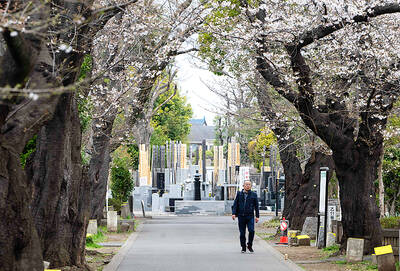
ROCKY RELATIONS: The figures on residents come as Chinese tourist numbers drop following Beijing’s warnings to avoid traveling to Japan The number of Chinese residents in Japan has continued to rise, even as ties between the two countries have become increasingly fractious, data released on Friday showed. As of the end of December last year, the number of Chinese residents had increased by 6.5 percent from the previous year to 930,428. Chinese people accounted for 22.6 percent of all foreign residents in Japan, making them by far the largest group, Japanese Ministry of Justice data showed. Beijing has criticized Tokyo in increasingly strident terms since Japanese Prime Minister Sanae Takaichi last year suggested that a military conflict around Taiwan could
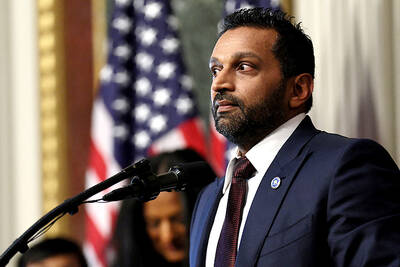
A pro-Iran hacking group claimed to breach FBI Director Kash Patel’s personal e-mail inbox and posted some of the contents online. The e-mails provided by the hacking group include travel details, correspondence with leasing agents in Washington and global entry, and loyalty account numbers. The e-mail address the hackers claim to have compromised has been previously tied to Patel’s personal details, and the leaked e-mails contain photos of Patel and others, in addition to correspondence with family members and colleagues. “The FBI is aware of malicious actors targeting Director Patel’s personal email information,” the agency said in a statement on
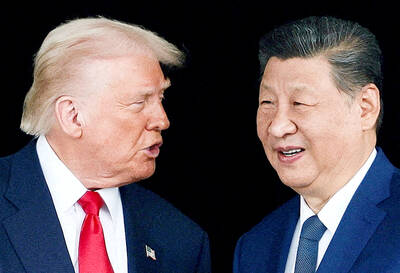
RIVALRY: ‘We know that these are merely symbolic investigations initiated by China, which is in fact the world’s most profligate disrupter of supply chains,’ a US official said China has started a pair of investigations into US trade practices, retaliating against similar probes by US President Donald Trump’s administration as the superpowers stake out positions before an expected presidential summit in May. The move, announced by the Chinese Ministry of Commerce on Friday, is a direct mirror of steps Trump took to revive his tariff agenda after the US Supreme Court last month struck down some of his duties. “China expresses its strong dissatisfaction and firm opposition to these actions,” a ministry spokesperson said in a statement, referring to the so-called Section 301 investigations initiated on March 11.

When a hiker fell from a 55m waterfall in wild New Zealand bush, rescuers were forced to evacuate the badly hurt woman without her dog, which could not be found. After strangers raised thousands of dollars for a search, border collie Molly was flown to safety by a helicopter pilot who was determined to reunite the pet and the owner. A week earlier, an emergency rescue helicopter found the woman with bruises and lacerations after a fall at a rocky spot at the waterfall on the South Island’s West Coast. She was airlifted on March 24, but they were forced to


 RSS
RSS