


A General Electric Co (GE) engineer said he resigned 35 years ago over concern about the safety of a nuclear reactor design used in the now crippled Fukushima Dai-ichi plant in Japan.
Dale Bridenbaugh said the “Mark 1” design had “not yet been designed to withstand the loads” that could be experienced in a large-scale accident.
“At the time, I didn’t think the utilities were taking things seriously enough,” Bridenbaugh, now retired, said in a telephone interview. “I felt some of the plants should have been shut down while the analysis was completed, and GE and the utilities didn’t want to do that, so I left.”
Bridenbaugh said that to the best of his knowledge, the design flaws he had identified were addressed at the Dai-ichi plant, requiring “a fairly significant expense.”
GE in a statement said it has had “40 years of safe operations” of its boiling water reactor Mark 1 technology.
“In 1980 the [Nuclear Regulatory Commission] issued a generic industry order assessing the Mark 1 containment,” the Fairfield, Connecticut-based company said. “We responded to this order and issued it to all of our customers.”
Following last Friday’s magnitude 9.0 earthquake and tsunami, the Dai-ichi plant has suffered several explosions, and is now sending radiation wafting into Tokyo, 240km to the south. Authorities are trying to prevent a full meltdown.
Bridenbaugh said that after leaving GE, he started a firm to advise state governments on safety issues. Like many, he said he was watching closely as events unfold in Japan.
“I feel sorry for the guys over there trying to handle that thing,” he said. “On the other hand, you can’t say the Fukushima situation is a direct result of the Mark 1 containment. It is a direct result of the earthquake, tsunami and the fact the Mark 1 containment is less forgiving than some of the other reactor versions.”
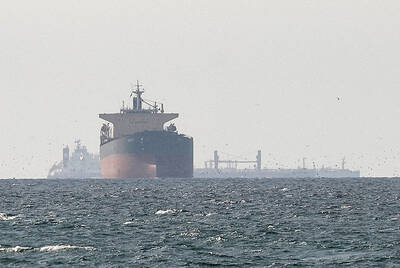
A ship that appears to be taking on the identity of a scrapped gas carrier exited the Strait of Hormuz on Friday, showing how strategies to get through the waterway are evolving as the Middle East war progresses. The vessel identifying as liquefied natural gas (LNG) carrier Jamal left the Strait on Friday morning, ship-tracking data show. However, the same tanker was also recorded as having beached at an Indian demolition yard in October last year, where it is being broken up, according to market participants and port agent’s reports. The ship claiming to be Jamal is likely a zombie vessel that
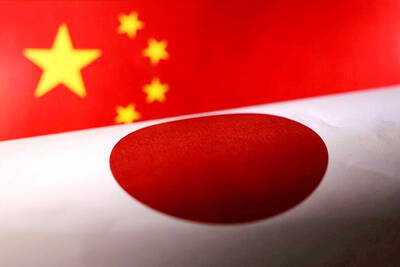
Japan is to downgrade its description of ties with China from “one of its most important” in an annual diplomatic report, according to a draft reviewed by Reuters, as relations with Beijing worsen. This year’s Diplomatic Bluebook, which Japanese Prime Minister Sanae Takaichi’s government is expected to approve next month, would instead describe China as an important neighbor and the relationship as “strategic” and “mutually beneficial.” The draft cites a series of confrontations with Beijing over the past year, including export controls on rare earths, radar lock-ons targeting Japanese military aircraft and increased pressure around Taiwan. The shift in tone underscores a deterioration

LAW CONSTRAINTS: The US has been pressing allies to send warships to open the Strait, but Tokyo’s military actions are limited under its postwar pacifist constitution Japan could consider deploying its military for minesweeping in the Strait of Hormuz if a ceasefire is reached in the war on Iran, Japanese Minister of Foreign Affairs Toshimitsu Motegi said yesterday. “If there were to be a complete ceasefire, hypothetically speaking, then things like minesweeping could come up,” Motegi said. “This is purely hypothetical, but if a ceasefire were established and naval mines were creating an obstacle, then I think that would be something to consider.” Japan’s military actions are limited under its postwar pacifist constitution, but 2015 security legislation allows Tokyo to use its Self-Defense Forces overseas if an attack,

German Chancellor Friedrich Merz’s conservative Christian Democratic Union (CDU) yesterday faced a regional election battle in Rhineland-Palatinate, now held by the center-left Social Democratic Party (SPD). Merz’s CDU has enjoyed a narrow poll lead over the SPD — their coalition partners at the national level — who have ruled the mid-sized state for 35 years. Polling third is the far-right Alternative for Germany (AfD), which spells a greater threat to the two centrist parties in several state elections in September in the country’s ex-communist east. The picturesque state of Rhineland-Palatinate, bordering France, Belgium and Luxembourg and with a population of about 4 million,


 RSS
RSS