


Belgium took the record for Europe’s longest political crisis on Saturday, as it hit 209 days without a government, amid mounting concern among business chiefs over the effects on its economy.
As the divided country surpassed previous record-holder the Netherlands, where politicians haggled 208 days before striking a deal in 1977, Belgium’s top business leaders raised alarm bells about the crisis in newspaper Le Soir.
Billionaire investor Albert Frere, a leading shareholder in energy groups Total and GDF Suez, said he was “appalled by this chaotic situation which could have long-lasting effects on the Belgian economy.”
“The markets will be merciless if the country does not emerge promptly from this unprecedented hell,” he said.
Belgian politicians have been deadlocked over the formation of a new government for almost seven months and the political crisis deepened on Thursday last week when a mediator appointed by the king threw in the towel in exasperation.
Johan Vande Lanotte tendered his resignation to King Albert II a day after the country’s powerful Flemish separatists refused to discuss a plan to give the country’s Dutch and French-speaking regions more power.
The plan was offered to seven political parties as a basis for setting up a coalition government after elections on June 13 last year failed to produce an outright winner.
Should Belgium fail to get a new government by March 30, it would beat Iraq’s world record of 289 days last year.
Albert today will announce whether he will accept Vande Lanotte’s resignation or not. He could decide to name a new go-between or widen the list of parties involved in the negotiations.
While a caretaker Cabinet is keeping the state running, fears are mounting of looming economic strife.
With debt hovering just below 100 percent of GDP, ratings agencies and the nation’s central bank have warned of a potential threat from financial markets if feuding politicians fail to strike a deal soon.
“It is now that we must ... choose definitive solutions,” Luc De Bruyckere, the head of the Flemish industries association, said in Le Soir.
“If we do not do it ourselves, we will in the end be forced to by international market pressures,” he said.
Others however warned against forming a new government too quickly.
“Belgium has a government that manages day-to-day affairs in an efficient manner,” said Herman Daems, the chairman of the board at BNP Paribas Fortis.
“It would be better to take a bit more time to reach a good agreement rather than to favor a crisis government,” which would send “a bad signal to the markets,” Daems said.


Showcasing phallus-shaped portable shrines and pink penis candies, Japan’s annual fertility festival yesterday teemed with tourists, couples and families elated by its open display of sex. The spring Kanamara Matsuri near Tokyo features colorfully dressed worshipers carrying a trio of giant phallic-shaped objects as they parade through the street with glee. The festival, as legend has it, honors a local blacksmith in the Edo Period (1603-1868) who forged an iron dildo to break the teeth of a sharp-toothed demon inhabiting a woman’s vagina that had been castrating young men on their wedding nights. A 1m black steel phallus sits in the courtyard of

JAN. 1 CLAUSE: As military service is voluntary, applications for permission to stay abroad for over three months for men up to age 45 must, in principle, be granted A little-noticed clause in sweeping changes to Germany’s military service policy has triggered an uproar after it emerged that the law requires men aged up to 45 to get permission from the armed forces before any significant stay abroad, even in peacetime. The legislation, which went into effect on Jan. 1 aims to bolster the military and demands all 18-year-old men fill out a questionnaire to gauge their suitability to serve in the armed forces, but stops short of conscription. If the “modernized” model fails to pull in enough recruits, parliament will be compelled to discuss the reintroduction of compulsory service, German
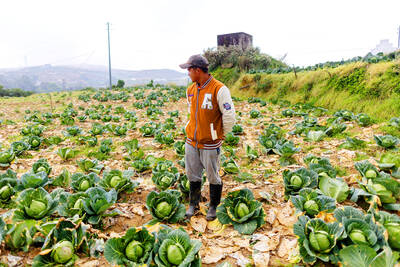
Filipino farmers like Romeo Wagayan have been left with little choice but to let their vegetables rot in the field rather than sell them at a loss, as rising oil prices linked to the Iran war drive up the cost of harvesting, labor and transport. “There’s nothing we can do,” said Wagayan, a 57-year old vegetable farmer in the northern Philippine province of Benguet. “If we harvest it, our losses only increase because of labor, transportation and packing costs. We don’t earn anything from it. That’s why we decided not to harvest at all,” he said. Soaring costs caused by the Middle East

Hungarian Prime Minister Viktor Orban’s officially declared wealth is fairly modest: some savings and a jointly owned villa in Budapest. However, voters in what Transparency International deems the EU’s most corrupt country believe otherwise — and they might make Orban pay in a general election this Sunday that could spell an end to his 16-year rule. The wealth amassed by Orban’s inner circle is fueling the increasingly palpable frustration of a population grappling with sluggish growth, high inflation and worsening public services. “The government’s communication machine worked well as long as our economic situation remained relatively good,” said Zoltan Ranschburg, a political analyst


 RSS
RSS