


Like many, Fabian Escalante remembers what he was doing when he heard US President John F. Kennedy had been shot: He was trying to stop the CIA from toppling the Cuban government with the help of anti-Castro exiles.
Years later, when he had risen to head Cuba’s Department of State Security, he was well placed to consider whether those same exiles may have had a hand in the Nov. 22, 1963, slaying of the dashing young president in Dallas.
Escalante does not claim to know who killed JFK, but says that Cuban exiles recruited by the CIA had planned to kill Kennedy twice in November 1963 because they felt the US president had done too little to topple the government on the Caribbean island.
“They had the capability, the means and the intent,” he said in an interview on the sidelines of the Semana Negra crime writing festival in Gijon, northern Spain.
“How was this meant to turn out? To assassinate Kennedy, launch a furious campaign against Cuba, blaming it for the assassination, which they did, then kill Fidel Castro a few days later, on Dec. 12, and invade Cuba.”
Escalante worked with members of the US House Select Committee of Assassinations investigating the JFK killing when they traveled to Cuba in 1978 to collect data on the activities of Cuban exiles.
In his retirement, he has published many of his findings in book form, along with research he has conducted since he set up the Center for Security Studies in 1993.
Escalante says one anti-Castro exile and former CIA operative who may hold clues to the JFK assassination is Luis Posada Carriles, who lives in Miami and is wanted in Cuba on charges of masterminding the 1976 bombing of a Cubana Airlines jet which killed 73 people.
Posada Carriles is also accused of involvement in a 1997 wave of hotel bombings, which were aimed at destabilizing Cuba and scaring away tourists, but Escalante doubts the US government will deport him to Cuba to face trial.
“He has a life insurance policy, which is what he knows about the Kennedy plot,” Escalante said. “He and [fellow exile] Orlando Bosch were in the thick of the Kennedy plot. Remember, both he and Posada were part of this terrorist mechanism set up in New Orleans, which is where the plot was hatched to assassinate Kennedy.”
Now 69, Escalante was just 18 when a revolution led by Fidel Castro took power in 1959. In the next few years, he and other young novices built up a counter-intelligence service from scratch.
He was invited to participate in the Spanish crime writing festival because organizers say fiction falls short of a world Escalante has uncovered, in which the CIA plotted to make Castro’s beard fall off or poison Cubans with infected coins.
Escalante belonged to the Q Section in 1961, which had 50 case officers to thwart the efforts of the so-called JMWAVE CIA base in Florida assigned to conduct sabotage operations in Cuba with a US$100 million budget and 4,000 agents.
In his book Executive Action, Escalante lists 634 conspiracies to kill Castro between 1959 and 2000, including 168 plots which may have succeeded.
He says the closest the Cuban leader came to death was when a CIA agent working at Havana’s former Hilton hotel tried to poison a chocolate milk shake Castro ordered.
However, a capsule containing botulin stuck to the side of the freezer compartment in the bar and broke when the agent tried to prise it loose.
Escalante says the Q Section often intercepted false documents sent by the CIA to their agents in Cuba, which were as good as genuine ones, so he used one for himself.
“Security measures for documents in those days were very lax. There was just ordinary paper, a photo, stamp and plastic cover. So that was how I began to drive, with a CIA license,” he said.
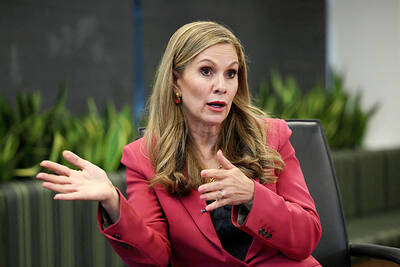
Australians were downloading virtual private networks (VPNs) in droves, while one of the world’s largest porn distributors said it was blocking users from its platforms as the country yesterday rolled out sweeping online age restriction. Australia in December became the first country to impose a nationwide ban on teenagers using social media. A separate law now requires artificial intelligence (AI)-powered chatbot services to keep certain content — including pornography, extreme violence and self-harm and eating disorder material — from minors or face fines of up to A$49.5 million (US$34.6 million). The country also joined Britain, France and dozens of US states requiring
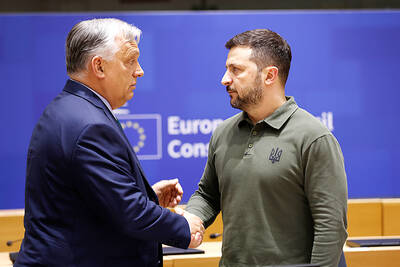
Hungarian authorities temporarily detained seven Ukrainian citizens and seized two armored cars carrying tens of millions of euros in cash across Hungary on suspicion of money laundering, officials said on Friday. The Ukrainians were released on Friday, following their detention on Thursday, but Hungarian officials held onto the cash, prompting Ukraine to accuse Hungary’s Russia-friendly government of illegally seizing the money. “We will not tolerate this state banditism,” Ukrainian Minister of Foreign Affairs Andrii Sybiha said. The seven detained Ukrainians were employees of the Ukrainian state-owned Oschadbank, who were traveling in the two armored cars that were carrying the money between Austria and
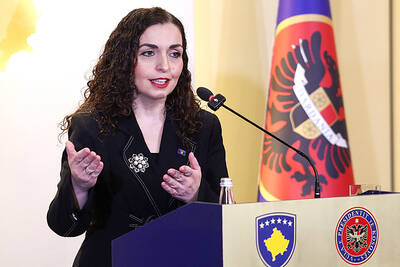
Kosovar President Vjosa Osmani on Friday after dissolving the Kosovar parliament said a snap election should be held as soon as possible to avoid another prolonged political crisis in the Balkan country at a time of global turmoil. Osmani said it is important for Kosovo to wrap up the upcoming election process and form functional institutions for political stability as the war rages in the Middle East. “Precisely because the geopolitical situation is that complex, it is important to finish this electoral process which is coming up,” she said. “It is very hard now to imagine what will happen next.” Kosovo, which declared

MORE BANS: Australia last year required sites to remove accounts held by under-16s, with a few countries pushing for similar action at an EU level and India considering its own ban Indonesia on Friday said it would ban social media access for children under 16, citing threats from online pornography, cyberbullying, online fraud and Internet addiction. “Accounts belonging to children under 16 on high-risk platforms will start to be deactivated, beginning with YouTube, TikTok, Facebook, Instagram, Threads, X, Bigo Live and Roblox,” Indonesian Minister of Communications and Digital Meutya Hafid said. “The government is stepping in so that parents no longer have to fight alone against the giants of the algorithm. Implementation will begin on March 28, 2026,” she said. The social media ban would be introduced in stages “until all platforms fulfill their


 RSS
RSS