


As masked Nigerian environmental experts examined a communal well in a village where more than 60 children were killed by lead poisoning, barefoot kids streaked with dust sat on the contaminated ground, running their hands through the silt and sucking on their fingers.
Even as a foreign nonprofit begins training villagers to clean up after illegal gold mining caused the poisoning, children still roam among toxic dirt piles. Livestock freely drink from a pond that kills animals.
Much of the dirt here has lead levels more than 23 times US standard limit, but villagers don’t seem to know that the earth can kill them. It’s just one of the issues facing those hoping to get things under control in Dareta and five other villages. A corrupt federal government and an encroaching rainy season also pose problems, as does the allure of quick profits from digging up gold from the surrounding countryside.
Gold wealth can be seen in the shining metal roofs of some of mudwalled homes in Dareta, a village of 2,000 in Zamfara state bordering Niger on the edge of the Sahara Desert. Here, women used hammers to beat open rock ore to find gold.
However, several months earlier, the ore coming to the village carried high concentrations of lead — a substance that can cause brain damage, blindness, deafness and death in young children. Soon children grew quiet, began convulsing and later died. Government officials say more than 160 people, most of them children, have died across the state in recent months from lead poisoning. Hundreds more are sick and face possible long-term disabilities.
It took time for news of the deaths to reach federal authorities from villages deep in the countryside, beyond the reach of paved roads and electricity. Now, the isolation of the villages makes it difficult for aid workers to reach them. Seasonal rains are making the rutted dirt roads virtually impassable.
“We are afraid that if the heavy rains continue ... the village will be inaccessible,” said Muhammad Bello Dareta, the 60-year-old chief of Dareta.
The government announced it would spend US$1.6 million for the cleanup effort, but local farmers who had been offered jobs to scrape away contaminated dirt were idle on Thursday morning, saying the state government balked at paying them.
A state government official arrived on the scene, saying: “The death of even one child is a tragedy.”
He handed out baseball hats supporting the re-election campaign of the state governor.
Five villages known to have also been contaminated have yet to see any cleanup. In Dareta, it will take time to properly scrape away the contaminated dirt across an estimated 26 sites where villagers broke up the lead-ridden ore.
Environmental activist Nnimmo Bassey said it will take a week for a team of experts from his Nigeria-based Environmental Rights Action to assess the extent of the contamination.
“If it was just the soil that the miners took away, that could be contained and carried away,” he said by telephone from Pretoria, South Africa.
He emphasized that if water sources have also been affected “it will take years to clean up.”
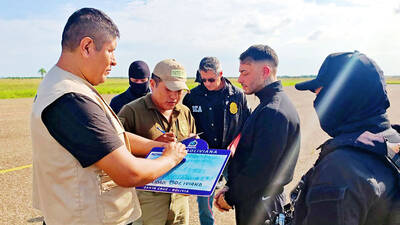
KINGPIN: Marset allegedly laundered the proceeds of his drug enterprise by purchasing and sponsoring professional soccer teams and even put himself in the starting lineups Notorious Latin American narco trafficker Sebastian Marset, who eluded police for years, was handed over to US authorities after his arrest on Friday in Bolivia. Marset, a Uruguayan national who was on the US most-wanted list, was passed to agents of the US Drug Enforcement Administration at Santa Cruz airport in Bolivia, then put on a US airplane, Bolivian state television showed. “The arrest and deportation were carried out pursuant to a court order issued by the US justice system,” Bolivian Minister of Government Marco Antonio Oviedo told reporters. The alleged kingpin was arrested in an upscale neighborhood of Santa
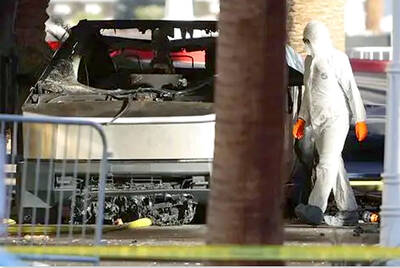
ACTIONABLE ADVICE: The majority of chatbots tested provided guidance on weapons, tactics and target selections, with Perplexity and Meta AI deemed to be the least safe From school shootings to synagogue bombings, leading artificial intelligence (AI) chatbots helped researchers plot violent attacks, according to a study published on Wednesday that highlighted the technology’s potential for real-world harm. Researchers from the nonprofit watchdog Center for Countering Digital Hate and CNN posed as 13-year-old boys in the US and Ireland to test 10 chatbots, including ChatGPT, Google Gemini, Perplexity, Deepseek and Meta AI. Eight of the chatbots assisted the make-believe attackers in more than half the responses, providing advice on “locations to target” and “weapons to use” in an attack, the study said. The chatbots had become a “powerful accelerant for
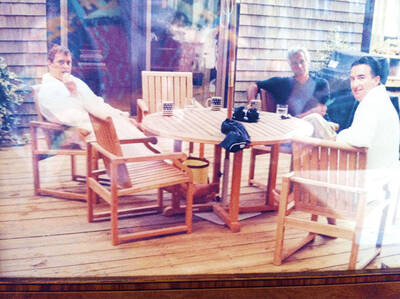
SCANDAL: Other images discovered earlier show Andrew bent over a female and lying across the laps of a number of women, while Mandelson is pictured in his underpants A photograph of former British prince Andrew and veteran politician Peter Mandelson sitting in bathrobes alongside late sex offender Jeffrey Epstein was unearthed on Friday in previously published documents. The image is believed to be the first known photograph of the two men with Epstein. They are currently engulfed in scandal in the UK over their ties to their mutual friend. The undated photograph, first reported by ITV News, shows King Charles III’s disgraced brother and former British ambassador to the US sitting barefoot outside on a wooden deck. They appear to have mugs with a US flag on them
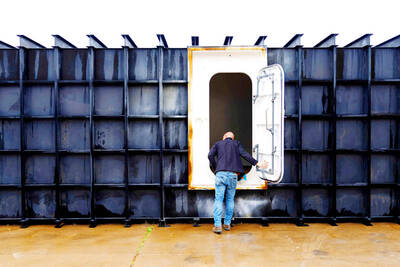
Since the war in the Middle East began nearly two weeks ago, the telephone at Ron Hubbard’s bomb shelter company in Texas has not stopped ringing. Foreign and US clients are rushing to buy his bunkers, seeking refuge in case of air raids, nuclear fallout or apocalypse. With the US and Israel pounding Iran, and Tehran retaliating with strikes across the region, Hubbard has seen demand for his product soar, mostly from Gulf nation customers in Bahrain, Qatar, Kuwait and the United Arab Emirates. “You can imagine how many people are thinking: ‘I wish I had a bomb shelter,’” Hubbard, 63, said in


 RSS
RSS