


South Asian leaders on Wednesday admitted a collective failure to develop their conflict-ridden region and to forge a united front against the threats of climate change and terrorism.
Opening a summit of the eight-nation South Asian Association for Regional Cooperation (SAARC) in Bhutan, the host nation’s Prime Minister Jigme Thinley said it was time for the bloc to take a long, critical look at itself.
In the 25 years since it was formed to encourage development and raise the living standards of a region that is home to one-fifth of humanity, “SAARC’s journey has not been one of outstanding success,” Thinley said.

PHOTO: AFP
“We are losing focus,” he added, citing squabbles and tensions between the bloc’s member states that had prevented implementation of its numerous, but ultimately toothless, commitments to change.
“Fractious and quarrelsome neighbors do not make a prosperous community,” he said.
SAARC, founded in 1985, groups Afghanistan, Bangladesh, Bhutan, India, the Maldives, Nepal, Pakistan and Sri Lanka.
Critics have blamed its failure to exploit the region’s common potential on the long and bitter rivalry between its two most powerful members, India and Pakistan, which has often hijacked the bloc’s agenda.
The nuclear-armed neighbors have fought three wars since the subcontinent’s 1947 partition and remain at loggerheads over the region of Kashmir.
They are also locked in a struggle for influence in Afghanistan, which joined SAARC in 2007.
The Indian and Pakistani prime ministers, Manmohan Singh and Yousuf Raza Gilani, both attended the summit, which comes at a time when their countries are, once again, barely on speaking terms.
A meeting between the two leaders was been scheduled for Thursday.
Addressing the regional gathering, Singh acknowledged that SAARC had fallen short of its founding aspirations.
“In looking back at these two-and-a-half decades we can claim the glass is half full, and compliment ourselves, or we can admit the glass is half empty and challenge ourselves,” he said.
“Declarations at summits and official level meetings do not amount to regional cooperation or integration,” he added.
The tiny Himalayan kingdom of Bhutan is hosting the summit for the first time and has put the focus on climate change, which is of special concern to SAARC members like Bangladesh and The Maldives, both threatened by rising sea levels.
“The capacity of the planet to sustain life is fast diminishing ... [and] it is the poor who suffer most,” Thinley said. “We need to act in concert.”
Pakistan’s prime minister echoed the need for some “dispassionate reflection” on SAARC’s record to date.
“For many years, real progress remained stalled, due in part to hesitancy born from historical legacies, differences and disputes,” Gilani said.

PHISHING: The con might appear convincing, as the scam e-mails can coincide with genuine messages from Apple saying you have run out of storage For a while you have been getting messages from Apple saying “your iCloud storage is full.” They say you have exceeded your storage plan, so documents are no longer being backed up, and photos you take are not being uploaded. You have been resisting Apple’s efforts to get you to pay a minimum of £0.99 (US$1.33) a month for more storage, but it seems that you cannot keep putting off the inevitable: You have received an e-mail which says your iCloud account has been blocked, and your photos and videos would be deleted very soon. To keep them you need
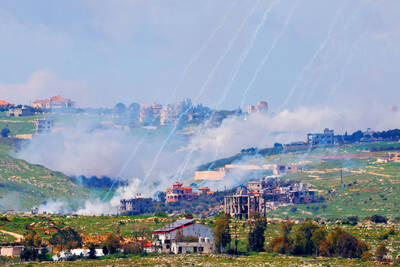
The Israeli military has demolished entire villages as part of its invasion of south Lebanon, rigging homes with explosives and razing them to the ground in massive remote detonations. The Guardian reviewed three videos posted by the Israeli military and on social media, which showed Israel carrying out mass detonations in the villages of Taybeh, Naqoura and Deir Seryan along the Israel-Lebanon border. Lebanese media has reported more mass detonations in other border villages, but satellite imagery was not readily available to verify these claims. The demolitions came after Israeli Minister of Defense Israel Katz called for the destruction of

A US YouTuber who caused outrage for filming himself kissing a statue commemorating Korean wartime sex slaves has been sentenced to six months in prison, a court in Seoul said yesterday. Johnny Somali, 25, gained notoriety several years ago for recording himself doing a series of provocative stunts in South Korea and Japan, and streaming them on platforms such as YouTube and Twitch. South Korean authorities indicted Somali — whose real name is Ramsey Khalid Ismael — in 2024 on public order violations and obstruction of business, and banned him from leaving the country. “The court has sentenced him to six months in
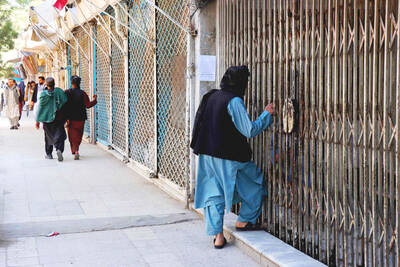
The death toll from a shooting in western Afghanistan rose to 11 on Saturday, after gunmen targeted civilians at a picnic spot in Herat, the provincial authority said. Bullet marks were visible on a wall of the Sayed Mohammad Agha Shia shrine, while bloodstains marked a blanket abandoned at the scene. “Eleven people have been recorded dead and eight others wounded from Friday’s incident, with the condition of two of the wounded reported as critical,” Herat’s information office said in a statement. The update raises a toll of seven killed provided on Friday by the Afghan Ministry of Interior Affairs


 RSS
RSS