


Shashi Tharoor, a former top UN diplomat and prominent government minister, has resigned over allegations of corruption in India’s multibillion-dollar premier cricket league.
The junior foreign minister, a reformist-minded politician who was known for building a large following on the Web site Twitter, submitted his resignation late on Sunday.
It was accepted by Indian Prime Minister Manmohan Singh and President Pratibha Patil.
The move marks a dramatic fall from grace for the former UN undersecretary-general, who swapped international diplomacy in New York for the rough and tumble of Indian politics, winning a seat in the southern state of Kerala in the general election in May last year.
Pressure had been building on Tharoor to step down after news broke a week ago that a female friend — said by Indian media to be his girlfriend — was given a free stake in a new franchise in the money-spinning Indian Premier League (IPL).
Opposition parties say the US$15 million stake was for Tharoor’s behind-the-scenes services in putting together the consortium that bought the Kochi team, which will be based in Kerala State.
The alleged deal was revealed by powerful IPL chief Lalit Modi, who leaked details on the Web site Twitter.
Tharoor, 54, denied any wrongdoing, saying he had helped only by “mentoring” the Kochi bid.
With opposition protests threatening to stall the passage of the budget through parliament, however, senior leaders of the ruling Congress party reportedly decided there was no choice but for the minister to resign.
Tharoor, who spent almost three decades at the UN before quitting in 2007, joined Congress in 2008 and made enemies within the party for being an outsider who was elevated so rapidly.
“Tharoor’s lack of familiarity with the Indian political system cost him dearly,” political analyst Rasheed Kidwai said. “Congress did not spell out to him the party’s do’s and don’ts and he did not bother to learn them either.”
Tharoor’s short tenure as junior foreign minister was marked by various “gaffes” and an outspokenness that garnered both critics and admirers.
In September last year, with the Congress party pushing an austerity drive, Tharoor was found staying in a five-star hotel while waiting for his ministerial residence to be prepared.
A few weeks later, with ministers forced to travel economy, Tharoor upset conservative Hindus by tweeting that he was traveling “cattle class in solidarity with all our holy cows.”
At one point he criticized his own government’s visa policies and also seemed to suggest that Saudi Arabia could play a mediating role in India-Pakistan relations.
The Indian government has always rejected any third-party involvement in its disputes with its Muslim neighbor.
“All politicians have to espouse their party values publicly, even if they don’t subscribe to them in private,” Kidwai said.
“His exit puts question marks over the future entry of other professionals into the Congress party and the Indian political system at large,” he said.
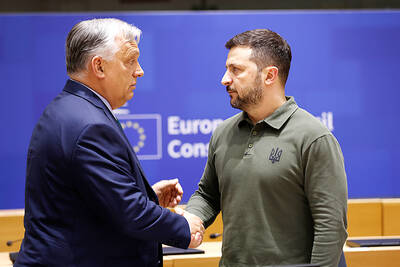
Hungarian authorities temporarily detained seven Ukrainian citizens and seized two armored cars carrying tens of millions of euros in cash across Hungary on suspicion of money laundering, officials said on Friday. The Ukrainians were released on Friday, following their detention on Thursday, but Hungarian officials held onto the cash, prompting Ukraine to accuse Hungary’s Russia-friendly government of illegally seizing the money. “We will not tolerate this state banditism,” Ukrainian Minister of Foreign Affairs Andrii Sybiha said. The seven detained Ukrainians were employees of the Ukrainian state-owned Oschadbank, who were traveling in the two armored cars that were carrying the money between Austria and
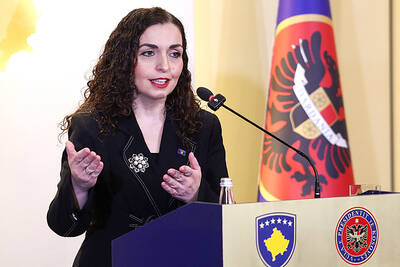
Kosovar President Vjosa Osmani on Friday after dissolving the Kosovar parliament said a snap election should be held as soon as possible to avoid another prolonged political crisis in the Balkan country at a time of global turmoil. Osmani said it is important for Kosovo to wrap up the upcoming election process and form functional institutions for political stability as the war rages in the Middle East. “Precisely because the geopolitical situation is that complex, it is important to finish this electoral process which is coming up,” she said. “It is very hard now to imagine what will happen next.” Kosovo, which declared

MORE BANS: Australia last year required sites to remove accounts held by under-16s, with a few countries pushing for similar action at an EU level and India considering its own ban Indonesia on Friday said it would ban social media access for children under 16, citing threats from online pornography, cyberbullying, online fraud and Internet addiction. “Accounts belonging to children under 16 on high-risk platforms will start to be deactivated, beginning with YouTube, TikTok, Facebook, Instagram, Threads, X, Bigo Live and Roblox,” Indonesian Minister of Communications and Digital Meutya Hafid said. “The government is stepping in so that parents no longer have to fight alone against the giants of the algorithm. Implementation will begin on March 28, 2026,” she said. The social media ban would be introduced in stages “until all platforms fulfill their
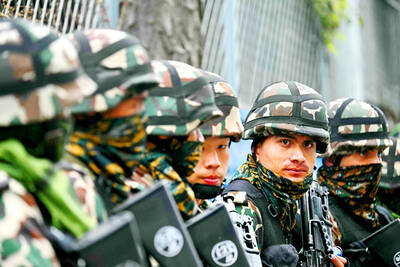
Counting was under way in Nepal yesterday, after a high-stakes parliamentary election to reshape the country’s leadership following protests last year that toppled the government. Key figures vying for power include former Nepalese prime minister K. P. Sharma Oli, rapper-turned-mayor Balendra Shah, who is bidding for the youth vote, and newly elected Nepali Congress party leader Gagan Thapa. In Kathmandu’s tea shops and city squares, people were glued to their phones, checking results as early trends flashed up — suggesting Shah’s centrist Rastriya Swatantra Party (RSP) was ahead. Nepalese Election Commission spokesman Prakash Nyupane said the counting was ongoing “in a peaceful manner”


 RSS
RSS