


Indian Premier League (IPL) organizers have vowed that security will be “watertight” for the remainder of the tournament after two bomb blasts at a Bangalore cricket stadium left 14 people injured and panicked fans before a match.
“We are talking to police and government officials about security arrangements,” IPL commissioner Lalit Modi told reporters yesterday. “We are feeling quite confident.”
The crudely made bombs went off outside Chinnaswamy Stadium on Saturday, an hour before an IPL match between Bangalore Royal Challengers and Mumbai Indians. Mumbai eventually won the match, which was played to a packed stadium and an hour behind schedule.
Modi said two extra layers of security would be added outside the already heavily guarded venues for the few remaining regular season matches and the semifinals and final.
“It will be a little inconvenient for the spectators, but we’re leaving no stone unturned,” Modi said. “Security will be watertight.”
According to initial investigations, the explosives used in the blasts were locally made and of low intensity, said M.R. Poojar, a senior local police official. He also said that of the 14 injured, only three remained in hospital yesterday morning.
Poojar said it was too early to say who was responsible for the blasts. The sound of the blasts, which occurred as thousands of spectators were entering the stadium, sent nervous crowds running in panic.
Bangalore is set to host some of next year’s cricket World Cup matches. The International Cricket Council said it was too early to comment on the attack.
Yesterday two sets of IPL regular season matches were scheduled — one in New Delhi between the Delhi Daredevils and the Deccan Chargers and another in the north Indian hill town of Dharmsala between Kings XI Punjab and the Chennai Super Kings. Sports venues in India have faced tight security amid fears that Islamist radical groups may target them.
Up to 80 foreign players from across the world are contracted to the eight IPL teams.
The second edition of the IPL was moved abroad to South Africa last year because of concern that the security forces would be too stretched by a clash of dates between the federal elections and the lucrative Twenty20 cricket tournament.
In late 2008, the first edition of the Twenty20 Champions League — featuring the leading provincial teams from five countries — was canceled in the wake of terror attacks in Mumbai which left 164 dead.
Neighboring Pakistan, which sees near-daily bombings from militants, has been off limits to foreign cricket teams since gunmen attacked the Sri Lanka team’s bus in Lahore last year, killing six police officers and the van’s driver.
The Pakistan Cricket Board was forced to organize its home series in the United Arab Emirates and will play Australia later this year in England.
Cricket Australia said yesterday that it was closely monitoring the security situation in India, but it was too early to discuss ramifications for next year’s World Cup, while New Zealand Cricket still plans to tour India in November despite the recent attack.
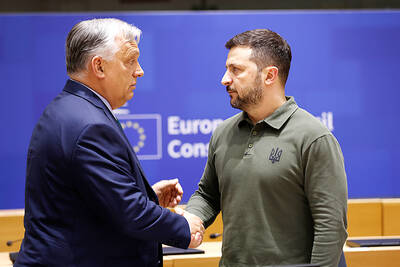
Hungarian authorities temporarily detained seven Ukrainian citizens and seized two armored cars carrying tens of millions of euros in cash across Hungary on suspicion of money laundering, officials said on Friday. The Ukrainians were released on Friday, following their detention on Thursday, but Hungarian officials held onto the cash, prompting Ukraine to accuse Hungary’s Russia-friendly government of illegally seizing the money. “We will not tolerate this state banditism,” Ukrainian Minister of Foreign Affairs Andrii Sybiha said. The seven detained Ukrainians were employees of the Ukrainian state-owned Oschadbank, who were traveling in the two armored cars that were carrying the money between Austria and
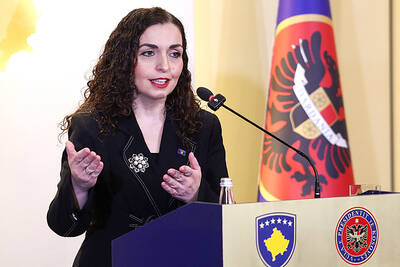
Kosovar President Vjosa Osmani on Friday after dissolving the Kosovar parliament said a snap election should be held as soon as possible to avoid another prolonged political crisis in the Balkan country at a time of global turmoil. Osmani said it is important for Kosovo to wrap up the upcoming election process and form functional institutions for political stability as the war rages in the Middle East. “Precisely because the geopolitical situation is that complex, it is important to finish this electoral process which is coming up,” she said. “It is very hard now to imagine what will happen next.” Kosovo, which declared

MORE BANS: Australia last year required sites to remove accounts held by under-16s, with a few countries pushing for similar action at an EU level and India considering its own ban Indonesia on Friday said it would ban social media access for children under 16, citing threats from online pornography, cyberbullying, online fraud and Internet addiction. “Accounts belonging to children under 16 on high-risk platforms will start to be deactivated, beginning with YouTube, TikTok, Facebook, Instagram, Threads, X, Bigo Live and Roblox,” Indonesian Minister of Communications and Digital Meutya Hafid said. “The government is stepping in so that parents no longer have to fight alone against the giants of the algorithm. Implementation will begin on March 28, 2026,” she said. The social media ban would be introduced in stages “until all platforms fulfill their
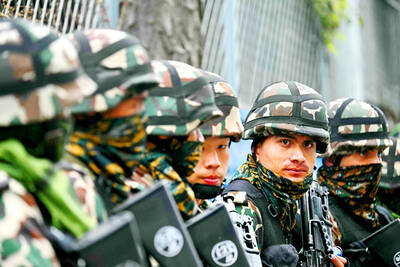
Counting was under way in Nepal yesterday, after a high-stakes parliamentary election to reshape the country’s leadership following protests last year that toppled the government. Key figures vying for power include former Nepalese prime minister K. P. Sharma Oli, rapper-turned-mayor Balendra Shah, who is bidding for the youth vote, and newly elected Nepali Congress party leader Gagan Thapa. In Kathmandu’s tea shops and city squares, people were glued to their phones, checking results as early trends flashed up — suggesting Shah’s centrist Rastriya Swatantra Party (RSP) was ahead. Nepalese Election Commission spokesman Prakash Nyupane said the counting was ongoing “in a peaceful manner”


 RSS
RSS