


Tibetans mourned dead relatives yesterday from an earthquake that killed nearly 800 people in remote western China as rescue crews found a handful of survivors, and homeless residents shivered in tents.
The official death toll from the quake that flattened much of the town of Gyegu climbed to 791, though some residents cast doubt on that figure, saying many more had died without being counted. Estimates by non-governmental organizations support a figure of about 1,000 dead.
Survivors of Wednesday’s tremor spent another night huddled under quilts and in tents, while doctors struggled to treat the wounded in a makeshift medical center.
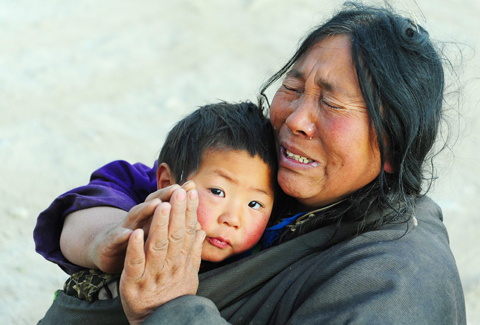
PHOTO: AFP
Hundreds, if not thousands, of Tibetan Buddhist monks clad in crimson cloaks and jackets joined the rescue effort undertaken by soldiers and rescue teams in distant, windswept Yushu county.
At a foothill under the main monastery of Gyegu, monks had gathered to chant mantras in front of piles of dead. Some helped residents look for kin among what appeared to be hundreds of bodies, collected on a covered platform.
“Many of the bodies you see here don’t have families or their families haven’t come looking for them, so it’s our job to take good care of them,” said Lopu, a monk clad in maroon robes. “I’d say we’ve collected a thousand or more bodies here. Some we found ourselves, some were sent to us.”
Many bodies had already been removed by family members, he said.
Many injured locals spent a cold night in tents or outdoors waiting for medical aid. Harried doctors said they had had almost no sleep over the past two days.
Addressing residents of Gyegu high on the Tibetan plateau late on Thursday, Chinese Premier Wen Jiabao (溫家寶) clambered over rubble and pledged continued rescue efforts.
In remarks translated into Tibetan to a receptive crowd, Wen pledged that rescuers would not give up hope of finding people still trapped under rubble.
However, temperatures well below freezing at night leave little chance of anyone still surviving under collapsed buildings in and around Gyegu, where most of Yushu county’s 100,000 people reside.
Rescuers were still discovering the odd survivor, including a 13-year-old girl buried in a hotel, in images shown live on state television.
A total of 243 people were still listed as missing, and more than 1,000 as “seriously injured.”
“I think [of my mother], but I have to control myself and not cry. I can only pray for her safety [in the afterlife],” said survivor Chenlin Cuoma, 27, sitting in front of a makeshift tent alongside her younger sister. “After having lost her that day, I can only wish she can go to heaven and not think of anything else or have any regrets.”
Some pregnant women were transferred 1,000km to the provincial capital, Xining, after at least two babies were born in tents outside Gyegu’s damaged hospital, the Xinhua news agency reported.
Chinese President Hu Jintao (胡錦濤) cut short a summit in Brazil, and cancelled a planned trip to Venezuela and Chile in order to return early to China.
Convoys carrying tents, water, food, blankets and medical equipment continued to roll into Yushu county yesterday. Chinese volunteer organizations and state media launched fund-raising and clothing drives.
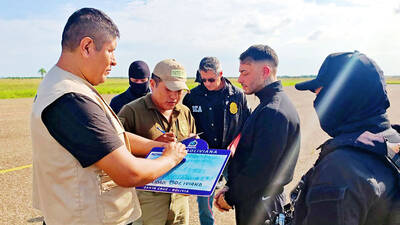
KINGPIN: Marset allegedly laundered the proceeds of his drug enterprise by purchasing and sponsoring professional soccer teams and even put himself in the starting lineups Notorious Latin American narco trafficker Sebastian Marset, who eluded police for years, was handed over to US authorities after his arrest on Friday in Bolivia. Marset, a Uruguayan national who was on the US most-wanted list, was passed to agents of the US Drug Enforcement Administration at Santa Cruz airport in Bolivia, then put on a US airplane, Bolivian state television showed. “The arrest and deportation were carried out pursuant to a court order issued by the US justice system,” Bolivian Minister of Government Marco Antonio Oviedo told reporters. The alleged kingpin was arrested in an upscale neighborhood of Santa
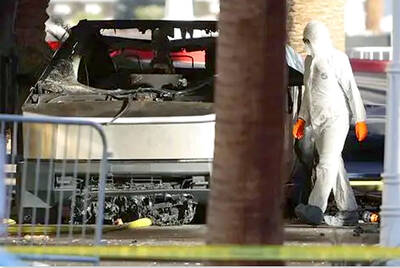
ACTIONABLE ADVICE: The majority of chatbots tested provided guidance on weapons, tactics and target selections, with Perplexity and Meta AI deemed to be the least safe From school shootings to synagogue bombings, leading artificial intelligence (AI) chatbots helped researchers plot violent attacks, according to a study published on Wednesday that highlighted the technology’s potential for real-world harm. Researchers from the nonprofit watchdog Center for Countering Digital Hate and CNN posed as 13-year-old boys in the US and Ireland to test 10 chatbots, including ChatGPT, Google Gemini, Perplexity, Deepseek and Meta AI. Eight of the chatbots assisted the make-believe attackers in more than half the responses, providing advice on “locations to target” and “weapons to use” in an attack, the study said. The chatbots had become a “powerful accelerant for
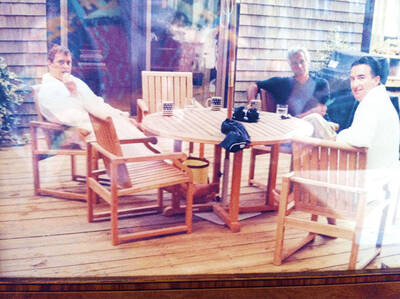
SCANDAL: Other images discovered earlier show Andrew bent over a female and lying across the laps of a number of women, while Mandelson is pictured in his underpants A photograph of former British prince Andrew and veteran politician Peter Mandelson sitting in bathrobes alongside late sex offender Jeffrey Epstein was unearthed on Friday in previously published documents. The image is believed to be the first known photograph of the two men with Epstein. They are currently engulfed in scandal in the UK over their ties to their mutual friend. The undated photograph, first reported by ITV News, shows King Charles III’s disgraced brother and former British ambassador to the US sitting barefoot outside on a wooden deck. They appear to have mugs with a US flag on them
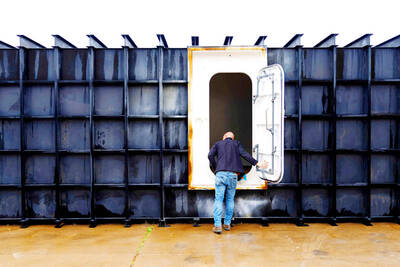
Since the war in the Middle East began nearly two weeks ago, the telephone at Ron Hubbard’s bomb shelter company in Texas has not stopped ringing. Foreign and US clients are rushing to buy his bunkers, seeking refuge in case of air raids, nuclear fallout or apocalypse. With the US and Israel pounding Iran, and Tehran retaliating with strikes across the region, Hubbard has seen demand for his product soar, mostly from Gulf nation customers in Bahrain, Qatar, Kuwait and the United Arab Emirates. “You can imagine how many people are thinking: ‘I wish I had a bomb shelter,’” Hubbard, 63, said in


 RSS
RSS