


The prime ministers of India and Pakistan met briefly on Monday on the sidelines of a nuclear summit in Washington as Islamabad tried to persuade its longtime rival to look beyond the horrors of the Mumbai attacks.
The South Asian nations in February resumed a cautious dialogue that had been cut off since the November 2008 siege of India’s financial capital, which was blamed on the Pakistan-based extremist movement Lashkar-e-Taiba.
The two nuclear powers did not plan talks during a 47-nation summit on nuclear security in Washington, but Pakistani Prime Minister Yousef Raza Gilani shook hands with Indian Prime Minister Manmohan Singh at a dinner reception.
Diplomats from the two nations said the prime ministers exchanged little more than pleasantries and did not hold substantive discussions, but Pakistani Foreign Minister Shah Mehmood Qureshi voiced hope for extensive diplomacy, saying it was “the only way forward” between the two countries.
“We have to look beyond Mumbai. Mumbai was sad, Mumbai was tragic, but we are as much victims of terrorism as India is and so this terrorist threat becomes a common challenge,” Qureshi told reporters.
He appealed to US President Barack Obama to “nudge” the two nations together, voicing concern about the views of both India’s ruling Congress Party and the Bharatiya Janata Party (BJP), the Hindu nationalist opposition.
“Prime Minister Manmohan Singh means well. We have no doubt about that,” Qureshi said. “But the problem is that he has not been able to carry domestic politics along within the Congress Party and the BJP.”
The BJP “has been very hawkish on him, I think unfair to him, and unfair to the region because ... coexistence is the most sensible way forward,” Qureshi said.
Indian investigators have found that Lashkar-e-Taiba handlers based in Pakistan orchestrated the chilling attacks on a top hotel, bar and Jewish center in Mumbai, which left 166 people dead.
Singh has also asked Obama to use his influence, on Sunday asking him to pressure Pakistan to rein in anti-Indian militants.
Singh told Obama “that unfortunately there was no will on the part of the government of Pakistan to punish those responsible for the terrorist crimes in Mumbai,” Indian Foreign Secretary Nirupama Rao said on Sunday.
US authorities have welcomed what they see as Pakistan’s growing resolve to fight against homegrown and Afghan Taliban, but the US has also encouraged Pakistan to do more against Lashkar-e-Taiba, which some experts believe Islamabad’s powerful military and intelligence service find useful to pit against India.
Gilani confirmed that Obama raised Singh’s concerns to him and said his civilian government had no tolerance for extremists.
Gilani, speaking to a roundtable of reporters, vowed never to “allow a handful of extremist bigots and terrorists to represent our peaceful way of life and inclusive culture.”
“We don’t want our soil used against any country and neither would we allow somebody else’s soil to be used against Pakistan,” Gilani said.
Gilani said that Pakistan has already banned some extremist groups and frozen their bank accounts and was seeking more evidence from India against Lashkar-e-Taiba.
“If we have more effective evidence, certainly they will be brought to justice,” Gilani said.
Analyst Bruce Riedel, however, a former CIA officer who led a major strategy review for Obama, said that Lashkar-e-Taiba has “continued to flourish” in Pakistan.
“What makes it so dangerous is that, unlike the mostly Pashtun Taliban, it recruits its followers in the Punjab, the same place where the Pakistani army recruits its officer corps,” he wrote in a paper of the Brookings Institution.
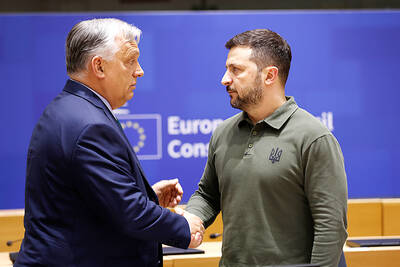
Hungarian authorities temporarily detained seven Ukrainian citizens and seized two armored cars carrying tens of millions of euros in cash across Hungary on suspicion of money laundering, officials said on Friday. The Ukrainians were released on Friday, following their detention on Thursday, but Hungarian officials held onto the cash, prompting Ukraine to accuse Hungary’s Russia-friendly government of illegally seizing the money. “We will not tolerate this state banditism,” Ukrainian Minister of Foreign Affairs Andrii Sybiha said. The seven detained Ukrainians were employees of the Ukrainian state-owned Oschadbank, who were traveling in the two armored cars that were carrying the money between Austria and
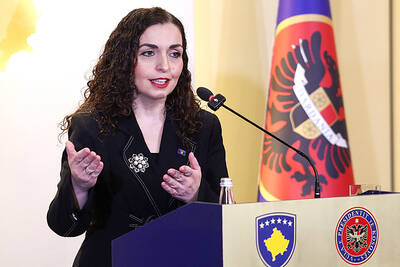
Kosovar President Vjosa Osmani on Friday after dissolving the Kosovar parliament said a snap election should be held as soon as possible to avoid another prolonged political crisis in the Balkan country at a time of global turmoil. Osmani said it is important for Kosovo to wrap up the upcoming election process and form functional institutions for political stability as the war rages in the Middle East. “Precisely because the geopolitical situation is that complex, it is important to finish this electoral process which is coming up,” she said. “It is very hard now to imagine what will happen next.” Kosovo, which declared

MORE BANS: Australia last year required sites to remove accounts held by under-16s, with a few countries pushing for similar action at an EU level and India considering its own ban Indonesia on Friday said it would ban social media access for children under 16, citing threats from online pornography, cyberbullying, online fraud and Internet addiction. “Accounts belonging to children under 16 on high-risk platforms will start to be deactivated, beginning with YouTube, TikTok, Facebook, Instagram, Threads, X, Bigo Live and Roblox,” Indonesian Minister of Communications and Digital Meutya Hafid said. “The government is stepping in so that parents no longer have to fight alone against the giants of the algorithm. Implementation will begin on March 28, 2026,” she said. The social media ban would be introduced in stages “until all platforms fulfill their
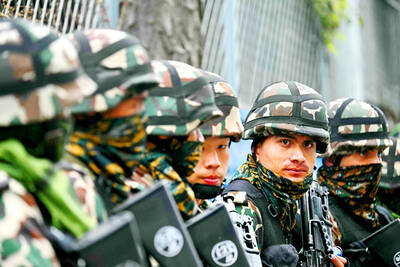
Counting was under way in Nepal yesterday, after a high-stakes parliamentary election to reshape the country’s leadership following protests last year that toppled the government. Key figures vying for power include former Nepalese prime minister K. P. Sharma Oli, rapper-turned-mayor Balendra Shah, who is bidding for the youth vote, and newly elected Nepali Congress party leader Gagan Thapa. In Kathmandu’s tea shops and city squares, people were glued to their phones, checking results as early trends flashed up — suggesting Shah’s centrist Rastriya Swatantra Party (RSP) was ahead. Nepalese Election Commission spokesman Prakash Nyupane said the counting was ongoing “in a peaceful manner”


 RSS
RSS