


First results from Iraq’s parliamentary election showed the prime minister and his secular rival locked in an extremely tight contest amid fraud allegations by rival parties and a chaotic, unpredictable vote count.
The partial tallies released on Thursday came from only five of Iraq’s 18 provinces. However, Iraqi officials who have seen results from across the country said Iraqi Prime Minister Nouri al-Maliki’s coalition appeared to have a narrow edge, though not an outright majority.
That foreshadows tough and lengthy negotiations to build a government and choose a prime minister.
The partial results, posted on TV screens in Baghdad to crowds of reporters, were the first in an election that will determine who governs the country as US troops go home — and whether Iraqis can put behind them deep sectarian tensions that once brought their nation to the brink of civil war.
The initial tallies from Sunday’s vote suggested an exceedingly tight contest between coalitions led by al-Maliki, who gained popularity as security improved, and former prime minister Ayad Allawi, a secular Shiite who sharply criticized the prime minister for failing to boost reconciliation efforts between Iraq’s factions.
The emerging picture was a setback to hard-line religious Shiite political leaders who saw al-Maliki make gains in two southern provinces deep on their turf. Allawi appeared to be drawing on Sunni support north of Baghdad.
Results did not include the race’s big prize — Baghdad — which accounts for 70 of the parliament’s 325 seats.
Thursday’s announcement set off a wave of fraud accusations, largely from Allawi’s Iraqiya coalition, which said it uncovered dozens of violations. It said these included soldiers not being allowed to vote, interference in the electoral commission’s work and some polling stations failing to post results.
In a statement, the group said it found “rigging to an extent that would render the elections useless for reflecting the voice of the Iraqis.”
Election commission officials did not respond specifically to the allegations, but said the commission had received more than 1,000 complaints about potential violations, all of which would be investigated.
Al-Maliki gained ground against hard-line religious parties in two southern provinces. In Babil, where about a third of the ballots had been counted, the prime minister’s State of Law coalition won some 69,000 votes. He also came out on top in Najaf, where his bloc won some 56,000 votes.
The tallies were a blow to al-Maliki’s main Shiite competition, the religious Iraqi National Alliance, which includes a party led by anti-US cleric Moqtada al-Sadr.
Since rising to prominence as part of a Shiite coalition that won the 2005 elections, al-Maliki has tried to recast himself as an inclusive leader for all Iraqis.
Allawi’s non-sectarian Iraqiya list, which included Sunni candidates, fared better in central Iraq, where there are more Sunni voters. In Diyala Province, Iraqiya received almost 43,000 votes, more than four time’s al-Maliki’s take. In Salahuddin, Allawi’s list had more than 34,000 votes, about five times that of al-Maliki.
Analyst Joost Hilterman of the International Crisis Group said the initial results were largely what he expected. He cautioned that final calls are hard to make without knowing about Baghdad.
“Who gets Baghdad is still the most important thing,” he said.
Results from a fifth province, Irbil, showed the Kurdish Alliance, representing the two main Kurdish parties, defeating the upstart Kurdish party, Gorran, in the self-ruled territory.
Speaking to al-Jazeera TV, Ammar al-Hakim, who heads the Shiite Supreme Islamic Iraqi Council, said al-Maliki’s bloc was ahead “by some seats.”
He said the assessment was based on information supplied by 40,000 observers from his alliance.
Almost all Iraqi political parties and coalitions post observers at polling stations and counting centers across the country, serving as a check against fraud.
Chaos reigned through much of the day before the first results were posted on large TV screens, with election officials offering different explanations of how much information would be released and when.
The officials said they had no deadline for releasing final results and were undecided about whether they would publicize more results yesterday.
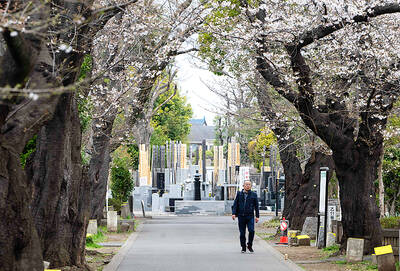
ROCKY RELATIONS: The figures on residents come as Chinese tourist numbers drop following Beijing’s warnings to avoid traveling to Japan The number of Chinese residents in Japan has continued to rise, even as ties between the two countries have become increasingly fractious, data released on Friday showed. As of the end of December last year, the number of Chinese residents had increased by 6.5 percent from the previous year to 930,428. Chinese people accounted for 22.6 percent of all foreign residents in Japan, making them by far the largest group, Japanese Ministry of Justice data showed. Beijing has criticized Tokyo in increasingly strident terms since Japanese Prime Minister Sanae Takaichi last year suggested that a military conflict around Taiwan could
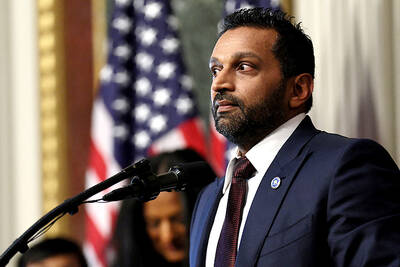
A pro-Iran hacking group claimed to breach FBI Director Kash Patel’s personal e-mail inbox and posted some of the contents online. The e-mails provided by the hacking group include travel details, correspondence with leasing agents in Washington and global entry, and loyalty account numbers. The e-mail address the hackers claim to have compromised has been previously tied to Patel’s personal details, and the leaked e-mails contain photos of Patel and others, in addition to correspondence with family members and colleagues. “The FBI is aware of malicious actors targeting Director Patel’s personal email information,” the agency said in a statement on
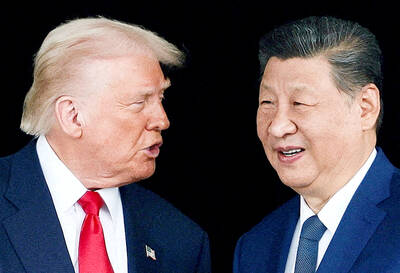
RIVALRY: ‘We know that these are merely symbolic investigations initiated by China, which is in fact the world’s most profligate disrupter of supply chains,’ a US official said China has started a pair of investigations into US trade practices, retaliating against similar probes by US President Donald Trump’s administration as the superpowers stake out positions before an expected presidential summit in May. The move, announced by the Chinese Ministry of Commerce on Friday, is a direct mirror of steps Trump took to revive his tariff agenda after the US Supreme Court last month struck down some of his duties. “China expresses its strong dissatisfaction and firm opposition to these actions,” a ministry spokesperson said in a statement, referring to the so-called Section 301 investigations initiated on March 11.

When a hiker fell from a 55m waterfall in wild New Zealand bush, rescuers were forced to evacuate the badly hurt woman without her dog, which could not be found. After strangers raised thousands of dollars for a search, border collie Molly was flown to safety by a helicopter pilot who was determined to reunite the pet and the owner. A week earlier, an emergency rescue helicopter found the woman with bruises and lacerations after a fall at a rocky spot at the waterfall on the South Island’s West Coast. She was airlifted on March 24, but they were forced to


 RSS
RSS