


Iraq awaited initial results yesterday from polls touted as a test of its young democracy, with Baghdad holding the key as the prime minister’s list and its top secular rival jockeyed for pole position.
Thirty percent of votes were due to be counted by the evening, giving Iraq’s complex range of political blocs their first official indication of how they fared in the second general election since the 2003 fall of former president Saddam Hussein. Iraqi Prime Minister Nuri al-Maliki, a Shiite who helped ease the country’s deadly sectarian strife, emerged on Monday as the front-runner, estimates from officials across the country showed. But he could yet face a tough battle to cling to power after the vote on Sunday that saw millions defy bomb, mortar and rocket attacks which killed 38 people to cast their ballots.
Estimates of early trends in the Baghdad region, which with its 70 parliamentary seats could swing the result of the vote, were not yet available yesterday.
However, officials said on Monday that Maliki’s political bloc was leading the count in nine of Iraq’s 18 provinces.
His State of Law Alliance was ahead in Shiite regions, while Iyad Allawi, a former prime minister who heads the Iraqiya list, led in Sunni areas, estimates obtained from officials across the country showed.
The complete results will be announced on March 18 and the final official results — after any appeals are taken into account — will come at the end of the month.
Months of horse-trading are then likely before a new government is formed.
Early indications were positive for Maliki, however. A source close to him said it now looked as if his list would secure 100 seats in the 325-seat parliament.
Maliki was appointed prime minister in 2005 as a compromise candidate and his administration, with the essential help of the US military, sharply reduced the Sunni-Shiite sectarian strife that killed tens of thousands of Iraqis.
He played down his party’s Shiite religious roots in campaigning for this election and sought to portray himself as the leader who restored security to Iraq, a claim dented by a series of bombings in recent weeks.
Maliki’s main challenger, according to the initial estimates, is Allawi, whose Iraqiya list is a mostly Shiite slate that campaigned on a nationalist and non-sectarian ticket.
The other leading list is the Iraq National Alliance, dominated by two Shiite religious parties — the Supreme Iraqi Islamic Council and the movement of radical leader Moqtada al-Sadr, who led two uprisings against US troops.
Sunday saw Sunni Arabs vote in large numbers, in stark contrast to their 2005 boycott in protest at the rise to power of the long-oppressed Shiite majority.
Overall voter turnout on Sunday was officially given at 62.4 percent.
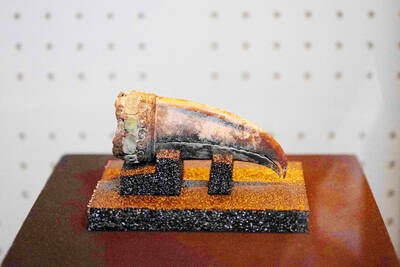
Archeologists in Peru on Thursday said they found the 5,000-year-old remains of a noblewoman at the sacred city of Caral, revealing the important role played by women in the oldest center of civilization in the Americas. “What has been discovered corresponds to a woman who apparently had elevated status, an elite woman,” archeologist David Palomino said. The mummy was found in Aspero, a sacred site within the city of Caral that was a garbage dump for more than 30 years until becoming an archeological site in the 1990s. Palomino said the carefully preserved remains, dating to 3,000BC, contained skin, part of the
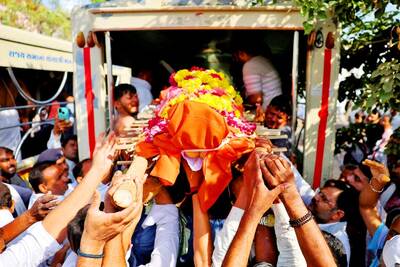
‘WATER WARFARE’: A Pakistani official called India’s suspension of a 65-year-old treaty on the sharing of waters from the Indus River ‘a cowardly, illegal move’ Pakistan yesterday canceled visas for Indian nationals, closed its airspace for all Indian-owned or operated airlines, and suspended all trade with India, including to and from any third country. The retaliatory measures follow India’s decision to suspend visas for Pakistani nationals in the aftermath of a deadly attack by shooters in Kashmir that killed 26 people, mostly tourists. The rare attack on civilians shocked and outraged India and prompted calls for action against their country’s archenemy, Pakistan. New Delhi did not publicly produce evidence connecting the attack to its neighbor, but said it had “cross-border” links to Pakistan. Pakistan denied any connection to

TRUMP EFFECT: The win capped one of the most dramatic turnarounds in Canadian political history after the Conservatives had led the Liberals by more than 20 points Canadian Prime Minister Mark Carney yesterday pledged to win US President Donald Trump’s trade war after winning Canada’s election and leading his Liberal Party to another term in power. Following a campaign dominated by Trump’s tariffs and annexation threats, Carney promised to chart “a new path forward” in a world “fundamentally changed” by a US that is newly hostile to free trade. “We are over the shock of the American betrayal, but we should never forget the lessons,” said Carney, who led the central banks of Canada and the UK before entering politics earlier this year. “We will win this trade war and

Armed with 4,000 eggs and a truckload of sugar and cream, French pastry chefs on Wednesday completed a 121.8m-long strawberry cake that they have claimed is the world’s longest ever made. Youssef El Gatou brought together 20 chefs to make the 1.2 tonne masterpiece that took a week to complete and was set out on tables in an ice rink in the Paris suburb town of Argenteuil for residents to inspect. The effort overtook a 100.48m-long strawberry cake made in the Italian town of San Mauro Torinese in 2019. El Gatou’s cake also used 350kg of strawberries, 150kg of sugar and 415kg of


 RSS
RSS