


While Haiti and Chile face years of rebuilding from two massive quakes, Nicaragua still bears the scars of its powerful 1972 temblor and the tonnes of twisted steel and cement it left behind are now scavenging grounds for the poor.
Mounds of debris from crumbled buildings that were dumped into Xolotlan Lake after the quake are now being brought up and heaped onshore in a government cleanup program that has turned into a godsend for needy scrap metal sellers.
“I’ve been coming here for a month to pick up metal and sell it to buy food, because there are no jobs in this country,” 35-year-old Maritza Guevara said as she sifted through the mass of cement and steel with the help of one of her five children.
Nicaragua is the Western Hemisphere’s second poorest country after Haiti with close to 50 percent underemployment rate and a scant US$995 of GDP per capita, IMF figures from 2008 showed.
“With what we scrounge, we can barely eat because we just have enough for some rice and beans” for the kids, Guevara said.
Children as young as 10 help their parents break clumps of cement apart to free at least 46kg of rebar and scrap iron in a day that is sold for US$8.50 to scrap metal merchants waiting in nearby trucks.
“I only come here to bust up cement so I can buy food for my eight brothers,” said 15-year-old Jose Ruiz, who was demolishing the rubble after school — he is in the fourth grade.
The Dec. 23, 1972, earthquake in Managua killed 5,000 people and left more than a quarter million homeless. The rubble of countless buildings and homes was by government decision dumped in Xolotlan Lake, also known as Lake Managua, one of the biggest and most polluted in Nicaragua.
The administration of Nicaraguan President Daniel Ortega a year ago obtained international funding to restore the lake back to health. One month ago, dredgers and other heavy equipment began pulling the rubble from the lake’s murky bottom.
As soon as the material began piling up onshore, people from the poorer districts of Managua and nearby towns of Manchester, Cristo del Rosario, Acahualinca and Ruben Dario descended on the lakeshore to work on it day and night.
“It’s tough work, but we’ve got no choice; there are no jobs,” said Fredy Sirias, 21, as he toiled atop some slabs at the water’s edge.
Sirias cannot read or write. He left home near the capital a month ago to make some money to support his 16-year-old fiancee and their first baby expected next month.
“With the money I make, I can buy food and diapers,” he said.
“It’s the only job we’ve got for now,” said 39-year-old Silvio Munoz, who was sharing the rubble pile with Sirias.
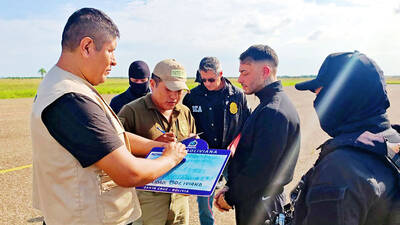
KINGPIN: Marset allegedly laundered the proceeds of his drug enterprise by purchasing and sponsoring professional soccer teams and even put himself in the starting lineups Notorious Latin American narco trafficker Sebastian Marset, who eluded police for years, was handed over to US authorities after his arrest on Friday in Bolivia. Marset, a Uruguayan national who was on the US most-wanted list, was passed to agents of the US Drug Enforcement Administration at Santa Cruz airport in Bolivia, then put on a US airplane, Bolivian state television showed. “The arrest and deportation were carried out pursuant to a court order issued by the US justice system,” Bolivian Minister of Government Marco Antonio Oviedo told reporters. The alleged kingpin was arrested in an upscale neighborhood of Santa
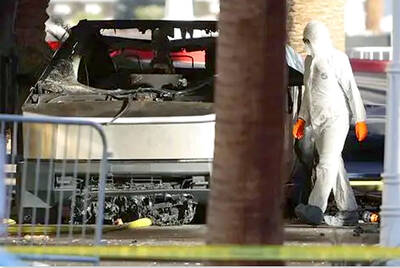
ACTIONABLE ADVICE: The majority of chatbots tested provided guidance on weapons, tactics and target selections, with Perplexity and Meta AI deemed to be the least safe From school shootings to synagogue bombings, leading artificial intelligence (AI) chatbots helped researchers plot violent attacks, according to a study published on Wednesday that highlighted the technology’s potential for real-world harm. Researchers from the nonprofit watchdog Center for Countering Digital Hate and CNN posed as 13-year-old boys in the US and Ireland to test 10 chatbots, including ChatGPT, Google Gemini, Perplexity, Deepseek and Meta AI. Eight of the chatbots assisted the make-believe attackers in more than half the responses, providing advice on “locations to target” and “weapons to use” in an attack, the study said. The chatbots had become a “powerful accelerant for
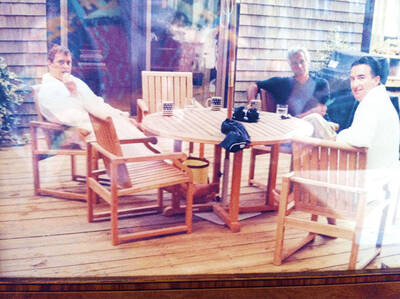
SCANDAL: Other images discovered earlier show Andrew bent over a female and lying across the laps of a number of women, while Mandelson is pictured in his underpants A photograph of former British prince Andrew and veteran politician Peter Mandelson sitting in bathrobes alongside late sex offender Jeffrey Epstein was unearthed on Friday in previously published documents. The image is believed to be the first known photograph of the two men with Epstein. They are currently engulfed in scandal in the UK over their ties to their mutual friend. The undated photograph, first reported by ITV News, shows King Charles III’s disgraced brother and former British ambassador to the US sitting barefoot outside on a wooden deck. They appear to have mugs with a US flag on them
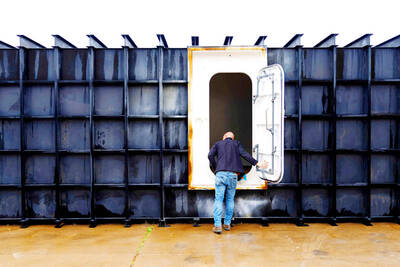
Since the war in the Middle East began nearly two weeks ago, the telephone at Ron Hubbard’s bomb shelter company in Texas has not stopped ringing. Foreign and US clients are rushing to buy his bunkers, seeking refuge in case of air raids, nuclear fallout or apocalypse. With the US and Israel pounding Iran, and Tehran retaliating with strikes across the region, Hubbard has seen demand for his product soar, mostly from Gulf nation customers in Bahrain, Qatar, Kuwait and the United Arab Emirates. “You can imagine how many people are thinking: ‘I wish I had a bomb shelter,’” Hubbard, 63, said in


 RSS
RSS