


An independent review of the train breakdowns that stranded thousands of travelers in Britain and France in December blamed the Eurostar train company and the operator of the English Channel tunnel on Friday for being unprepared for severe winter weather and rebuked their emergency responses as slow and uncoordinated.
The series of service breakdowns had raised “serious concerns” about the procedures in place for dealing with a loss of power inside the 50km-long Channel Tunnel, the report said. Train passengers were marooned inside the tunnel for hours without food, water or air-conditioning.
Eurostar said on Friday that it planned to invest about US$47 million to improve the “resilience” of its trains to severe weather and to improve passenger care. The company’s chief executive, Richard Brown, said Eurostar had already made many of the changes recommended in the report.
The report, commissioned by the French and British governments, faulted Eurostar as failing to adequately maintain and winterize its high-speed trains to protect sensitive components from malfunction resulting from excessive buildup of snow and moisture.
The tunnel operator, Eurotunnel, was criticized as having unsatisfactory communications systems inside the tunnel that could have given employees direct contact with train drivers and other Eurostar staff.
“If a train breaks down and passengers have to be rescued or evacuated, this must be done with greater speed and consideration,” the authors of the report, Christopher Garnett, a former chief executive of Great North Eastern Railway in Britain, and Claude Gressier, a civil engineer and board member the French national railway, said in a statement. “In an emergency, passengers need to have prompt information and regular updates.”
A series of Eurostar breakdowns beginning on Dec. 18 stranded more than 2,000 passengers for as long as 16 hours on five London-bound trains. The service was subsequently suspended for three days, disrupting the holiday travel plans of an estimated 90,000 people.
Passengers trapped in the dark, overheated tunnel endured serious distress, the report found.
“Some passengers suffered stress and panic attacks, and others started to feel unwell due to the heat,” the report said.
The report recommended that Eurostar carry out a series of mechanical upgrades to its trains, including the systems that protect sensitive electronic components and air-intake systems from snow, as well as a redesign of the roof of the train’s power car. It also called on the company to place additional rescue locomotives near the tunnel’s exits.
“I know we let our passengers down before Christmas, and I am determined to put things right,” Brown said. “Our focus now is on fully implementing the recommendations from the review as well as those additional measures that we have identified ourselves to improve our service.”
The report found that crisis communication between Eurotunnel and Eurostar was poor and recommended a series of measures, including installing a live video link between the companies’ crisis centers. It also called for a dedicated wireless communication system inside the tunnel.
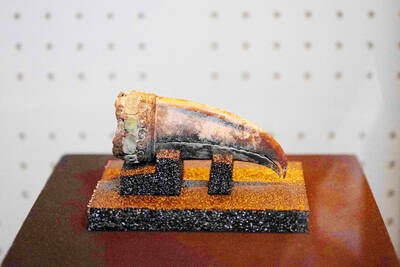
Archeologists in Peru on Thursday said they found the 5,000-year-old remains of a noblewoman at the sacred city of Caral, revealing the important role played by women in the oldest center of civilization in the Americas. “What has been discovered corresponds to a woman who apparently had elevated status, an elite woman,” archeologist David Palomino said. The mummy was found in Aspero, a sacred site within the city of Caral that was a garbage dump for more than 30 years until becoming an archeological site in the 1990s. Palomino said the carefully preserved remains, dating to 3,000BC, contained skin, part of the
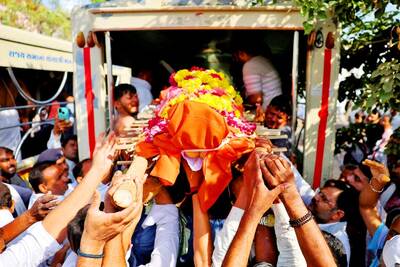
‘WATER WARFARE’: A Pakistani official called India’s suspension of a 65-year-old treaty on the sharing of waters from the Indus River ‘a cowardly, illegal move’ Pakistan yesterday canceled visas for Indian nationals, closed its airspace for all Indian-owned or operated airlines, and suspended all trade with India, including to and from any third country. The retaliatory measures follow India’s decision to suspend visas for Pakistani nationals in the aftermath of a deadly attack by shooters in Kashmir that killed 26 people, mostly tourists. The rare attack on civilians shocked and outraged India and prompted calls for action against their country’s archenemy, Pakistan. New Delhi did not publicly produce evidence connecting the attack to its neighbor, but said it had “cross-border” links to Pakistan. Pakistan denied any connection to

TRUMP EFFECT: The win capped one of the most dramatic turnarounds in Canadian political history after the Conservatives had led the Liberals by more than 20 points Canadian Prime Minister Mark Carney yesterday pledged to win US President Donald Trump’s trade war after winning Canada’s election and leading his Liberal Party to another term in power. Following a campaign dominated by Trump’s tariffs and annexation threats, Carney promised to chart “a new path forward” in a world “fundamentally changed” by a US that is newly hostile to free trade. “We are over the shock of the American betrayal, but we should never forget the lessons,” said Carney, who led the central banks of Canada and the UK before entering politics earlier this year. “We will win this trade war and

Armed with 4,000 eggs and a truckload of sugar and cream, French pastry chefs on Wednesday completed a 121.8m-long strawberry cake that they have claimed is the world’s longest ever made. Youssef El Gatou brought together 20 chefs to make the 1.2 tonne masterpiece that took a week to complete and was set out on tables in an ice rink in the Paris suburb town of Argenteuil for residents to inspect. The effort overtook a 100.48m-long strawberry cake made in the Italian town of San Mauro Torinese in 2019. El Gatou’s cake also used 350kg of strawberries, 150kg of sugar and 415kg of


 RSS
RSS