

Colombian President Alvaro Uribe says only God, the people and the courts will decide whether he can seek re-election for a third term in May, but he also faces a race against time even if he wins support to run again.
Uribe, who is Washington’s staunchest ally in South America, faces a March 12 deadline to register as a candidate, with several legal hurdles still to cross before then.
Colombia’s constitutional court opened a debate on Thursday on whether to approve a re-election law, but the national registry says it needs two months after a positive court ruling to organize a referendum for a vote on amending the Constitution to allow Uribe to run again.
That threatens to keep the 57-year-old Uribe from registering.
“Even if the re-election law gets the nod from the court in the next days, the schedule for the ensuing referendum looks impossibly tight,” said Christian Voelkel, an analyst with IHS Global Insight.
Uribe first took office in 2002, was re-elected four years later and remains a popular leader, largely because of his successful US-backed campaign against Latin America’s oldest left-wing guerrilla army.
He has been evasive on whether he will run, calling it a “crossroads of the soul,” but his state machinery has been hard at work on re-election and his supporters are already looking for other ways to get him on the ballot on May 30.
His bid appeared to take a knock last week when local media said one of the constitutional court judges had recommended his eight peers reject the referendum because of irregularities.
The court has up to two months to make a final ruling, but it is organizing extra sessions and plans a quick decision as pressure builds ahead of the election.
That decision could be to approve or reject the referendum, or even send the law back to Congress to rectify some of the irregularities, said Jaime Castro, a constitutional lawyer.
Uribe’s backers admit time is short, but say if the court approves it, a referendum could be organized within a few weeks. They also argue that Uribe should be able to register by April 5 — the deadline for candidates involved in internal party ballots — rather than the March 12 deadline.
“I don’t think the window of opportunity has closed,” said Patrick Esteruelas at Eurasia Group in New York. “I find it extremely hard to believe if it comes down to a couple of weeks the government won’t find a way of somehow stretching that deadline.”
Uribe is the most popular president in recent Colombian history and his second term saw spectacular successes against rebel leaders of the Revolutionary Armed Forces of Colombia, but his political armor was dented by scandals over rights abuses by troops and corruption investigations into some of his close allies.
A national poll in November showed his popularity had slipped to 64 percent, while Colombians who supported his re-election fell to 52 percent from 58 percent.
Uribe was re-elected in 2006, but the bid to change the Constitution again for him is fueling worries over the strength of Colombia’s democracy. It also draws comparisons to his left-wing neighbors in Venezuela and Ecuador, criticized for changing their Constitutions to extend their rule.
Wall Street applauds Uribe’s security and pro-investment policies, and local stocks and bonds could see a brief sell-off should he not run. The Colombian peso dipped after the judge’s recommendation that the court reject his bid.
Any candidate who replaces Uribe in the presidential palace, however, will stick closely enough to his popular line that a dramatic shift away from his basic policies is unlikely.

Beijing yesterday dismissed as “groundless speculation” a report that said Nvidia CEO Jensen Huang (黃仁勳) was the target of a Chinese spy plot. The article by the New York Times, published on Thursday, said that US intelligence officials concluded that a Chinese executive linked to a Singapore-based data center company had been funneling information to Beijing. “The report in question is based on groundless speculation and is nothing more than an attempt to smear China,” Chinese Ministry of Foreign Affairs spokesman Guo Jiakun (郭嘉昆) told a regular briefing. China is in a race for tech dominance with the US, which restricts the export

Long dubbed an “air-conditioned nation,” Singapore is experimenting with cooling alternatives from chilled beams to “passive displacement” to curb its thirst for energy-guzzling air-conditioning. The city-state has the highest per-capita air-conditioner ownership rate in Southeast Asia, with about 99 percent of private residences equipped with cooling units. Singapore’s local building sector accounts for one-fifth of its emissions, while cooling itself accounts for 40 to 60 percent of a building’s energy consumption, according to studies. A stroll down Orchard Road highlights that dependence. Shoppers are greeted by blasts of cool air that waft into the street as doors swing open — a major draw
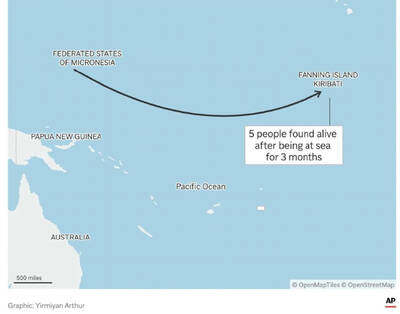
KIRIBATI: Nine people on a skiff had been reported missing after they failed to return to Ruo Island in Micronesia on July 30. Four people remained missing Five people, including two children, were rescued this week in the South Pacific island nation of Kiribati after three months drifting at sea in a 20-foot (6m) skiff, authorities said. Another four remained missing. Villagers rescued the group on Sunday off Fanning Island in Kiribati, the Australian Broadcasting Corp (ABC) reported, after they had drifted an estimated 5,400km east from the Federated States of Micronesia. The US Coast Guard in Guam yesterday confirmed that the skiff with nine people aboard had been reported missing after it failed to return to Ruo Island in Micronesia on July 30. 10-DAY SEARCH A 10-day search covering

33 MISSING: The unprecedented number of empty seats at the fifth plenum, an annual gathering of top officials, serve as a symbol of the extent of the purges under Xi Jinping China expelled a record number of officials from the Chinese Communist party (CCP) as it concluded a major political gathering, which saw an unprecedented number of empty seats indicating the scale of the purges under Chinese President Xi Jinping (習近平). A record 33 members were expelled at this week’s fifth plenum, a gathering of top officials that takes place roughly once a year. Just 279 of the full and alternate members of the CCP’s Central Committee attended this week’s gathering, compared with the 376 originally named as members in 2022. That means that more than 25 percent of the original cohort were


 RSS