


The dream of turning Australia’s tropical north into a major food bowl to replace drought-stricken southern farmlands and feed a future Asia has been shattered by a new report released yesterday.
Despite 1 billion liters of annual rainfall, the equivalent of 2,000 Sydney harbors, northern Australia has limited water, with 65 percent of rain lost through evaporation and 20 percent in rivers, while only 15 percent recharges groundwater reserves.
And climate change will make northern Australia hotter and drier by 2030, reducing water availability, the report by the Northern Australian Land and Water Taskforce said. Northern Australia’s resources boom, with miners Rio Tinto and BHP Billiton fueling China’s growth, is forecast to continue to grow significantly.
However, water scarcity in the north will be a major issue for future mining, along with access to skilled labor, the report on sustainable development in northern Australia said.
“Given the significant growth anticipated in this industry, it will be important to monitor the impact of the mining and resources industry on the water balance in northern Australia,” the government-commissioned report said.
Farmers and rural politicians have for decades called for the “Top End” of Australia to be developed into a food bowl, citing the success of the nation’s largest irrigation scheme, the Ord River Irrigation Scheme in the far northwest. The Ord scheme produces fresh fruit and vegetables, mainly for export to Asia.
“It will not be the food bowl for the world,” Western Australian state politician Gary Gray said after the reports release.

VAGUE: The criteria of the amnesty remain unclear, but it would cover political violence from 1999 to today, and those convicted of murder or drug trafficking would not qualify Venezuelan Acting President Delcy Rodriguez on Friday announced an amnesty bill that could lead to the release of hundreds of prisoners, including opposition leaders, journalists and human rights activists detained for political reasons. The measure had long been sought by the US-backed opposition. It is the latest concession Rodriguez has made since taking the reins of the country on Jan. 3 after the brazen seizure of then-Venezuelan president Nicolas Maduro. Rodriguez told a gathering of justices, magistrates, ministers, military brass and other government leaders that the ruling party-controlled Venezuelan National Assembly would take up the bill with urgency. Rodriguez also announced the shutdown
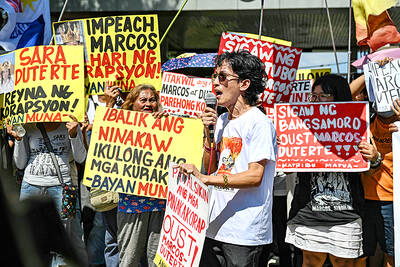
Civil society leaders and members of a left-wing coalition yesterday filed impeachment complaints against Philippine Vice President Sara Duterte, restarting a process sidelined by the Supreme Court last year. Both cases accuse Duterte of misusing public funds during her term as education secretary, while one revives allegations that she threatened to assassinate former ally Philippine President Ferdinand Marcos Jr. The filings come on the same day that a committee in the House of Representatives was to begin hearings into impeachment complaints against Marcos, accused of corruption tied to a spiraling scandal over bogus flood control projects. Under the constitution, an impeachment by the
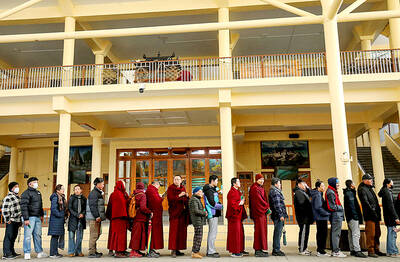
Exiled Tibetans began a unique global election yesterday for a government representing a homeland many have never seen, as part of a democratic exercise voters say carries great weight. From red-robed Buddhist monks in the snowy Himalayas, to political exiles in megacities across South Asia, to refugees in Australia, Europe and North America, voting takes place in 27 countries — but not China. “Elections ... show that the struggle for Tibet’s freedom and independence continues from generation to generation,” said candidate Gyaltsen Chokye, 33, who is based in the Indian hill-town of Dharamsala, headquarters of the government-in-exile, the Central Tibetan Administration (CTA). It

China executed 11 people linked to Myanmar criminal gangs, including “key members” of telecom scam operations, state media reported yesterday, as Beijing toughens its response to the sprawling, transnational industry. Fraud compounds where scammers lure Internet users into fake romantic relationships and cryptocurrency investments have flourished across Southeast Asia, including in Myanmar. Initially largely targeting Chinese speakers, the criminal groups behind the compounds have expanded operations into multiple languages to steal from victims around the world. Those conducting the scams are sometimes willing con artists, and other times trafficked foreign nationals forced to work. In the past few years, Beijing has stepped up cooperation


 RSS
RSS