


For the US Marines patrolling the dusty footpaths of southern Afghanistan, a bomb-sniffing black Labrador can mean the difference between life and death.
These “dogs of war” have saved countless lives and their record for finding hidden explosives has won them a loyal following.
“They are 98 percent accurate. We trust these dogs more than metal detectors and mine sweepers,” Corporal Andrew Guzman said.
Trained to detect five kinds of threat, from military grade C-4 plastic explosive to common chemicals used by the Taliban to make improvised explosive devices (IEDs), the dogs play a vital role alongside their human comrades.
Bomb expert Sergeant Crush is all concentration as he leads a foot patrol by two squads of US Marines deployed to Afghanistan as part of Washington’s fresh surge to end an eight-year insurgency by the Taliban.
His job along with Corporal Goodwin is to lead the men to safety through dusty footpaths and compounds where Taliban militants plant deadly bombs that have left many troops dead in recent months.
They are from a group of four Labradors, who are on average four years old and have all seen action in Iraq and Afghanistan.
“These dogs are great. They keep our Marines alive,” said First Lieutenant Aaron MacLean, 2nd Platoon commander of the Marines 1st Battalion, 6th Regiment Charlie Company, to which the dog team is attached.
Crush suddenly goes on a swift bound, sniffing out a corner of a compound in the outskirts of a Taliban stronghold in Helmand Province.
There is a quick change in his demeanor, his muscles tense up, he freezes, sticks out his tail and then lies down with his paws extended up front. The area turned out to have been a former storage place for ammonium nitrate, a fertilizer compound recently banned by the government that the Taliban commonly use in making powerful homemade bombs.
“It’s better safe than sorry,” Guzman said.
Just days earlier two squads of Marines were ambushed and trapped in a compound. Two Marines died after stepping on the pressure plates of IEDs, just minutes before the dogs were to have cleared the area.
The force of the explosion threw the handlers and the dogs to the ground, but they quickly got up and resumed their jobs.
The dogs also provide an emotional crutch for young Marines facing death every day. They crowd around the dogs and play with them inside the camp. There are frequent questions about adopting them after the Labradors end their tour.
Lance Corporal George Grimm, the handler of Corporal Brooks, said most Marines feel safer with his bomb team leading the way.
Brooks, a three year-old Labrador with tan fur, has been deployed three times in Iraq and Afghanistan and has helped with the recovery of approximately 14 bombs and saved many lives.
One sniffer named Ringo gained a legendary reputation for having found as many as 30 daisy-chain landmines in Iraq, he said.
“Our life is in this boy’s hands pretty much,” said Grimm, a 19-year-old who has been Brooks’ handler since late last year.
Grimm grabs a rubber toy called a “konk” and lets Brooks nibble on it.
“They don’t ask for much except to be taken cared of,” he said.
Handlers said the US government spends huge amounts of money to train the dogs in a civilian-led program contracted out by the defense department.
They begin training when they are puppies, and by the time they reach two-and-half-years old, are ready to be deployed.
The bomb squad in Afghanistan prefer using pure-bred Labradors over sentry dogs such as German Shepherds because they are easier to train. Labradors are also hunting dogs who can pick up a scent as far as 500m away.
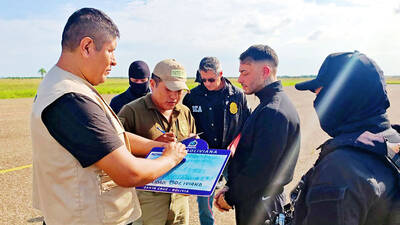
KINGPIN: Marset allegedly laundered the proceeds of his drug enterprise by purchasing and sponsoring professional soccer teams and even put himself in the starting lineups Notorious Latin American narco trafficker Sebastian Marset, who eluded police for years, was handed over to US authorities after his arrest on Friday in Bolivia. Marset, a Uruguayan national who was on the US most-wanted list, was passed to agents of the US Drug Enforcement Administration at Santa Cruz airport in Bolivia, then put on a US airplane, Bolivian state television showed. “The arrest and deportation were carried out pursuant to a court order issued by the US justice system,” Bolivian Minister of Government Marco Antonio Oviedo told reporters. The alleged kingpin was arrested in an upscale neighborhood of Santa
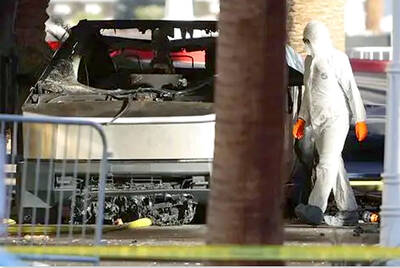
ACTIONABLE ADVICE: The majority of chatbots tested provided guidance on weapons, tactics and target selections, with Perplexity and Meta AI deemed to be the least safe From school shootings to synagogue bombings, leading artificial intelligence (AI) chatbots helped researchers plot violent attacks, according to a study published on Wednesday that highlighted the technology’s potential for real-world harm. Researchers from the nonprofit watchdog Center for Countering Digital Hate and CNN posed as 13-year-old boys in the US and Ireland to test 10 chatbots, including ChatGPT, Google Gemini, Perplexity, Deepseek and Meta AI. Eight of the chatbots assisted the make-believe attackers in more than half the responses, providing advice on “locations to target” and “weapons to use” in an attack, the study said. The chatbots had become a “powerful accelerant for
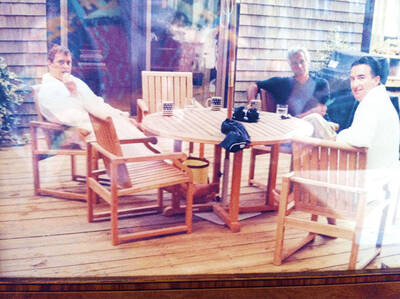
SCANDAL: Other images discovered earlier show Andrew bent over a female and lying across the laps of a number of women, while Mandelson is pictured in his underpants A photograph of former British prince Andrew and veteran politician Peter Mandelson sitting in bathrobes alongside late sex offender Jeffrey Epstein was unearthed on Friday in previously published documents. The image is believed to be the first known photograph of the two men with Epstein. They are currently engulfed in scandal in the UK over their ties to their mutual friend. The undated photograph, first reported by ITV News, shows King Charles III’s disgraced brother and former British ambassador to the US sitting barefoot outside on a wooden deck. They appear to have mugs with a US flag on them
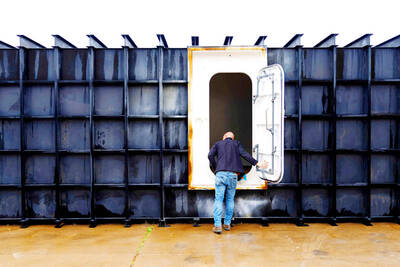
Since the war in the Middle East began nearly two weeks ago, the telephone at Ron Hubbard’s bomb shelter company in Texas has not stopped ringing. Foreign and US clients are rushing to buy his bunkers, seeking refuge in case of air raids, nuclear fallout or apocalypse. With the US and Israel pounding Iran, and Tehran retaliating with strikes across the region, Hubbard has seen demand for his product soar, mostly from Gulf nation customers in Bahrain, Qatar, Kuwait and the United Arab Emirates. “You can imagine how many people are thinking: ‘I wish I had a bomb shelter,’” Hubbard, 63, said in


 RSS
RSS