


The ringleader of a homegrown terror plot that planned to set off truck bombs in front of Canada’s main stock exchange and two government buildings was given a life sentence on Monday.
Zakaria Amara, 24, pleaded guilty in October. He acknowledged being a leader of the so-called Toronto 18 plot to set off bombs outside Toronto’s Stock Exchange, a building housing Canada’s spy agency and a military base. The goal was to scare Canada into removing its troops from Afghanistan.
Amara, a Jordanian-born Canadian citizen, received Canada’s first life sentence for a terrorism offense.
The 2006 arrests of Amara and 17 others made international headlines and heightened fears in a country where many people thought they were relatively immune from terrorist strikes.
Judge Bruce Durno said on Monday that the attack would have been the most horrific crime in Canada’s history if the plot been successful.
“What this case revealed was spine-chilling,” Durno said. “The potential for loss of life existed on a scale never before seen in Canada.”
“Zakaria Amara did not just commit a criminal offense. He committed a terrorist offense that would have had catastrophic and fatal consequences,” Durno said. “He did not do it as a foot soldier, he did so as the leader.”
Amara had his head down, staring at the floor during his sentencing. After the judge read his sentencing Amara asked to address the judge and said: “I just want to reassure you that the promises I made [to rehabilitate], I’ll do my best.”
Before he left the courtroom, he blew a kiss to his family.
The prosecution sought life imprisonment, while Amara’s defense asked for a sentence of between 18 and 20 years. The life sentence is the stiffest penalty yet imposed under Canadian anti-terrorism laws, but Durno said Amara will be eligible to apply for parole after serving six years and three months in prison — around the time of his 30th birthday. Durno said he didn’t want to permanently decide Amara’s fate.
However, defense lawyer Michael Lacy said the parole board isn’t likely to grant Amara parole after six years and three months.
“While he may be eligible for parole in six-and-a-half years that doesn’t mean he will be paroled,” Lacy said.
Lacy said they were disappointed with the sentence in light of his Amara’s “genuine expressions of remorse and in light of his denunciation of the terrorist activity.”
He said they haven’t decided whether to appeal.
Royal Canadian Mounted Police Superintendent Jamie Jagoe said the case illustrates that Canada is not immune to terrorism.
Wesley Wark, a University of Toronto professor and national security expert, said the unprecedented life sentence is significant, and he doubts Amara will be granted parole after six years.
Prosecutors said Amara planned to rent U-Haul trucks, pack them with explosives and detonate them via remote control toward the end of 2006. Police found he used a public library computer to conduct searches on bomb-making and the chemicals needed for explosives. A search of his home also turned up a bomb-making manual, circuit boards, and a device that could trigger an explosion via a cellphone.
Amara apologized in an open letter to Canadians at his sentencing hearing on Thursday, saying he deserved nothing but Canadians’ contempt.
Amara was born in Jordan and baptized as an Orthodox Christian before he converted to Islam at age 10. His family lived in Cyprus, Saudi Arabia and Jordan before they moved to Canada in 1997.
Amara, who is married and has a four-year old daughter, worked at a gas station at the time of his arrest, when he was 20. He was a first-year electronics student at a local college.
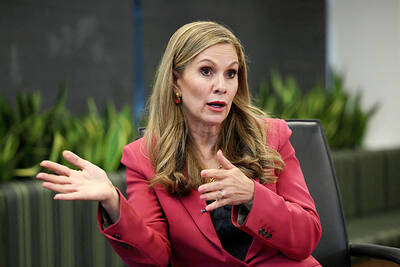
Australians were downloading virtual private networks (VPNs) in droves, while one of the world’s largest porn distributors said it was blocking users from its platforms as the country yesterday rolled out sweeping online age restriction. Australia in December became the first country to impose a nationwide ban on teenagers using social media. A separate law now requires artificial intelligence (AI)-powered chatbot services to keep certain content — including pornography, extreme violence and self-harm and eating disorder material — from minors or face fines of up to A$49.5 million (US$34.6 million). The country also joined Britain, France and dozens of US states requiring
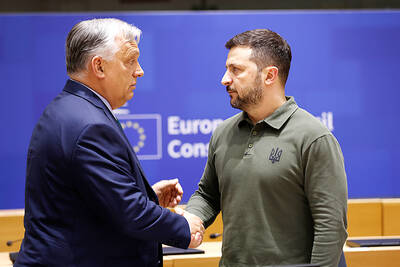
Hungarian authorities temporarily detained seven Ukrainian citizens and seized two armored cars carrying tens of millions of euros in cash across Hungary on suspicion of money laundering, officials said on Friday. The Ukrainians were released on Friday, following their detention on Thursday, but Hungarian officials held onto the cash, prompting Ukraine to accuse Hungary’s Russia-friendly government of illegally seizing the money. “We will not tolerate this state banditism,” Ukrainian Minister of Foreign Affairs Andrii Sybiha said. The seven detained Ukrainians were employees of the Ukrainian state-owned Oschadbank, who were traveling in the two armored cars that were carrying the money between Austria and
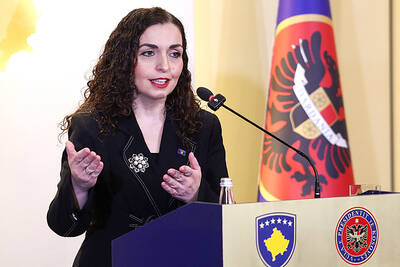
Kosovar President Vjosa Osmani on Friday after dissolving the Kosovar parliament said a snap election should be held as soon as possible to avoid another prolonged political crisis in the Balkan country at a time of global turmoil. Osmani said it is important for Kosovo to wrap up the upcoming election process and form functional institutions for political stability as the war rages in the Middle East. “Precisely because the geopolitical situation is that complex, it is important to finish this electoral process which is coming up,” she said. “It is very hard now to imagine what will happen next.” Kosovo, which declared

MORE BANS: Australia last year required sites to remove accounts held by under-16s, with a few countries pushing for similar action at an EU level and India considering its own ban Indonesia on Friday said it would ban social media access for children under 16, citing threats from online pornography, cyberbullying, online fraud and Internet addiction. “Accounts belonging to children under 16 on high-risk platforms will start to be deactivated, beginning with YouTube, TikTok, Facebook, Instagram, Threads, X, Bigo Live and Roblox,” Indonesian Minister of Communications and Digital Meutya Hafid said. “The government is stepping in so that parents no longer have to fight alone against the giants of the algorithm. Implementation will begin on March 28, 2026,” she said. The social media ban would be introduced in stages “until all platforms fulfill their


 RSS
RSS