


Drug addicts are denied proper treatment in China’s state-run rehabilitation centers and are sometimes beaten and forced to work without pay, a human rights group said on Thursday.
A 2008 law demanding humanitarian treatment and banning punishment of drug users in detention has been poorly implemented, leading to continuing — sometimes lethal — abuse, Human Rights Watch said in a report.
“Warehousing large numbers of drug users and subjecting them to forced labor and physical abuse is not rehabilitation,” Joe Amon, the New York-based group’s director of health and human rights, said in a statement.
“The Chinese government should stop these abuses and ensure that the rights of suspected drug users are fully respected,” Amon said.
The report examines China’s centers for “compulsory isolation and detoxification” and includes interviews with 33 current and former detainees and 25 workers for private groups dealing with AIDS and drug-use issues.
Chinese drug addicts are routinely sent to such detention houses for terms of at least two years, without charge or trial. At any given time, about half a million addicts are believed to be held, the report said. Most are heroin users.
The 2008 law ended the practice of sending drug users to labor camps, ordering them instead to be sent for community rehabilitation or to specialized drug rehabilitation centers. It also banned physical and verbal abuse and required that they be provided with proper treatment and paid for any work they performed.
However, Human Rights Watch said the law was vaguely defined and has been largely ignored, resulting in a continuation of past practices under a different legal rubric.
Virtually wiped out after the 1949 Communist revolution, drug use came roaring back in the 1980s following the relaxation of economic and social strictures. China now has about 1.2 million registered drug addicts, although the actual number of users is believed to be far higher.
Giovanni Nicotera, who heads the UN Office on Drugs and Crime’s China office, said the government knows the system doesn’t work — addicts going through rehabilitation at these centers very often return to drugs — and is working to address the problems.
“Being detained in these centers not only does not help drug users to recover, as evidenced by the high rates of relapse, but also increases the likelihood that an individual will become infected with HIV,” said Nicotera, who had not seen the Human Rights Watch report.
Recent advances include the setting up of methadone clinics and adoption of new laws and regulations, he said.
Despite that, AIDS activist Wan Yanhai (萬延海), founder of the Beijing-based Aizhixing Institute, said many addicts remain fearful of the rehabilitation system.
“Many drug users, when caught by police, would rather admit that they are trafficking drugs than using drugs because at least there is some kind of legal procedure involved in a drug trafficking charge,” Wan said.
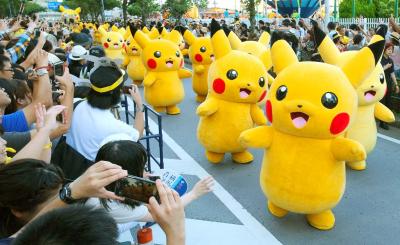
China’s military news agency yesterday warned that Japanese militarism is infiltrating society through series such as Pokemon and Detective Conan, after recent controversies involving events at sensitive sites. In recent days, anime conventions throughout China have reportedly banned participants from dressing as characters from Pokemon or Detective Conan and prohibited sales of related products. China Military Online yesterday posted an article titled “Their schemes — beware the infiltration of Japanese militarism in culture and sports.” The article referenced recent controversies around the popular anime series Pokemon, Detective Conan and My Hero Academia, saying that “the evil influence of Japanese militarism lives on in

DIPLOMATIC THAW: The Canadian prime minister’s China visit and improved Beijing-Ottawa ties raised lawyer Zhang Dongshuo’s hopes for a positive outcome in the retrial China has overturned the death sentence of Canadian Robert Schellenberg, a Canadian official said on Friday, in a possible sign of a diplomatic thaw as Canadian Prime Minister Mark Carney seeks to boost trade ties with Beijing. Schellenberg’s lawyer, Zhang Dongshuo (張東碩), yesterday confirmed China’s Supreme People’s Court struck down the sentence. Schellenberg was detained on drug charges in 2014 before China-Canada ties nosedived following the 2018 arrest in Vancouver of Huawei chief financial officer Meng Wanzhou (孟晚舟). That arrest infuriated Beijing, which detained two Canadians — Michael Spavor and Michael Kovrig — on espionage charges that Ottawa condemned as retaliatory. In January

A sign hanging from a rusty ice-green shipping container installed by Thai forces on what they say is the border with Cambodia reads: “Cambodian citizens are strictly prohibited from entering this area.” On opposite sides of the makeshift barricade, fronted by coils of barbed wire, Cambodians lamented their lost homes and livelihoods as Thailand’s military showed off its gains. Thai forces took control of several patches of disputed land along the border during fighting last year, which could amount to several square kilometers in total. Cambodian Kim Ren said her house in Chouk Chey used to stand on what is now the Thai

NEW RULES: There would be fewer school days, four-day workweeks, and a reduction in transportation services as the country battles a crisis exacerbated by US pressure The Cuban government on Friday announced emergency measures to address a crippling energy crisis worsened by US sanctions, including the adoption of a four-day work week for state-owned companies and fuel sale restrictions. Cuban Deputy Prime Minister Oscar Perez-Oliva Fraga blamed Washington for the crisis, telling Cuban television the government would “implement a series of decisions, first and foremost to guarantee the vitality of our country and essential services, without giving up on development.” “Fuel will be used to protect essential services for the population and indispensable economic activities,” he said. Among the new measures are the reduction of the working week in


 RSS
RSS