


More than two-thirds of British troops returning from Afghanistan are suffering severe and permanent hearing damage, according to the most comprehensive study into one of the less well-known side-effects of the conflict in Helmand.
Internal defense documents reveal that of 1,250 Royal Marine commandos who served in Afghanistan, 69 percent suffered hearing damage from the intense noise of combat. The findings indicate that complaints such as tinnitus or almost complete deafness among combat troops are considerably greater than previously reported. One audiologist said the report revealed that hearing loss was endemic among Afghan veterans, with many suffering defects that could bar them from frontline service.
The intensity of the conflict in Helmand and its close-combat fighting, roadside devices and the noise of low-flying coalition aircraft caused the problems, the British Ministry of Defence (MoD) study said. The report, dated Dec. 7 and written by military consultant surgeon Chris Pearson, warns that the known scale of the problem might prove to be the “tip of the iceberg” because only the most severe forms of hearing loss, grave enough to bar troops from frontline service, are officially reported.
Mark Haggard, honorary vice-president of Deafness Research UK, which is working with the MoD to resolve the problem, said: “The issue has become systemic, endemic. Combat gunfire and explosions mean significant numbers are turning up with significant hearing problems.”
Hearing tests were conducted on 1,254 troops from 42 Commando Royal Marines following their six-month tour in Helmand between April and October last year. Analysis by the defense audiology service found that 865 of the Marines displayed signs of severe hearing damage caused by loud noise. Of these, 410 were classified as having more extreme cases.
Pearson, who is calling for further studies into the issue, concluded that 69 percent of the Royal Marines had “audiometric evidence consistent with NIHL [noise-induced hearing loss].”
British employers must not subject staff to noise levels over 85 decibels (dB) for prolonged periods. Haggard said the blast of a gun or “medium” explosion measured 140dB, equivalent to hearing a jet plane taking off about 40m away. The sound of a pneumatic drill at 2m distance measures 126dB while an alarm clock is 90dB. The normal pain threshold is around 120dB.
The MoD study, The Extent of Operational NIHL, also points towards major problems among reservists deployed to Helmand. Pearson’s report reveals that one in 10 Territorial Army recruits also experienced a significant degree of hearing loss following their tour of duty that was “unlikely to be due to anything other than noise or blast.”
Tests comparing the Royal Marines from Afghanistan with service personnel from a Royal Air Force (RAF) base in the UK found that 17.7 percent had severe ear damage compared with 5.2 percent of the RAF personnel.

‘CROSSING THE LINE’: China’s embassy in Seoul criticized US Forces Korea Commander General Xavier Brunson, asking if his ‘hostile’ remarks were authorized by Washington South Korea and the US are in talks over recent public remarks by the commander of US Forces Korea, Seoul’s presidential office said yesterday, after the comments drew sharp criticism from China. In a recent podcast interview, US Forces Korea Commander General Xavier Brunson described South Korea as “the dagger in the heart of Asia” from China’s east coast, prompting the Chinese embassy in Seoul to say that he had “truly crossed the line.” The interview came amid growing speculation that Washington might seek to expand the role of US Forces Korea in countering the growing regional influence of China, a key

Through the noise of rushing papers and whirring belts at a print factory in Kyoto, two creators watch their photo essay come to life in broadsheet form — part of an effort to win new audiences in the age of artificial intelligence (AI). Despite the decline of the publishing industry, self-publication and handmade “zine” magazines are growing in popularity in Japan, reflecting the nation’s enduring love of paper in the digital era. While speaking to Agence France-Presse at the plant, his hands black with ink, one of the creators, Kazuma Obara, said: “I think [paper] is a medium that engages all five

Australian researchers have trained lab-grown brain cells on a silicon computer chip to play the 1990s shooter game Doom and said they are just scratching the surface of what the neurons could be capable of doing. It is the science-fiction work of biotech boffins at Cortical Labs, who researched and developed the technology that harnesses the workings of the brain’s networking system. Each so-called “biological computer” contains about 200,000 living human brain cells, grown from stem cells that were harvested from blood donations. Having mastered the simple computer game Pong, where a paddle is moved up and down to send a ball
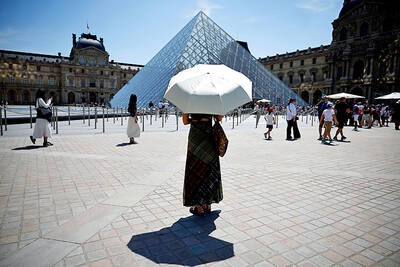
France experienced its hottest spring on record, the French weather service said on Tuesday, after an exceptional early heat wave that also broke highs for the season in England and Wales. Meteo-France said the average nationwide temperature over March to May was 13.8°C — about 1.7°C above the norm, and surpassing records set in 2011 and 2020. “The warmest spring since records began in 1900,” it said in a bulletin. All three months were warmer than average, but the onset of an “unprecedented heatwave” late last month pushed the mercury to highs typically seen at the height of the summer. “Our country had never


 RSS
RSS