


An underground network of Christian missionaries that usually works with North Korean refugees says it has helped smuggle nearly two dozen Muslim Uighurs out of China following last summer’s deadly ethnic violence and the subsequent government crackdown.
It’s the first time the Christian interfaith network has worked with a group of Uighurs, and it won’t be the last, with more currently using the so-called underground railway to make their way out of the country and requests for assistance surging into the hundreds, missionaries said.
Long-simmering tensions between Turkic Uighurs and China’s Han majority have increased since July’s riots in the western region of Xinjiang. The Chinese government says the violence left nearly 200 people, mostly Han, dead.
A Chinese court sentenced three Uighurs to death on Friday for their actions during the rioting, bringing to 17 the number of death sentences handed down over the violence. Overseas Uighur groups say Uighurs have been rounded up in mass detentions since the riots.
Some have turned to the “railway” for help, and one Macau-based missionary who is part of the network said they now have daily contact with major Uighur exile groups.
The network of sympathetic Chinese Christians shelter and guide people, usually North Koreans, as they cross China on their way to UN refugee offices abroad to seek asylum.
The first group of 22 Uighurs, who’ve been described by exile groups as witnesses to the rioting, made their way through China and Vietnam before arriving over the past few weeks in the Cambodian capital, where they have made contact with the UN refugee office and applied for political asylum.
However, they live in fear of being picked up and returned to China, which has close ties with Cambodia, Uighur groups said.
“China has a very big influence in Cambodia. So their life is in risk, I would say,” said Ilshat Hassan, the US-based director of interior affairs for the World Uyghur Congress.
A spokesman for China’s Foreign Ministry asked that questions about the 22 Uighurs be sent in a fax, and offered no immediate response on Friday. The Public Security Bureau in Xinjiang did not immediately respond to a faxed request.
Hassan said the group is the first large one to leave China after the riots. Two other Uighurs were arrested in Vietnam, he said, and he lost contact with another group of four.
A spokesman for Cambodia’s Ministry of the Interior said on Friday that at least 16 Uighurs are staying at the office of the UN High Commissioner for Refugees (UNHCR) in Phnom Penh. The office is the closest UNHCR office to China in Southeast Asia.
UNHCR’s spokeswoman for Asia, Kitty McKinsey, said she could not discuss the case.
“It’s our policy everywhere in the world never to speak about individual asylum seekers or refugees,” she said.
Cambodian government spokesman Khieu Kanharith said the government would consider carefully any repatriation request from China. He said Cambodia has the right to deny such a request if the people are considered political asylum seekers.
“But if they are purely criminal people and there is a request, we may deport them,” he said.
It was unclear what role, if any, the 22 Uighurs played in the rioting. They could not be reached for comment on Friday.
“They may have been involved in the protest July 5, but it is not clear at the moment,” said Dilxat Raxit, a spokesman for the World Uyghur Congress.
Radio Free Asia reported on Friday that two of the Uighurs told the UNHCR they watched the July violence unfold. One said he feared retribution for taking photos.
Hassan said the Uighurs still have photos of the riots and government response, but there were no immediate plans to make them public.
“We want to get them first to a safe place,” he said.
Overseas Uighur groups have been making more and more requests to use the railway, said the Reverend Marcus Ramsey of the Macau Interfaith Network, whose group collaborates with other missionary groups and helped the 22 Uighurs leave China.
Another Macau-based missionary, who didn’t want to give his name because of concerns about official retribution, said the network had a few requests for help from Europe-based Uighur Christians before the July violence, but requests have since surged.
He dismissed the idea of possible tensions between the Muslim Uighurs and the Christian Chinese who help them cross China.
“This is what it means when they ask, ‘What would Jesus do?’” he said.
Hassan did not want to talk about any involvement with the missionary network, saying only “some locals from the China side helped.”
Now, however, China has tightened border controls and passing through Vietnam is no longer possible, he said.
The missionaries sounded more optimistic.
“The first group took two months,” the Macau-based missionary said, “but some things can be streamlined next year.”
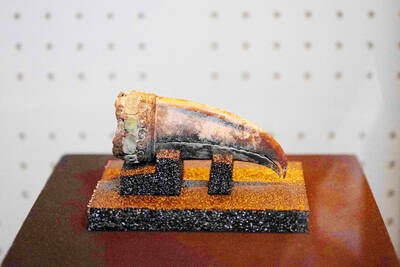
Archeologists in Peru on Thursday said they found the 5,000-year-old remains of a noblewoman at the sacred city of Caral, revealing the important role played by women in the oldest center of civilization in the Americas. “What has been discovered corresponds to a woman who apparently had elevated status, an elite woman,” archeologist David Palomino said. The mummy was found in Aspero, a sacred site within the city of Caral that was a garbage dump for more than 30 years until becoming an archeological site in the 1990s. Palomino said the carefully preserved remains, dating to 3,000BC, contained skin, part of the
‘WATER WARFARE’: A Pakistani official called India’s suspension of a 65-year-old treaty on the sharing of waters from the Indus River ‘a cowardly, illegal move’ Pakistan yesterday canceled visas for Indian nationals, closed its airspace for all Indian-owned or operated airlines, and suspended all trade with India, including to and from any third country. The retaliatory measures follow India’s decision to suspend visas for Pakistani nationals in the aftermath of a deadly attack by shooters in Kashmir that killed 26 people, mostly tourists. The rare attack on civilians shocked and outraged India and prompted calls for action against their country’s archenemy, Pakistan. New Delhi did not publicly produce evidence connecting the attack to its neighbor, but said it had “cross-border” links to Pakistan. Pakistan denied any connection to

TRUMP EFFECT: The win capped one of the most dramatic turnarounds in Canadian political history after the Conservatives had led the Liberals by more than 20 points Canadian Prime Minister Mark Carney yesterday pledged to win US President Donald Trump’s trade war after winning Canada’s election and leading his Liberal Party to another term in power. Following a campaign dominated by Trump’s tariffs and annexation threats, Carney promised to chart “a new path forward” in a world “fundamentally changed” by a US that is newly hostile to free trade. “We are over the shock of the American betrayal, but we should never forget the lessons,” said Carney, who led the central banks of Canada and the UK before entering politics earlier this year. “We will win this trade war and

Armed with 4,000 eggs and a truckload of sugar and cream, French pastry chefs on Wednesday completed a 121.8m-long strawberry cake that they have claimed is the world’s longest ever made. Youssef El Gatou brought together 20 chefs to make the 1.2 tonne masterpiece that took a week to complete and was set out on tables in an ice rink in the Paris suburb town of Argenteuil for residents to inspect. The effort overtook a 100.48m-long strawberry cake made in the Italian town of San Mauro Torinese in 2019. El Gatou’s cake also used 350kg of strawberries, 150kg of sugar and 415kg of


 RSS
RSS