


The Canadian defense minister attacked the credibility of a senior Canadian diplomat who said that government officials ignored evidence that prisoners handed over to Afghanistan’s intelligence service a few years ago were tortured.
Canadian Defense Minister Peter MacKay on Thursday dismissed calls for a public inquiry after intelligence officer Richard Colvin testified before a parliamentary committee earlier this week.
Colvin alleged that captives taken by Canadian troops and handed over to Afghan authorities were subjected to beatings and electric shocks in 2006 and early 2007.
MacKay said there was no evidence to support Colvin’s allegations and painted him in parliament as a Taliban dupe who has asked Canadians to accept the word of prisoners who, as Taliban members, have been trained to lie.
The official Liberal opposition party and the New Democratic Party called for a public inquiry into the allegations, saying it was in the interest of the Conservative government to establish whether it ignored reports that prisoners were being tortured.
MacKay rejected the idea, telling parliament there are “incredible holes” in Colvin’s story.
“There has not been a single, solitary proven allegation of abuse involving a transferred Taliban prisoner by Canadian forces,” he said.
Canada has about 2,800 soldiers in the volatile southern Afghan city of Kandahar on a combat mission that is due to end in 2011.
Canadian troops first began transferring detainees to Afghan authorities in late 2005.
Colvin, now an intelligence officer at the Canadian embassy in Washington, spent 18 months in Afghanistan during 2006 and 2007. He said on Wednesday that Canadian officials knew detainees faced a high risk of torture for a year and a half but continued to order military police to hand over detainees to the Afghan National Directorate of Security.
Colvin said he sent several reports to senior military and government officials, which he said were ignored. He said former General Rick Hillier, Canada’s top military commander and main spokesman for the war in Afghanistan, knew detainees faced torture.
The Red Cross tried for three months in 2006 to warn the Canadian army in Kandahar about what was happening to prisoners, but no one would take their phone calls, Colvin said.
He added that Canada took roughly six times more prisoners than British forces and 20 times more than the Dutch. He said the vast majority of the prisoners were ordinary Afghans, many with no connection to the insurgency.
Colvin also said he was told in 2007 by Canadian Prime Minister Stephen Harper’s foreign affairs adviser, David Mulroney, to leave no paper trail about the allegations.
But the Conservative government fought back on Thursday, saying the government has always taken its responsibility regarding the treatment of Taliban prisoners seriously.
Canadian Foreign Affairs Minister Lawrence Cannon said Canadian civilian officials had made more than 182 visits to detention facilities in Kandahar and Kabul to monitor the efforts and to train and mentor local correctional authorities, Cannon said.
During a visit earlier this year to Kandahar’s infamous Sarposa prison, Cannon said he and then-public safety minister Stockwell Day asked prisoners personally whether they had been tortured and they said no. He said prisoners told officials that they were content with the way they had been treated.
“When we’ve had specific allegations of abuse, we’ve acted, and we will not tolerate proven evidence of abuse,” Cannon said in a conference call from Kabul, where he was on hand for the inauguration of re-elected Afghan President Hamid Karzai.
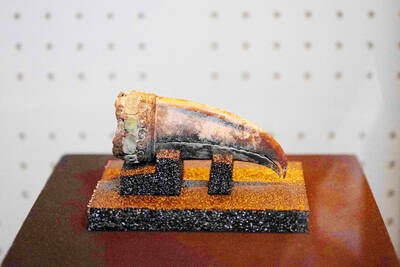
Archeologists in Peru on Thursday said they found the 5,000-year-old remains of a noblewoman at the sacred city of Caral, revealing the important role played by women in the oldest center of civilization in the Americas. “What has been discovered corresponds to a woman who apparently had elevated status, an elite woman,” archeologist David Palomino said. The mummy was found in Aspero, a sacred site within the city of Caral that was a garbage dump for more than 30 years until becoming an archeological site in the 1990s. Palomino said the carefully preserved remains, dating to 3,000BC, contained skin, part of the
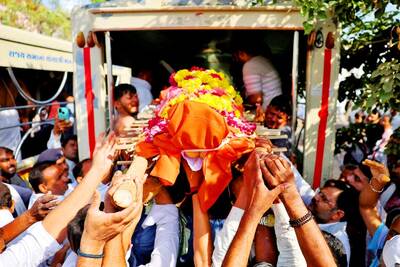
‘WATER WARFARE’: A Pakistani official called India’s suspension of a 65-year-old treaty on the sharing of waters from the Indus River ‘a cowardly, illegal move’ Pakistan yesterday canceled visas for Indian nationals, closed its airspace for all Indian-owned or operated airlines, and suspended all trade with India, including to and from any third country. The retaliatory measures follow India’s decision to suspend visas for Pakistani nationals in the aftermath of a deadly attack by shooters in Kashmir that killed 26 people, mostly tourists. The rare attack on civilians shocked and outraged India and prompted calls for action against their country’s archenemy, Pakistan. New Delhi did not publicly produce evidence connecting the attack to its neighbor, but said it had “cross-border” links to Pakistan. Pakistan denied any connection to

TRUMP EFFECT: The win capped one of the most dramatic turnarounds in Canadian political history after the Conservatives had led the Liberals by more than 20 points Canadian Prime Minister Mark Carney yesterday pledged to win US President Donald Trump’s trade war after winning Canada’s election and leading his Liberal Party to another term in power. Following a campaign dominated by Trump’s tariffs and annexation threats, Carney promised to chart “a new path forward” in a world “fundamentally changed” by a US that is newly hostile to free trade. “We are over the shock of the American betrayal, but we should never forget the lessons,” said Carney, who led the central banks of Canada and the UK before entering politics earlier this year. “We will win this trade war and
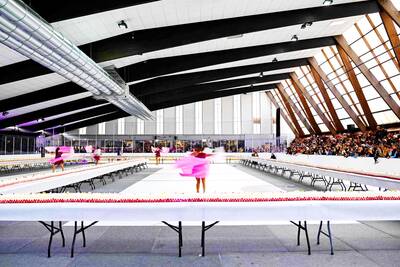
Armed with 4,000 eggs and a truckload of sugar and cream, French pastry chefs on Wednesday completed a 121.8m-long strawberry cake that they have claimed is the world’s longest ever made. Youssef El Gatou brought together 20 chefs to make the 1.2 tonne masterpiece that took a week to complete and was set out on tables in an ice rink in the Paris suburb town of Argenteuil for residents to inspect. The effort overtook a 100.48m-long strawberry cake made in the Italian town of San Mauro Torinese in 2019. El Gatou’s cake also used 350kg of strawberries, 150kg of sugar and 415kg of


 RSS
RSS