


Two people in China who received swine flu vaccinations died in the past week but at least one death appears unrelated to the vaccine and the other was being investigated.
The country’s health ministry reported the deaths late on Friday on its Web site — the first time China has announced deaths with potential links to the Chinese-made swine flu vaccine.
An autopsy showed one victim suffered a heart attack, and “experts have basically ruled out the possibility that the patient’s sudden death was the result of immediate allergic reactions to the flu vaccines,” the ministry statement said.
Experts were waiting for more lab results, it added.
An autopsy on the second person was scheduled for late Friday, but no results had been reported yesterday morning.
The Hunan provincial health department posted a statement on its Web site on Friday saying a teacher died on Monday while playing basketball, eight hours after being vaccinated.
A spokeswoman for the WHO’s office in China said the second death was a man from Tianjin, southeast of Beijing.
“Our assessment of the safety of the Chinese vaccine hasn’t changed,” spokeswoman Vivian Tan said. “The deaths are unfortunate, but we need to get to the bottom of it.”
The health ministry has said more than 13 million Chinese have received the swine flu vaccine.
“So far from the sheer numbers vaccinated, there’s a very small number of mild and ever smaller number of serious reactions. We still believe it is generally safe and effective,” Tan said.
The ministry statement said 1,235 people had been suspected of having abnormal reactions to the vaccine as of Wednesday. Reactions included fever and swelling. Fifteen people had relatively serious responses such as anaphylactic shock, a severe allergic reaction that can be deadly.
The health ministry statement said the vaccines are generally safe and vaccinations will continue.
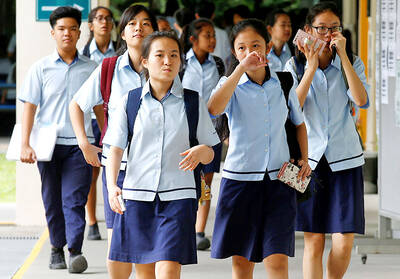
School bullies in Singapore are to face caning under new guidelines, but the education minister on Tuesday said it would be meted out only as a last resort with strict safeguards. Human rights groups regularly criticize Singapore for the use of corporal punishment, which remains part of the school and criminal justice systems, but authorities have defended it as a deterrent to crime and serious misconduct. Caning was discussed in the parliament after legislators asked how it would be used in relation to bullying in schools. The debate followed stricter guidelines on serious student misconduct, including bullying, unveiled by the Singaporean Ministry of

As evening falls in Fiji’s capital, a steady stream of people approaches a makeshift clinic that is a first line of defense against one of the world’s fastest-growing HIV epidemics. In the South Pacific nation — a popular tourist destination of just under a million people — more than 2,000 new HIV cases were recorded last year, a 26 percent increase from 2024. The government has declared an HIV outbreak and described it as a national crisis. “It’s spreading like wildfire,” said Siteri Dinawai, 46, who came to be tested. The Moonlight Clinic, a converted minibus parked in a suburban cul-de-sac in Suva, is
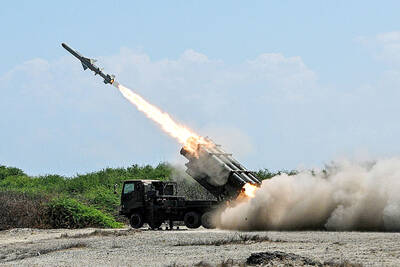
A MESSAGE: Japan’s participation in the Balikatan drills is a clear deterrence signal to China not to attack Taiwan while the US is busy in the Middle East, an analyst said The Japan Self-Defense Forces yesterday fired a Type 88 anti-ship missile during a joint maritime exercise with US, Australian and Philippine forces, hitting a decommissioned Philippine Navy ship in waters facing the disputed South China Sea, in drills that underscore Tokyo’s rising willingness to project military power on China’s doorstep. The drill took place as Manila and Tokyo began talks on a potential defense equipment transfer, made possible by Japan’s decision to scrap restrictions on military exports. The discussions include the possible early transfer of Abukuma-class destroyers and TC-90 aircraft to the Philippines, Japanese Minister of Defense Shinjiro Koizumi said. Philippine Secretary of
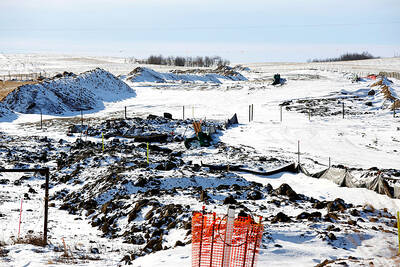
Separatists in Alberta are preparing to submit a petition tomorrow that they said has enough signatures to force a referendum on independence for the oil-rich Canadian province. Polls indicate the pro-independence camp remains a minority among Alberta’s 5 million people, but has hit a historic high of roughly 30 percent. Alberta separatists are also closer than ever to forcing a referendum, riding momentum fueled by intensifying grievances over Ottawa’s control of the provincial oil industry. They have also undeniably gotten a boost from the return to power of US President Donald Trump. After launching a petition in January, Stay Free Alberta, the group


 RSS
RSS