


Hezbollah is rapidly rearming in preparation for a new conflict with Israel, fearing that Israeli Prime Minister Benjamin Netanyahu’s government will attack Lebanon again prior to any assault on Iran’s nuclear facilities.
Last week, Israeli commandos seized a ship in the Mediterranean loaded with almost 400 tonnes of rockets and small arms — which Israel claimed was being sent from Iran to its Hezbollah allies. In dramatic further evidence of growing tensions, Hezbollah fighters have been busy reinforcing fixed defense positions north of the Litani River.
Hezbollah is preparing a new strategy to defend villages there.
Although the organization denied last week that the weapons were intended for its use, senior commanders have done little to disguise the scale of rearmament.
“Sure, we are rearming, we have even said that we have far more rockets and missiles than we did in 2006,” said a Hezbollah commander, speaking on condition of anonymity.
The 2006 war between Hezbollah and Israel began after an ill-advised operation by to kidnap two Israeli soldiers, prompting a massive response that lasted 34 days and killed more than 1,000 people.
“We had to blow up or leave some of our bunkers and fighting positions, but we still have plenty of capabilities in the south. We expect the Israelis to come soon, if not this winter, then they will wait until spring, when the ground isn’t too soft for their tanks,” the commander said.
It was expected that the ceasefire would neutralize Hezbollah military efforts along the Lebanon-Israel border, as a newly bolstered UN peacekeeping force and the Lebanese army took up positions. Instead, based on dozens of interviews and multiple trips into the country’s south, it is clear that Hezbollah believes it would face different challenges.
It has been forced to abandon the line of deeply entrenched positions on the border with Israel and withdraw most of its men and weaponry to clusters of Shiite villages.
“It’s clear that Hezbollah no longer controls the border, due to the presence of UNIFIL [UN Interim Force in Lebanon] troops,” said Andrew Exum, a military expert on Hezbollah at the Center for New American Security. “They appear to be hardening the villages for this next round of fighting, while pushing their fixed positions north.”
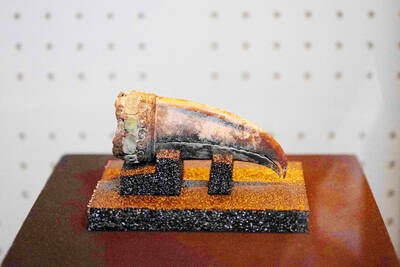
Archeologists in Peru on Thursday said they found the 5,000-year-old remains of a noblewoman at the sacred city of Caral, revealing the important role played by women in the oldest center of civilization in the Americas. “What has been discovered corresponds to a woman who apparently had elevated status, an elite woman,” archeologist David Palomino said. The mummy was found in Aspero, a sacred site within the city of Caral that was a garbage dump for more than 30 years until becoming an archeological site in the 1990s. Palomino said the carefully preserved remains, dating to 3,000BC, contained skin, part of the
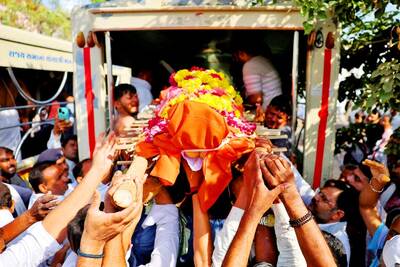
‘WATER WARFARE’: A Pakistani official called India’s suspension of a 65-year-old treaty on the sharing of waters from the Indus River ‘a cowardly, illegal move’ Pakistan yesterday canceled visas for Indian nationals, closed its airspace for all Indian-owned or operated airlines, and suspended all trade with India, including to and from any third country. The retaliatory measures follow India’s decision to suspend visas for Pakistani nationals in the aftermath of a deadly attack by shooters in Kashmir that killed 26 people, mostly tourists. The rare attack on civilians shocked and outraged India and prompted calls for action against their country’s archenemy, Pakistan. New Delhi did not publicly produce evidence connecting the attack to its neighbor, but said it had “cross-border” links to Pakistan. Pakistan denied any connection to

TRUMP EFFECT: The win capped one of the most dramatic turnarounds in Canadian political history after the Conservatives had led the Liberals by more than 20 points Canadian Prime Minister Mark Carney yesterday pledged to win US President Donald Trump’s trade war after winning Canada’s election and leading his Liberal Party to another term in power. Following a campaign dominated by Trump’s tariffs and annexation threats, Carney promised to chart “a new path forward” in a world “fundamentally changed” by a US that is newly hostile to free trade. “We are over the shock of the American betrayal, but we should never forget the lessons,” said Carney, who led the central banks of Canada and the UK before entering politics earlier this year. “We will win this trade war and
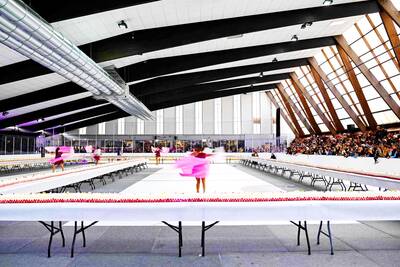
Armed with 4,000 eggs and a truckload of sugar and cream, French pastry chefs on Wednesday completed a 121.8m-long strawberry cake that they have claimed is the world’s longest ever made. Youssef El Gatou brought together 20 chefs to make the 1.2 tonne masterpiece that took a week to complete and was set out on tables in an ice rink in the Paris suburb town of Argenteuil for residents to inspect. The effort overtook a 100.48m-long strawberry cake made in the Italian town of San Mauro Torinese in 2019. El Gatou’s cake also used 350kg of strawberries, 150kg of sugar and 415kg of


 RSS
RSS