


Malaysia’s top ethnic Indian party, which was shunned in elections a year ago, faces a major challenge after a rival party was launched with the blessing of the ruling coalition.
Malaysian Prime Minister Najib Razak presided over the debut of the Malaysian Makkal Sakti (MSP) party, which sprang from the banned rights group Hindraf, whose leaders were jailed for mounting anti-discrimination protests in 2007.
Analysts said the prime minister’s role was a slap in the face for the Malaysian Indian Congress (MIC), a member of the 13-member Barisan Nasional (BN) coalition that has ruled Malaysia since independence in 1957.
They said that Najib, who needs to reclaim support from minority Indians and Chinese who are shifting toward a resurgent opposition, cannot rely on the MIC, which is widely seen as out of touch and beset by cronyism.
“That the PM himself is backing a small, insignificant Indian party shows he has lost faith in the MIC and the MSP is now a threat to the MIC, which will definitely try to block it from joining the ruling coalition,” political analyst Khoo Kay Peng said. “The amount of attention being given to MSP is surprising given that it has yet to prove whether it can attract Indian votes.”
In a speech punctuated by standing ovations and the prime minister leading cheers of “Makkal Sakti” (People’s Power), Najib said he would work with anyone who supported his government.
“I’d like to reach out to anyone in and outside of BN. As long as they believe in my government, we can work together,” he told some 3,000 party members and supporters at a lavish ceremony on Saturday. “These people want to support the BN, my leadership and government, except that they are not ready to be in MIC, so they have formed their own party. It is not my instigation for them to form the party.”
MSP president R. Thanenthiran said his party did not have any immediate plans to join the coalition.
“We are trying to improve the living conditions of the Indian community first and we can think of joining the BN later,” he said.
The MIC, which has been led by veteran politician Samy Vellu since 1979, has been criticized for failing to improve the lives of ethnic Indians, who say they are disadvantaged in terms of education, wealth and job opportunities.
The party was punished in national elections a year ago, securing only three out of nine parliamentary seats contested, but has ignored calls for change and retained Samy as its leader in internal polls last month.
The shunning of the MIC was part of an unprecedented drubbing for the BN, which lost its two-thirds parliamentary majority and control of five states to the Pakatan Rakyat opposition alliance.

Hungarian authorities temporarily detained seven Ukrainian citizens and seized two armored cars carrying tens of millions of euros in cash across Hungary on suspicion of money laundering, officials said on Friday. The Ukrainians were released on Friday, following their detention on Thursday, but Hungarian officials held onto the cash, prompting Ukraine to accuse Hungary’s Russia-friendly government of illegally seizing the money. “We will not tolerate this state banditism,” Ukrainian Minister of Foreign Affairs Andrii Sybiha said. The seven detained Ukrainians were employees of the Ukrainian state-owned Oschadbank, who were traveling in the two armored cars that were carrying the money between Austria and
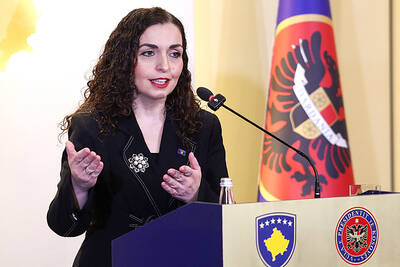
Kosovar President Vjosa Osmani on Friday after dissolving the Kosovar parliament said a snap election should be held as soon as possible to avoid another prolonged political crisis in the Balkan country at a time of global turmoil. Osmani said it is important for Kosovo to wrap up the upcoming election process and form functional institutions for political stability as the war rages in the Middle East. “Precisely because the geopolitical situation is that complex, it is important to finish this electoral process which is coming up,” she said. “It is very hard now to imagine what will happen next.” Kosovo, which declared

MORE BANS: Australia last year required sites to remove accounts held by under-16s, with a few countries pushing for similar action at an EU level and India considering its own ban Indonesia on Friday said it would ban social media access for children under 16, citing threats from online pornography, cyberbullying, online fraud and Internet addiction. “Accounts belonging to children under 16 on high-risk platforms will start to be deactivated, beginning with YouTube, TikTok, Facebook, Instagram, Threads, X, Bigo Live and Roblox,” Indonesian Minister of Communications and Digital Meutya Hafid said. “The government is stepping in so that parents no longer have to fight alone against the giants of the algorithm. Implementation will begin on March 28, 2026,” she said. The social media ban would be introduced in stages “until all platforms fulfill their
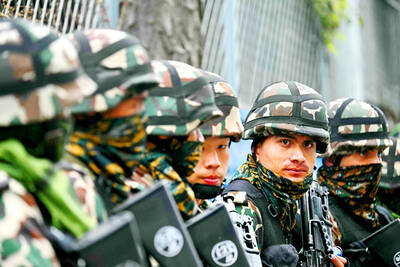
Counting was under way in Nepal yesterday, after a high-stakes parliamentary election to reshape the country’s leadership following protests last year that toppled the government. Key figures vying for power include former Nepalese prime minister K. P. Sharma Oli, rapper-turned-mayor Balendra Shah, who is bidding for the youth vote, and newly elected Nepali Congress party leader Gagan Thapa. In Kathmandu’s tea shops and city squares, people were glued to their phones, checking results as early trends flashed up — suggesting Shah’s centrist Rastriya Swatantra Party (RSP) was ahead. Nepalese Election Commission spokesman Prakash Nyupane said the counting was ongoing “in a peaceful manner”


 RSS
RSS