


Colonel Abdulghias, an Afghan pilot with a tough, weathered face, still remembers the name of the Russian airman who taught him how to fly 25 years ago.
“I was young and I wanted to be a pilot. I met a Russian pilot near Herat. His name was Kachalov,” he said, rubbing his forehead as he tried to recollect his memories. “I said: ‘Hey, I want to be a helicopter pilot. Teach me!’ He laughed at me and agreed.”
Now 47, Abdulghias is doing a job his Russian mentor could not have possibly imagined: helping the US resurrect the Afghan National Army Air Corps — a force all but destroyed in the US-led war against the Taliban in 2001.
Created with Russian help in 1921, the Afghan air force reached its heyday during the Soviet-backed rule of the 1980s, operating hundreds of combat aircraft and helicopters.
But it is now a mere shadow of its former self, with just a few dozen battered Soviet aircraft at its disposal.
STRATEGY
Bringing it back to its former strength is a key part of a broader US plan to build a strong enough Afghan army that could one day take over security in the war-wrecked country.
It is a formidable task at a time when the Taliban insurgency is at its fiercest, and skeptics say it could be years if not decades before Afghanistan, one of the world’s poorest nations, can maintain an effective force of its own.
“Air power is critical for Afghanistan,” said US Colonel James Garrett, deputy to the Commanding General of the Combined Airpower Transition Force.
“The ruggedness of the terrain, the remoteness of the population and the widespread nature of the insurgency make air power vital to a strong, supportive Afghan National Army,” he said.
At a sprawling training facility at the Kabul Air Field, US instructors train hundreds of Afghan pilots.
Most of the pilots are in their 40s and many were once trained by Soviet instructors. Old habits die hard, particularly the legacy of Russia’s top-heavy command style that still casts a shadow over the pilots’ performance.
“They were originally taught by the Russians. And it’s very different,” said Captain David Penuela, a helicopter instructor from Alabama who trains about 100 Afghans.
“We are trying to get them self-sufficient and effective.”
The air force is still equipped with old Soviet aircraft such as Mi-35 attack helicopters and AN-26 transport planes.
The Afghan government however is betting on the air force revival, planning to nearly triple personnel to more than 7,000. It is also to be equipped with US C-27 aircraft from this year.
The fleet is already playing a bigger role: Its cargo planes helped shuttle ballots to far-flung locations in last month’s presidential election.
TEMPORARY HELP
General Babaji, in charge of Afghan President Hamid Karzai’s fleet, says he is confident that one day the Afghan air force will return to the skies and take over all airborne operations.
“We know our enemies better. We know the region better and the country better,” he said. “As a military pilot I believe ... that [foreign] troops will not remain here for a long time.”
Clutching a notebook filled with Russian-language instructions dating back to his Soviet training, Abdulghias laughs when asked about the difference between now and then.
“Now we have more technology and things are much easier. In the past, all the instructions were written by hand,” he said.
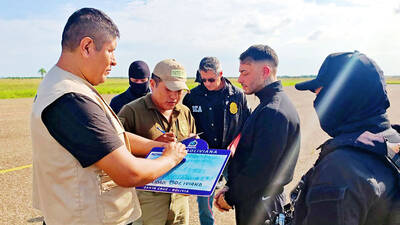
KINGPIN: Marset allegedly laundered the proceeds of his drug enterprise by purchasing and sponsoring professional soccer teams and even put himself in the starting lineups Notorious Latin American narco trafficker Sebastian Marset, who eluded police for years, was handed over to US authorities after his arrest on Friday in Bolivia. Marset, a Uruguayan national who was on the US most-wanted list, was passed to agents of the US Drug Enforcement Administration at Santa Cruz airport in Bolivia, then put on a US airplane, Bolivian state television showed. “The arrest and deportation were carried out pursuant to a court order issued by the US justice system,” Bolivian Minister of Government Marco Antonio Oviedo told reporters. The alleged kingpin was arrested in an upscale neighborhood of Santa
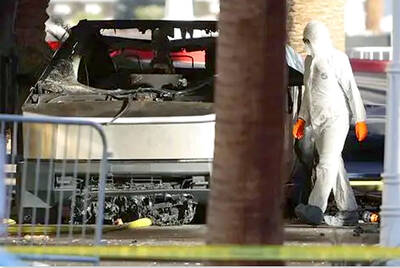
ACTIONABLE ADVICE: The majority of chatbots tested provided guidance on weapons, tactics and target selections, with Perplexity and Meta AI deemed to be the least safe From school shootings to synagogue bombings, leading artificial intelligence (AI) chatbots helped researchers plot violent attacks, according to a study published on Wednesday that highlighted the technology’s potential for real-world harm. Researchers from the nonprofit watchdog Center for Countering Digital Hate and CNN posed as 13-year-old boys in the US and Ireland to test 10 chatbots, including ChatGPT, Google Gemini, Perplexity, Deepseek and Meta AI. Eight of the chatbots assisted the make-believe attackers in more than half the responses, providing advice on “locations to target” and “weapons to use” in an attack, the study said. The chatbots had become a “powerful accelerant for
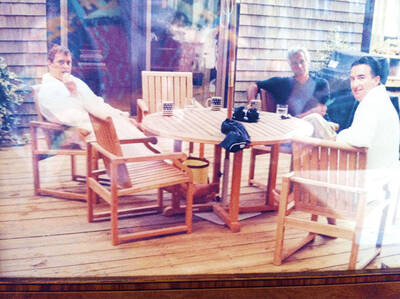
SCANDAL: Other images discovered earlier show Andrew bent over a female and lying across the laps of a number of women, while Mandelson is pictured in his underpants A photograph of former British prince Andrew and veteran politician Peter Mandelson sitting in bathrobes alongside late sex offender Jeffrey Epstein was unearthed on Friday in previously published documents. The image is believed to be the first known photograph of the two men with Epstein. They are currently engulfed in scandal in the UK over their ties to their mutual friend. The undated photograph, first reported by ITV News, shows King Charles III’s disgraced brother and former British ambassador to the US sitting barefoot outside on a wooden deck. They appear to have mugs with a US flag on them
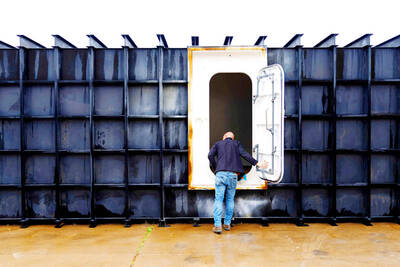
Since the war in the Middle East began nearly two weeks ago, the telephone at Ron Hubbard’s bomb shelter company in Texas has not stopped ringing. Foreign and US clients are rushing to buy his bunkers, seeking refuge in case of air raids, nuclear fallout or apocalypse. With the US and Israel pounding Iran, and Tehran retaliating with strikes across the region, Hubbard has seen demand for his product soar, mostly from Gulf nation customers in Bahrain, Qatar, Kuwait and the United Arab Emirates. “You can imagine how many people are thinking: ‘I wish I had a bomb shelter,’” Hubbard, 63, said in


 RSS
RSS