


The head of a nongovernmental organization and her husband were found shot dead in Chechnya yesterday after their abduction a day earlier, the latest killing of campaigners in the conflict-torn Caucasus region.
The murder of the head of Let’s Save the Generation, Zarema Sadulayeva, and her husband came less than one month after Natalya Estemirova, one of the best known activists in Chechnya, was killed in similar circumstances.
“This morning their bodies were found in the settlement of Chernorechye in Grozny,” the Chechen capital, board member of the Memorial rights group Alexander Cherkasov said.
Unidentified armed men abducted Sadulayeva and her husband Alik Djibralov, from the offices of the young people’s NGO on Monday afternoon, Cherkasov said.
The Chechen interior ministry confirmed the killing.
“The rights activists were found in the boot of a car with gunshot wounds,” an official source said.
The murders come amid growing international pressure on Russia to end the apparent culture of impunity in which activists are being killed after the still unsolved killing of journalist Anna Politkovskaya in 2006.
Let’s Save the Generation works with young people in Chechnya who have been marginalized, helping them get back on their feet to prevent them joining any of the armed groups in the unstable region.
Sadulayeva’s husband had been jailed for four years for links to illegal armed groups, Cherkasov said on Monday. He had married Sadulayeva two months after leaving prison, he added.
“This is just unimaginable. They killed a young woman, she was probably 25, and her husband, who was about the same age. They had just got married,” said rights activist Ludmila Alexeyeva of the Moscow Helsinki group.
“She headed an NGO that saved a generation of children,”she said.
The investigative committee of Russian prosecutors said that a criminal inquiry had been opened into the double murder.
The body of Estemirova, who worked for Memorial, was found with gunshot wounds shortly after she was seen being bundled into a car outside her home in the Chechen capital Grozny on July 15.
In the wake of her killing, Memorial chairman Oleg Orlov accused Chechnya’s pro-Kremlin leader Ramzan Kadyrov of being responsible for the murder, irrespective of who ordered the crime.
Kadyrov denied the allegation on Monday, saying in an interview with Radio Svoboda, the Russian service of Radio Free Europe: “Why should Kadyrov kill a woman who was useful to no one?
To the shock of rights activists, he added: “She was without honour, merit or conscience.”
Kadyrov is praised by the Kremlin for restoring some stability to the Caucasus region but is detested by human rights activists who accuse him of letting his personal militia carry out kidnappings and torture.
After her death, Russian President Dmitry Medvedev praised Estemirova for speaking “the truth.”
Chechnya, a predominantly Muslim region in the North Caucasus mountains, was the site of two full-scale wars between separatist forces and Russia’s central government after the collapse of the Soviet Union in 1991.
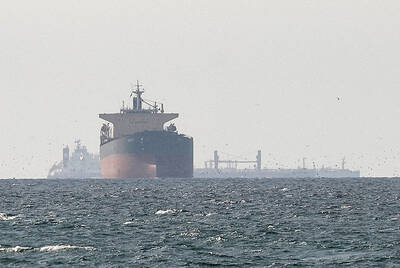
A ship that appears to be taking on the identity of a scrapped gas carrier exited the Strait of Hormuz on Friday, showing how strategies to get through the waterway are evolving as the Middle East war progresses. The vessel identifying as liquefied natural gas (LNG) carrier Jamal left the Strait on Friday morning, ship-tracking data show. However, the same tanker was also recorded as having beached at an Indian demolition yard in October last year, where it is being broken up, according to market participants and port agent’s reports. The ship claiming to be Jamal is likely a zombie vessel that
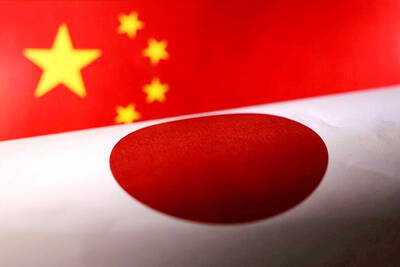
Japan is to downgrade its description of ties with China from “one of its most important” in an annual diplomatic report, according to a draft reviewed by Reuters, as relations with Beijing worsen. This year’s Diplomatic Bluebook, which Japanese Prime Minister Sanae Takaichi’s government is expected to approve next month, would instead describe China as an important neighbor and the relationship as “strategic” and “mutually beneficial.” The draft cites a series of confrontations with Beijing over the past year, including export controls on rare earths, radar lock-ons targeting Japanese military aircraft and increased pressure around Taiwan. The shift in tone underscores a deterioration

LAW CONSTRAINTS: The US has been pressing allies to send warships to open the Strait, but Tokyo’s military actions are limited under its postwar pacifist constitution Japan could consider deploying its military for minesweeping in the Strait of Hormuz if a ceasefire is reached in the war on Iran, Japanese Minister of Foreign Affairs Toshimitsu Motegi said yesterday. “If there were to be a complete ceasefire, hypothetically speaking, then things like minesweeping could come up,” Motegi said. “This is purely hypothetical, but if a ceasefire were established and naval mines were creating an obstacle, then I think that would be something to consider.” Japan’s military actions are limited under its postwar pacifist constitution, but 2015 security legislation allows Tokyo to use its Self-Defense Forces overseas if an attack,

German Chancellor Friedrich Merz’s conservative Christian Democratic Union (CDU) yesterday faced a regional election battle in Rhineland-Palatinate, now held by the center-left Social Democratic Party (SPD). Merz’s CDU has enjoyed a narrow poll lead over the SPD — their coalition partners at the national level — who have ruled the mid-sized state for 35 years. Polling third is the far-right Alternative for Germany (AfD), which spells a greater threat to the two centrist parties in several state elections in September in the country’s ex-communist east. The picturesque state of Rhineland-Palatinate, bordering France, Belgium and Luxembourg and with a population of about 4 million,


 RSS
RSS