


Shyam Sharma’s marriage request in the Times of India’s classified section reads more like an eye chart than a matrimonial advertisement: SM/KKB invited 4 PQM earning 15 LPA.
Acronyms aside, Sharma is a professionally qualified match earning 15 lakhs (US$30,000) per annum seeking a suitable match who belongs to the Kanya Kubja Brahmin caste. To the untrained eye, the matchmaking vernacular that floods the matrimonial pages of Indian newspapers every Sunday can seem puzzling.
But for the lonely hearts — or their parents — who regularly pore over these ads, each detail, no matter how trivial, could potentially make or break an alliance. Personal ads cover every aspect of a person’s life that is considered important in India — religion, caste, profession, family status, dietary habits and skin complexion — which ranges from “fair” to “wheatish” to “very dark” in this color-conscious nation.
Even intimate details about whether or not an annulled marriage has been consummated are not off limits to people desperately seeking a partner. Fifteen hundred rupees (US$30) later, Sharma — whose advertisement describes him as a “V. h’some, fair, tall and smart boy” — says he has received a few responses from women who fit the ideal image.
“I have some figure in my mind and I want a girl according to that only,” the 28-year-old teacher said as he rolled off a list of requirements. “My height is 5’11” so at least I want a height of 5’4” and fair color and the features should be sharp and they should be beautiful. And for education, at least she should be a graduate.”
Any prospective spouse should be no older than 26, he said, considered a ripe age for settling down in India. Many families who opt for traditional arranged marriages choose to tap into their network of friends and acquaintances before turning to matchmaking services, viewed as a last resort for those who have weak family connections or have been overseas for some time.
“We have a very small family and we don’t have good social contacts and that’s why I’ve placed an ad,” he said.
Within the lucrative matchmaking industry, newspaper advertisements have emerged as the medium of choice for families who are not quite Internet savvy, even if they limit the scope of potential matches.
“A profile posted in a matrimonial classified column only gives one access to potential matches in one’s local area, which leads to narrow search results,” said Gourav Rakshit, business head at shaadi.com, one of the most popular matrimonial sites for South Asians worldwide.
Joycelin Jose, head of the matrimonial classified section of the Hindustan Times, said the paper’s clientele was “a mixed bag, cutting across socio-economic groups.”
“There are loads of people who come to us to find a match because they find it more reliable,” she says.

Hungarian authorities temporarily detained seven Ukrainian citizens and seized two armored cars carrying tens of millions of euros in cash across Hungary on suspicion of money laundering, officials said on Friday. The Ukrainians were released on Friday, following their detention on Thursday, but Hungarian officials held onto the cash, prompting Ukraine to accuse Hungary’s Russia-friendly government of illegally seizing the money. “We will not tolerate this state banditism,” Ukrainian Minister of Foreign Affairs Andrii Sybiha said. The seven detained Ukrainians were employees of the Ukrainian state-owned Oschadbank, who were traveling in the two armored cars that were carrying the money between Austria and
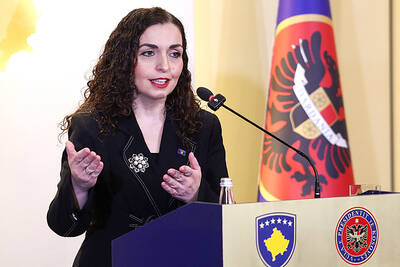
Kosovar President Vjosa Osmani on Friday after dissolving the Kosovar parliament said a snap election should be held as soon as possible to avoid another prolonged political crisis in the Balkan country at a time of global turmoil. Osmani said it is important for Kosovo to wrap up the upcoming election process and form functional institutions for political stability as the war rages in the Middle East. “Precisely because the geopolitical situation is that complex, it is important to finish this electoral process which is coming up,” she said. “It is very hard now to imagine what will happen next.” Kosovo, which declared

MORE BANS: Australia last year required sites to remove accounts held by under-16s, with a few countries pushing for similar action at an EU level and India considering its own ban Indonesia on Friday said it would ban social media access for children under 16, citing threats from online pornography, cyberbullying, online fraud and Internet addiction. “Accounts belonging to children under 16 on high-risk platforms will start to be deactivated, beginning with YouTube, TikTok, Facebook, Instagram, Threads, X, Bigo Live and Roblox,” Indonesian Minister of Communications and Digital Meutya Hafid said. “The government is stepping in so that parents no longer have to fight alone against the giants of the algorithm. Implementation will begin on March 28, 2026,” she said. The social media ban would be introduced in stages “until all platforms fulfill their

Counting was under way in Nepal yesterday, after a high-stakes parliamentary election to reshape the country’s leadership following protests last year that toppled the government. Key figures vying for power include former Nepalese prime minister K. P. Sharma Oli, rapper-turned-mayor Balendra Shah, who is bidding for the youth vote, and newly elected Nepali Congress party leader Gagan Thapa. In Kathmandu’s tea shops and city squares, people were glued to their phones, checking results as early trends flashed up — suggesting Shah’s centrist Rastriya Swatantra Party (RSP) was ahead. Nepalese Election Commission spokesman Prakash Nyupane said the counting was ongoing “in a peaceful manner”


 RSS
RSS