


The father of a British teenager who survived 12 nights in the Australian bush is locked in a feud with his son over the money made from television appearances, he told the Mail on Sunday newspaper.
Richard Cass, 54, said the relationship with his 19-year-old son Jamie Neale had turned “murderously nasty” over the cash he received for recounting his story.
The Mail on Sunday said Neale received £50,000 (US$82,000) for the television contracts they both signed, but the teenager has yet to hand over Cass’ slice of the money.
The Londoner became lost on July 3 in the Blue Mountains, west of Sydney.
“I feel I have been robbed by my own son. I was so glad when he was found but it’s gone from being such a feelgood thing to being murderously nasty. The son I found isn’t the son I went out to look for,” Cass said.
“I’m not sure if we’re going to be on speaking terms for a very long time,” he said.
“He knows he’s got to give me some of the money and I will be happy. I want him to make that step that will enable us to reconcile. I feel terrible that this dark incident has now blighted Jamie’s return from the dead,” Cass said.
“I would back down in that I don’t want to lose contact with him but it would gnaw away at me. I feel betrayed,” he said.
Cass said there was “an argument in Australia that says why should taxpayers pay for very expensive searches for idiots who don’t take proper precautions,” adding: “I feel tremendous sympathy with that view.”
Neale’s story made headlines around the world. Not yet well enough to fly, he is expected to remain in Australia for a further six to eight weeks.
The teenager said: “I do not plan to get into a public slanging match with my father and will deal with any issues in private.”
“I had an agreement with him regarding his involvement in the 60 Minutes interview — he wanted his flights and the rescue party paid for,” he said.
“I agreed to that and intend to honor that commitment. I am yet to receive the 60 Minutes money — it is due next week — but what I do with it is a matter for me,” he said.
Some Australian news Web sites carried comments accusing Neale of staging his survival feat to secure a lucrative media deal but the teenager said his extraordinary story was not a hoax.
He set off for a solo hike on July 3 but got hopelessly lost, eating only seeds and weeds with just a lightweight jacket for warmth in freezing overnight conditions.
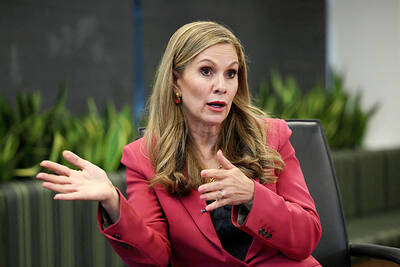
Australians were downloading virtual private networks (VPNs) in droves, while one of the world’s largest porn distributors said it was blocking users from its platforms as the country yesterday rolled out sweeping online age restriction. Australia in December became the first country to impose a nationwide ban on teenagers using social media. A separate law now requires artificial intelligence (AI)-powered chatbot services to keep certain content — including pornography, extreme violence and self-harm and eating disorder material — from minors or face fines of up to A$49.5 million (US$34.6 million). The country also joined Britain, France and dozens of US states requiring
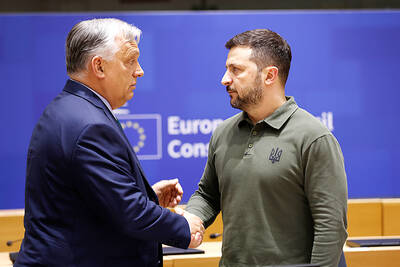
Hungarian authorities temporarily detained seven Ukrainian citizens and seized two armored cars carrying tens of millions of euros in cash across Hungary on suspicion of money laundering, officials said on Friday. The Ukrainians were released on Friday, following their detention on Thursday, but Hungarian officials held onto the cash, prompting Ukraine to accuse Hungary’s Russia-friendly government of illegally seizing the money. “We will not tolerate this state banditism,” Ukrainian Minister of Foreign Affairs Andrii Sybiha said. The seven detained Ukrainians were employees of the Ukrainian state-owned Oschadbank, who were traveling in the two armored cars that were carrying the money between Austria and
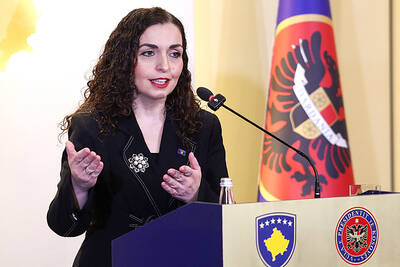
Kosovar President Vjosa Osmani on Friday after dissolving the Kosovar parliament said a snap election should be held as soon as possible to avoid another prolonged political crisis in the Balkan country at a time of global turmoil. Osmani said it is important for Kosovo to wrap up the upcoming election process and form functional institutions for political stability as the war rages in the Middle East. “Precisely because the geopolitical situation is that complex, it is important to finish this electoral process which is coming up,” she said. “It is very hard now to imagine what will happen next.” Kosovo, which declared

MORE BANS: Australia last year required sites to remove accounts held by under-16s, with a few countries pushing for similar action at an EU level and India considering its own ban Indonesia on Friday said it would ban social media access for children under 16, citing threats from online pornography, cyberbullying, online fraud and Internet addiction. “Accounts belonging to children under 16 on high-risk platforms will start to be deactivated, beginning with YouTube, TikTok, Facebook, Instagram, Threads, X, Bigo Live and Roblox,” Indonesian Minister of Communications and Digital Meutya Hafid said. “The government is stepping in so that parents no longer have to fight alone against the giants of the algorithm. Implementation will begin on March 28, 2026,” she said. The social media ban would be introduced in stages “until all platforms fulfill their


 RSS
RSS