

British fossil experts sparked turmoil in the normally staid world of paleontology yesterday as they challenged a familiar view of dinosaurs.
The controversy goes to the heart of our perception of the largest of the dinosaurs, the sauropods, which became widespread 150 million years ago in the late Jurassic period.
A fresh analysis of animal bones indicates that the beasts did not stick their necks out in front of them as is often depicted, but held their heads high on majestic, curving, swan-like necks.
The claim overturns the popular impression of the lumbering creatures given by museum exhibits and TV series such as the BBC’s Walking with Dinosaurs.
The sauropods include many of the best known prehistoric beasts, such as diplodocus and apatosaurus, the dinosaur formerly known as brontosaurus.
“Unless sauropods carried their heads and necks differently from every living vertebrate, we have to assume that the base of their neck was curved strongly upwards,” said Mike Taylor of Portsmouth University in England, who led the study. “In some sauropods, this would have meant a graceful, swan-like S-curve to the neck, and a look quite different from the recreations we are used to seeing today.”
In their study, Taylor and his team examined the natural neck posture of a wide range of land vertebrates, such as cats, rabbits, turtles and crocodiles.
They found that almost all hold their necks in an upright, S-shaped curve, even though analysis of the bones alone would suggest the neck should stick out horizontally. His report appears in the journal Acta Paleontologica Polonica.
The idea that sauropods held their necks upright is not new. Until the 1950s, most dinosaur experts considered this to be their natural posture.
That view changed when scientists suggested that an upright neck would raise the animals’ blood pressure catastrophically.
But Taylor said the estimates of blood pressure were based on extrapolations from smaller animals, which he doesn’t believe are valid for larger creatures.
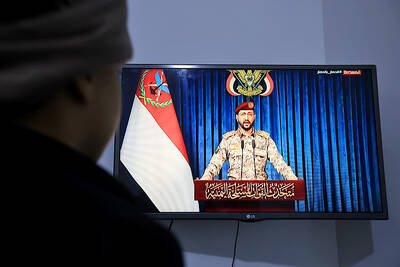
ON THE MOVE: Trump unexpectedly cut short a trip to return to the White House, while the State Department warned Americans to avoid travel to the Middle East The US on Saturday warned that hostilities between Saudi Arabia and Iran-backed Houthis could “escalate rapidly” after a missile attack targeted Riyadh for the first time since the Yemen conflict resumed. US President Donald Trump on Saturday cut short a weekend at Camp David, a secluded presidential complex in rural Maryland, to return unexpectedly to the White House. The White House gave no explanation for the early return, which comes as a new threshold was crossed in the conflict between Saudi Arabia and the Houthis, who control a large part of Yemen and are fighting government forces backed by a coalition led
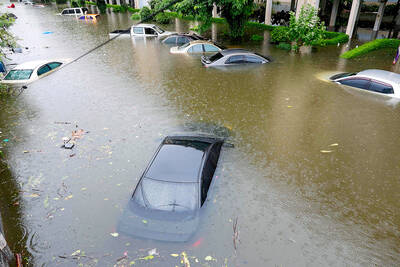
Several areas of Thailand’s capital city Bangkok were inundated by continuous rain from Thursday afternoon to yesterday morning that has disrupted traffic and forced some residents to evacuate. Major canals in Bangkok filled with accumulated rainfall exceeding 20cm, officials said yesterday. Floodwaters spread across the city, particularly in the central and eastern parts, blocking roads and stopping traffic. The Thai Meteorological Department warned that the heavy rain would continue in most parts of the country through today, citing a strong low-pressure system over the central region and strengthening southwest monsoon conditions. More than 84,000 people in 21 provinces nationwide were

World leaders gather in New York this week for the UN General Assembly, bracing for US President Donald Trump’s return to the rostrum for a second year running, with talks centering on the widening conflicts in the Middle East and Ukraine and the risks of artificial intelligence (AI). Nearly 130 heads of state meet with the post-World War II order under strain and with the UN itself struggling to remain relevant and weathering attacks from Trump, who has slashed the US’ contributions and withdrawn from dozens of UN bodies. Chinese President Xi Jinping (習近平), who last addressed the diplomatic jamboree via video
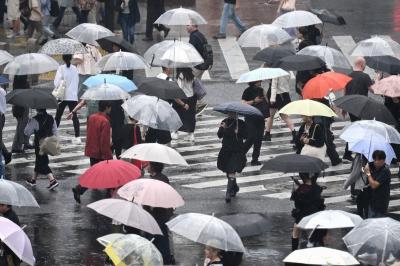
Typhoon Dujuan forced the cancellation of at least 275 flights in Japan today and prompted warnings of potentially record-breaking rainfall as the storm nears Tokyo. The typhoon, which is accompanied by high winds, has also led to the early closure in Tokyo of one the world’s biggest video game trade fairs and knocked out power for thousands. The Japan Meteorological Agency (JMA) warned yesterday that rain and winds were expected to intensify even before the typhoon’s arrival. “The total rainfall through Tuesday could exceed the average monthly rainfall for September, resulting in record-breaking heavy rain,” the agency said. The typhoon’s wind speeds were at


 RSS
RSS