


Indian Prime Minister Manmohan Singh was sworn in yesterday for a second five-year term with a host of old-guard ministers at a time of economic downturn and fraught ties with Pakistan.
Singh’s Congress party-led coalition has a stronger parliamentary majority than his first administration, although a southern ally said it would not join the government because of differences over ministerial positions.
Unfettered by its former leftist allies, Congress is likely to push reforms such as raising the foreign investment limit in insurance and opening up the pension sector.
However, it will face pressure to spread the benefits of growth in a country where around 30 percent earn just a dollar a day.
Indian President Pratibha Patil administered the oath of office to Singh, 76, at the red sandstone presidential palace, watched by relatives and leaders of his party and its allies.
Nineteen other members of his Cabinet, including Congress stalwart Pranab Mukherjee, who is tipped to be the new finance minister, were sworn in.
Portfolios of the ministers have not been allocated.
Junior ministers will be named over the next few days, the prime minister’s office said, after 24 hours of wrangling over these positions among coalition allies of the Congress.
Rahul Gandhi, the fourth generation member of the Gandhi-Nehru dynasty, was not among the ministers sworn in, despite reports that the heir apparent, seen as the architect of the party’s resurgence, could be given a ministerial job.
The Indian stock market surged earlier this week as investors welcomed Singh’s strong mandate, which raised expectations for aggressive economic reforms at a time when growth in Asia’s third-largest economy has slowed to 6.5 percent.
“The election is seen by many as a game changer. India has a real chance of breaking out, attracting strong inflows and being positioned in investors’ minds alongside China,” the Business Standard said.
“The new government has the mandate, there is a huge opportunity to bring about structural change across sectors, and [the] policy road map is also clear. We need the new government to deliver,” the newspaper said.
Besides the slowdown, Singh’s second term will face an array of challenges such as fraught relations with old rival Pakistan after the Mumbai attacks and a potential showdown with wealthier countries at the Doha world trade talks.
“There is an opportunity for change with this mandate. If in the first 100 days I don’t see any signs of reforms being done or a timeline I will feel very concerned,” Amit Mitra, head of India’s industry lobby group, told reporters.
South African President Jacob Zuma yesterday congratulated the Congress party over its victory in general elections.
“On behalf of the African National Congress [South AFrica’s ruling party] and on my behalf, I congratulate you and the Indian Congress Party for having formed the United Progressive Alliance,” Zuma said in a statement addressed to Congress president Sonia Gandhi.
“India has always occupied a special place in the collective memory of our people for the immense sacrifices made by the people of India as epitomised by the passive resistance campaigns of that great son of the soil, Mahatma Gandhi, whom we consider as our own,” Zuma said.
Gandhi lived in South Africa from 1893 to 1915.
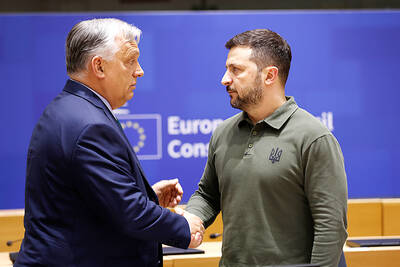
Hungarian authorities temporarily detained seven Ukrainian citizens and seized two armored cars carrying tens of millions of euros in cash across Hungary on suspicion of money laundering, officials said on Friday. The Ukrainians were released on Friday, following their detention on Thursday, but Hungarian officials held onto the cash, prompting Ukraine to accuse Hungary’s Russia-friendly government of illegally seizing the money. “We will not tolerate this state banditism,” Ukrainian Minister of Foreign Affairs Andrii Sybiha said. The seven detained Ukrainians were employees of the Ukrainian state-owned Oschadbank, who were traveling in the two armored cars that were carrying the money between Austria and

Kosovar President Vjosa Osmani on Friday after dissolving the Kosovar parliament said a snap election should be held as soon as possible to avoid another prolonged political crisis in the Balkan country at a time of global turmoil. Osmani said it is important for Kosovo to wrap up the upcoming election process and form functional institutions for political stability as the war rages in the Middle East. “Precisely because the geopolitical situation is that complex, it is important to finish this electoral process which is coming up,” she said. “It is very hard now to imagine what will happen next.” Kosovo, which declared

MORE BANS: Australia last year required sites to remove accounts held by under-16s, with a few countries pushing for similar action at an EU level and India considering its own ban Indonesia on Friday said it would ban social media access for children under 16, citing threats from online pornography, cyberbullying, online fraud and Internet addiction. “Accounts belonging to children under 16 on high-risk platforms will start to be deactivated, beginning with YouTube, TikTok, Facebook, Instagram, Threads, X, Bigo Live and Roblox,” Indonesian Minister of Communications and Digital Meutya Hafid said. “The government is stepping in so that parents no longer have to fight alone against the giants of the algorithm. Implementation will begin on March 28, 2026,” she said. The social media ban would be introduced in stages “until all platforms fulfill their
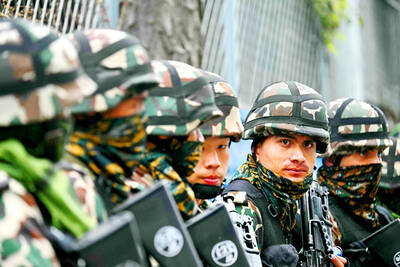
Counting was under way in Nepal yesterday, after a high-stakes parliamentary election to reshape the country’s leadership following protests last year that toppled the government. Key figures vying for power include former Nepalese prime minister K. P. Sharma Oli, rapper-turned-mayor Balendra Shah, who is bidding for the youth vote, and newly elected Nepali Congress party leader Gagan Thapa. In Kathmandu’s tea shops and city squares, people were glued to their phones, checking results as early trends flashed up — suggesting Shah’s centrist Rastriya Swatantra Party (RSP) was ahead. Nepalese Election Commission spokesman Prakash Nyupane said the counting was ongoing “in a peaceful manner”


 RSS
RSS