


Indian police yesterday were expected to charge the sole surviving gunman involved in last year’s devastating Mumbai attacks, which rocked the country’s financial capital and badly hit relations with Pakistan.
Pakistani national Mohammed Ajmal Amir Iman — also known as Kasab — was the only member of the commando-type unit captured alive during the Nov. 26 to Nov. 29 siege.
A total of 165 people were killed and 308 injured when Iman and nine others, allegedly from the Pakistan-based Lashkar-e-Taiba group, attacked a string of targets including luxury hotels, a railway station, a cafe and a Jewish center.
Nine of the attackers were killed, leaving Iman to face alone charges detailing a string of murders, terrorism, conspiracy, weapons and immigration violations.
If convicted Iman, 21, could face the hangman’s noose.
“We will file the charge sheet in a city court. It is a mammoth document,” said Rakesh Maria, Mumbai’s joint commissioner of police.
The Press Trust of India news agency quoted public prosecutor Ujwal Nikam as saying the charge sheet runs into “nearly 5,000 pages” and included evidence provided by the FBI, who helped probe the attacks.
Other evidence includes security camera footage of the gunman attacking a railway station, where scores of people died.
Besides Iman and nine other suspected Lashkar-e-Taiba militants, the charge sheet may name around 20 more accused believed to be hiding in Pakistan, an official said on condition of anonymity.
Indian law requires that a charge sheet be filed in court against a suspect within 90 days of detention.
Iman was arrested on Nov. 28.
Two other suspected members of the group are in custody in Mumbai, accused of providing support to the attackers.
The trial is expected to focus attention on how the gunmen were selected, trained and armed.
Pakistan admitted for the first time this month that the Mumbai strikes were partly planned on its soil and acknowledged that the surviving gunman is a Pakistani.
With the filing of formal charges, however, the Indian judicial system must now grapple with the question of Kasab’s defense in the light of a refusal by lawyers to represent him.
India’s Constitution provides for the right to legal representation and a “fair, just and equitable procedure” in court.
But the honorary secretary of the Bombay Bar Association, M.P. Rao, said in December that the unprecedented nature of the attacks meant normal rules should not apply.
“He has waged war on the country. If he’s waged war, the basic requirement of giving him a fair trial doesn’t really become justified,” he said.
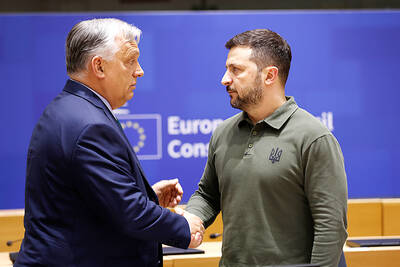
Hungarian authorities temporarily detained seven Ukrainian citizens and seized two armored cars carrying tens of millions of euros in cash across Hungary on suspicion of money laundering, officials said on Friday. The Ukrainians were released on Friday, following their detention on Thursday, but Hungarian officials held onto the cash, prompting Ukraine to accuse Hungary’s Russia-friendly government of illegally seizing the money. “We will not tolerate this state banditism,” Ukrainian Minister of Foreign Affairs Andrii Sybiha said. The seven detained Ukrainians were employees of the Ukrainian state-owned Oschadbank, who were traveling in the two armored cars that were carrying the money between Austria and
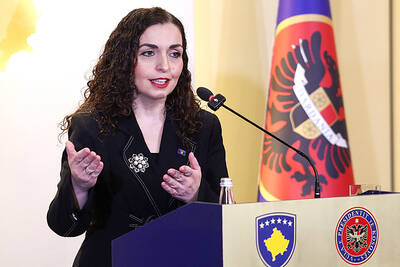
Kosovar President Vjosa Osmani on Friday after dissolving the Kosovar parliament said a snap election should be held as soon as possible to avoid another prolonged political crisis in the Balkan country at a time of global turmoil. Osmani said it is important for Kosovo to wrap up the upcoming election process and form functional institutions for political stability as the war rages in the Middle East. “Precisely because the geopolitical situation is that complex, it is important to finish this electoral process which is coming up,” she said. “It is very hard now to imagine what will happen next.” Kosovo, which declared

MORE BANS: Australia last year required sites to remove accounts held by under-16s, with a few countries pushing for similar action at an EU level and India considering its own ban Indonesia on Friday said it would ban social media access for children under 16, citing threats from online pornography, cyberbullying, online fraud and Internet addiction. “Accounts belonging to children under 16 on high-risk platforms will start to be deactivated, beginning with YouTube, TikTok, Facebook, Instagram, Threads, X, Bigo Live and Roblox,” Indonesian Minister of Communications and Digital Meutya Hafid said. “The government is stepping in so that parents no longer have to fight alone against the giants of the algorithm. Implementation will begin on March 28, 2026,” she said. The social media ban would be introduced in stages “until all platforms fulfill their
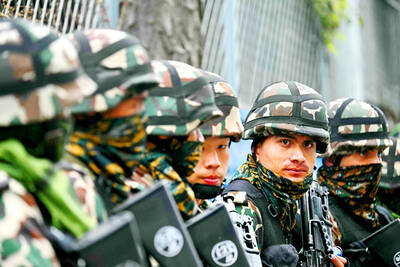
Counting was under way in Nepal yesterday, after a high-stakes parliamentary election to reshape the country’s leadership following protests last year that toppled the government. Key figures vying for power include former Nepalese prime minister K. P. Sharma Oli, rapper-turned-mayor Balendra Shah, who is bidding for the youth vote, and newly elected Nepali Congress party leader Gagan Thapa. In Kathmandu’s tea shops and city squares, people were glued to their phones, checking results as early trends flashed up — suggesting Shah’s centrist Rastriya Swatantra Party (RSP) was ahead. Nepalese Election Commission spokesman Prakash Nyupane said the counting was ongoing “in a peaceful manner”


 RSS
RSS