


After campaigning on the promise to end one war, US President Barack Obama is preparing to escalate another.
Obama’s dual stance on the two wars is not lost on congressional Democrats, many of whom also ran on anti-war platforms.
In the coming weeks, they expect to have to consider tens of billions of dollars needed for combat, including a major buildup of troops in Afghanistan.
While increasing the military’s focus on Afghanistan was anticipated — it was a cornerstone of Obama’s campaign — many Democrats acknowledged in recent interviews that they were skittish about sending more troops, even in small numbers.
The concern, they said, was that the military could become further entrenched in an unwinnable war on their watch.
“Before I support any more troops to Afghanistan, I want to see a strategy that includes an exit plan,” said Representative Jim McGovern, a Massachusetts liberal who at one point wanted to cut off money for the Iraq War.
Democratic Senator Russ Feingold of Wisconsin, another fierce war opponent, said: “The idea of putting the troops in without having more clarity at least gives me pause.”
The Obama administration is in the midst of a sweeping strategy review.
The results of that assessment might not be released for several weeks.
In the meantime, the administration is expected to approve an immediate request from the top military commander in Afghanistan for three more brigades, roughly 14,000 troops.
It is expected that more troops would follow, eventually doubling the US presence from 33,000 to 60,000. The proposed buildup had been under consideration by the Bush administration as a means of dealing with an uptick in violent attacks.
More than 130 US personnel died in Afghanistan last year, compared to 82 in 2007, a recent Pentagon report showed.
US Vice President Joe Biden sought to lower lawmakers’ expectations in the war when he met recently with House Democrats at their party retreat in Williamsburg, Virginia.
“The economic and security and social conditions there are daunting” and the nation has “geography, demography and history working against us,” Biden said.
US Defense Secretary Robert Gates said as much in congressional testimony last month, warning against aspiring to turn Afghanistan into a “Central Asian Valhalla,” referring to a haven of purity in Norse mythology.
“Nobody in the world has that kind of time, patience or money, to be honest,” he told lawmakers.
Indeed, Afghanistan poses a foreign policy challenge unlike no other.
The country is one of the poorest in the world. Opium production has given way to Colombia-like drug cartels trafficking heroin. Corruption is rampant. Terrorist fighters move freely across the Pakistan border. European voters want their armies to leave. And in the latest twist, the US is now scrambling to find an alternative to flying troops and supplies into the landlocked country because of threats by nearby Kyrgyzstan that it plans to shut down the US base there.
“The complexities just mount — and you have to bring yourself back to what I hope we’re going to ask, which is ‘what is the goal?’” Representative John Tierney said in an interview after returning from his third trip to Afghanistan.
“You’ve got to look at these kids’ parents in the face when you go to a funeral and say, ‘This is why your kid was killed in action,’” said Tierney, a Massachusetts Democrat, who chairs an investigative subcommittee on national security issues.
David Kilcullen, a counterinsurgency adviser to former US secretary of state Condoleezza Rice recently warned senators against widening US involvement in the war.
“If you think about what we did in Vietnam, we escalated, we overthrew that leader, we took control of the problem, we tried to fix it and we couldn’t fix it, couldn’t afford it,” Kilcullen, a former Australian Army officer, told the Senate Foreign Relations Committee.
“And I just think we need to be extremely careful about signing ourselves up to escalating to the point where we can’t pullback ... Because once you own the problem, you own it,” he said.
Obama’s biggest supporters in Congress say they believe the new president won’t go too far. But they’re also counting on the popular president to win over a war-weary public.
“I have to believe he will come well prepared and present a case to us that will justify what he is attempting to do,” said Representative Elijah Cummings, a Maryland Democrat.
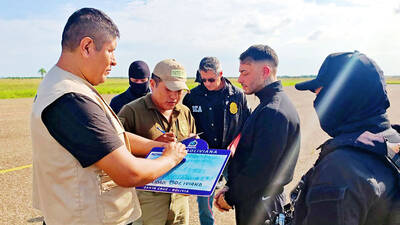
KINGPIN: Marset allegedly laundered the proceeds of his drug enterprise by purchasing and sponsoring professional soccer teams and even put himself in the starting lineups Notorious Latin American narco trafficker Sebastian Marset, who eluded police for years, was handed over to US authorities after his arrest on Friday in Bolivia. Marset, a Uruguayan national who was on the US most-wanted list, was passed to agents of the US Drug Enforcement Administration at Santa Cruz airport in Bolivia, then put on a US airplane, Bolivian state television showed. “The arrest and deportation were carried out pursuant to a court order issued by the US justice system,” Bolivian Minister of Government Marco Antonio Oviedo told reporters. The alleged kingpin was arrested in an upscale neighborhood of Santa
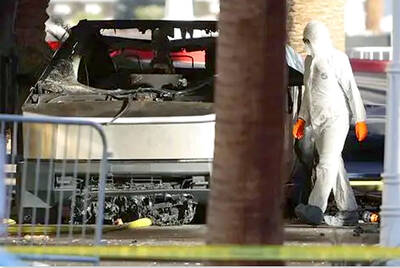
ACTIONABLE ADVICE: The majority of chatbots tested provided guidance on weapons, tactics and target selections, with Perplexity and Meta AI deemed to be the least safe From school shootings to synagogue bombings, leading artificial intelligence (AI) chatbots helped researchers plot violent attacks, according to a study published on Wednesday that highlighted the technology’s potential for real-world harm. Researchers from the nonprofit watchdog Center for Countering Digital Hate and CNN posed as 13-year-old boys in the US and Ireland to test 10 chatbots, including ChatGPT, Google Gemini, Perplexity, Deepseek and Meta AI. Eight of the chatbots assisted the make-believe attackers in more than half the responses, providing advice on “locations to target” and “weapons to use” in an attack, the study said. The chatbots had become a “powerful accelerant for
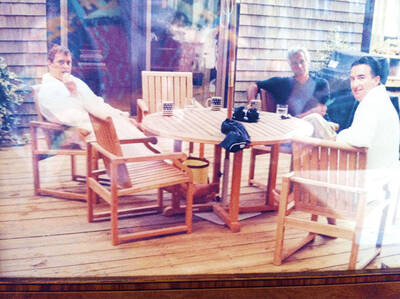
SCANDAL: Other images discovered earlier show Andrew bent over a female and lying across the laps of a number of women, while Mandelson is pictured in his underpants A photograph of former British prince Andrew and veteran politician Peter Mandelson sitting in bathrobes alongside late sex offender Jeffrey Epstein was unearthed on Friday in previously published documents. The image is believed to be the first known photograph of the two men with Epstein. They are currently engulfed in scandal in the UK over their ties to their mutual friend. The undated photograph, first reported by ITV News, shows King Charles III’s disgraced brother and former British ambassador to the US sitting barefoot outside on a wooden deck. They appear to have mugs with a US flag on them
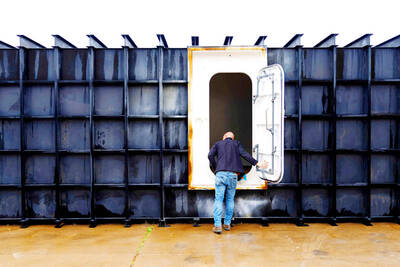
Since the war in the Middle East began nearly two weeks ago, the telephone at Ron Hubbard’s bomb shelter company in Texas has not stopped ringing. Foreign and US clients are rushing to buy his bunkers, seeking refuge in case of air raids, nuclear fallout or apocalypse. With the US and Israel pounding Iran, and Tehran retaliating with strikes across the region, Hubbard has seen demand for his product soar, mostly from Gulf nation customers in Bahrain, Qatar, Kuwait and the United Arab Emirates. “You can imagine how many people are thinking: ‘I wish I had a bomb shelter,’” Hubbard, 63, said in


 RSS
RSS