


Top envoys from Afghanistan, its neighbors and the international powers agreed on Sunday to work together to restore stability in the war-torn state.
“There can be no long-term security and peace in the region without a stable, secure, prosperous and democratic Afghanistan,” they said in a statement released after a one-day conference in Paris.
The envoys “expressed their support for existing initiatives to reinforce cooperation between Afghanistan and its neighbors [and] committed to the effective implementation of these initiatives.”
But, apart from a vague agreement “to work more closely to strengthen border security as a key component of counter-narcotics and counter-terrorism,” no concrete measures were announced.
Afghan Foreign Minister Rangin Dadfar Spanta said: “We need a global strategy against terrorism.”
UN envoy Kai Eide said: “We agreed to work together to control borders, and also to build the economic growth this region needs.”
The conference got off to a bad start when Iranian Foreign Minister Manouchehr Mottaki failed to turn up. The Iranian Foreign Ministry said yesterday that he did not attend because of “undiplomatic comments” by France.
French President Nicolas Sarkozy, an outspoken critic of Iran since coming to office last year, said last Monday that he could not shake hands with Iranian President Mahmoud Ahmadinejad for saying Israel should be “wiped off the map.”
He also said Ahmadinejad did not represent Iran.
The one-day meeting included foreign ministers and senior officials from Pakistan, India, Russia, China, Britain and the US. The aim was to find ways to bring Afghanistan out of its seemingly endless state of war, and to urge neighboring states, especially Pakistan and Iran, to play a more positive role.
The conference hosts want to involve more Afghans in work to stabilize the country, but French officials had played down expectations of rapid progress, noting that little new in the way of policy can be decided until US president-elect Barack Obama takes office on Jan. 20.
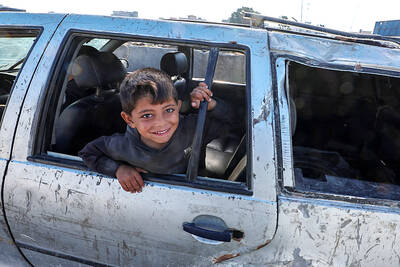
Gaza is rapidly running out of its limited fuel supply and stocks of food staples might become tight, officials said, after Israel blocked the entry of fuel and goods into the war-shattered territory, citing fighting with Iran. The Israeli military closed all Gaza border crossings on Saturday after announcing airstrikes on Iran carried out jointly with the US. Israeli authorities late on Monday night said that they would reopen the Kerem Shalom crossing from Israel to Gaza yesterday, for “gradual entry of humanitarian aid” into the strip, without saying how much. Israeli authorities previously said the crossings could not be operated safely during
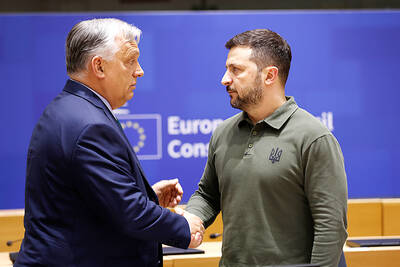
Hungarian authorities temporarily detained seven Ukrainian citizens and seized two armored cars carrying tens of millions of euros in cash across Hungary on suspicion of money laundering, officials said on Friday. The Ukrainians were released on Friday, following their detention on Thursday, but Hungarian officials held onto the cash, prompting Ukraine to accuse Hungary’s Russia-friendly government of illegally seizing the money. “We will not tolerate this state banditism,” Ukrainian Minister of Foreign Affairs Andrii Sybiha said. The seven detained Ukrainians were employees of the Ukrainian state-owned Oschadbank, who were traveling in the two armored cars that were carrying the money between Austria and
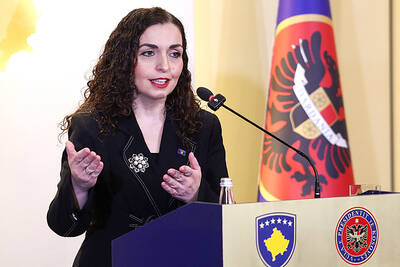
Kosovar President Vjosa Osmani on Friday after dissolving the Kosovar parliament said a snap election should be held as soon as possible to avoid another prolonged political crisis in the Balkan country at a time of global turmoil. Osmani said it is important for Kosovo to wrap up the upcoming election process and form functional institutions for political stability as the war rages in the Middle East. “Precisely because the geopolitical situation is that complex, it is important to finish this electoral process which is coming up,” she said. “It is very hard now to imagine what will happen next.” Kosovo, which declared
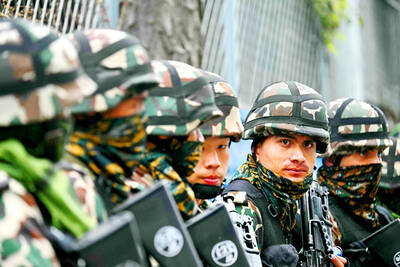
Counting was under way in Nepal yesterday, after a high-stakes parliamentary election to reshape the country’s leadership following protests last year that toppled the government. Key figures vying for power include former Nepalese prime minister K. P. Sharma Oli, rapper-turned-mayor Balendra Shah, who is bidding for the youth vote, and newly elected Nepali Congress party leader Gagan Thapa. In Kathmandu’s tea shops and city squares, people were glued to their phones, checking results as early trends flashed up — suggesting Shah’s centrist Rastriya Swatantra Party (RSP) was ahead. Nepalese Election Commission spokesman Prakash Nyupane said the counting was ongoing “in a peaceful manner”


 RSS
RSS