


Thailand’s main international airport continued to clear a backlog of stranded tourists yesterday while the abrupt return of exiled Thai prime minister Thaksin Shinawatra’s powerful ex-wife threatened to deepen the country’s political crisis.
The reopening of the airports, still partially crippled after a weeklong siege by protesters, had raised hopes the country was emerging from the chaos of the past months. However, many Thais were also following with trepidation the health of King Bhumibol Adulyadej, regarded as crucial to the country’s stability.
The palace announced on Friday night that he was suffering from an inflamed throat and fluctuating fever after he failed to give his annual birthday address.
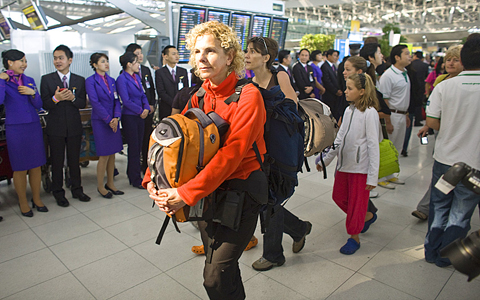
PHOTO: AP
Bangkok’s Suvarnabhumi international airport — Thailand’s main gateway to the world — officially reopened on Friday after protesters ended a weeklong siege that trapped more than 300,000 travelers. The occupation of the capital’s two airports by the People’s Alliance for Democracy (PAD) dealt a heavy blow to tourism.
The airport was operating at about 50 percent capacity on Friday, but a public relations official at the airport said yesterday that most international flights were now back on schedule.
“Flights to Asia are now operating in full gear. But there are a few airlines that are still checking their systems to ensure safety,” said the official, who demanded anonymity because she was not authorized to speak with the press.
The return to Bangkok on Friday of Thaksin’s ex-wife, Pojamarn Damapong, who faces a three-year jail term on a tax evasion conviction, added a complicating element to the political crisis. Thaksin, ousted in a 2006 military coup, remains at the epicenter of instability.
Thai media speculated Pojamarn might rally the ex-leader’s supporters following a court decision that dissolved the ruling political party made up of his allies and drove the prime minister from office.
But a spokesman for the ex-prime minister, Pongthep Thepkanchana, said Pojamarn had returned solely to visit her sick mother “not to manage the problems among factions in the party.”
A number of members of ousted Thai prime minister Somchai Wongsawat’s People Power Party have regrouped in a new party, Pheua Thai, and they retain the right to name a new prime minister within 30 days.
Local media said that the party would meet today to put forward a leader amid behind-the-scenes scurrying among several parties and factions.
Any move to reinstate Thaksin’s allies would likely set off more protests from the anti-government alliance, which charges that the party and the recently toppled government is merely a front for Thaksin.
The ousted prime minister and his ex-wife, a highly influential figure during his years in power, are hated by many of the country’s elite, who charge that they were trying to usurp royal authority. Their divorce is widely regarded as a ploy to reduce each party’s legal liability and preserve the family fortune, made in telecommunications.
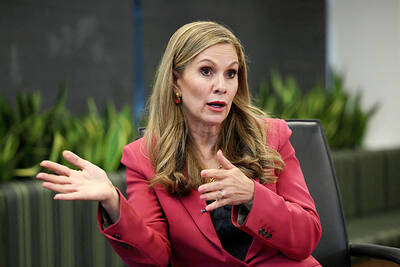
Australians were downloading virtual private networks (VPNs) in droves, while one of the world’s largest porn distributors said it was blocking users from its platforms as the country yesterday rolled out sweeping online age restriction. Australia in December became the first country to impose a nationwide ban on teenagers using social media. A separate law now requires artificial intelligence (AI)-powered chatbot services to keep certain content — including pornography, extreme violence and self-harm and eating disorder material — from minors or face fines of up to A$49.5 million (US$34.6 million). The country also joined Britain, France and dozens of US states requiring
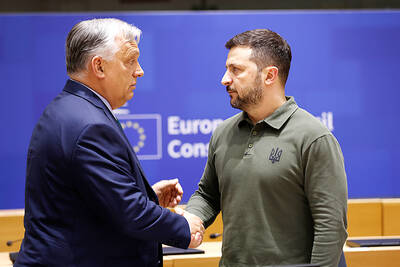
Hungarian authorities temporarily detained seven Ukrainian citizens and seized two armored cars carrying tens of millions of euros in cash across Hungary on suspicion of money laundering, officials said on Friday. The Ukrainians were released on Friday, following their detention on Thursday, but Hungarian officials held onto the cash, prompting Ukraine to accuse Hungary’s Russia-friendly government of illegally seizing the money. “We will not tolerate this state banditism,” Ukrainian Minister of Foreign Affairs Andrii Sybiha said. The seven detained Ukrainians were employees of the Ukrainian state-owned Oschadbank, who were traveling in the two armored cars that were carrying the money between Austria and
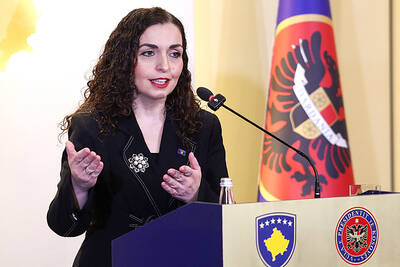
Kosovar President Vjosa Osmani on Friday after dissolving the Kosovar parliament said a snap election should be held as soon as possible to avoid another prolonged political crisis in the Balkan country at a time of global turmoil. Osmani said it is important for Kosovo to wrap up the upcoming election process and form functional institutions for political stability as the war rages in the Middle East. “Precisely because the geopolitical situation is that complex, it is important to finish this electoral process which is coming up,” she said. “It is very hard now to imagine what will happen next.” Kosovo, which declared

MORE BANS: Australia last year required sites to remove accounts held by under-16s, with a few countries pushing for similar action at an EU level and India considering its own ban Indonesia on Friday said it would ban social media access for children under 16, citing threats from online pornography, cyberbullying, online fraud and Internet addiction. “Accounts belonging to children under 16 on high-risk platforms will start to be deactivated, beginning with YouTube, TikTok, Facebook, Instagram, Threads, X, Bigo Live and Roblox,” Indonesian Minister of Communications and Digital Meutya Hafid said. “The government is stepping in so that parents no longer have to fight alone against the giants of the algorithm. Implementation will begin on March 28, 2026,” she said. The social media ban would be introduced in stages “until all platforms fulfill their


 RSS
RSS