


India pointed the finger of blame at Pakistan on Friday, saying preliminary investigations into the bloody attacks on its commercial capital showed that “some elements” inside the rival nation were responsible.
The coordinated series of attacks, which began on Wednesday night, targeted 10 sites across Mumbai, including an iconic hotel and a landmark train station.
Local media speculation quickly settled on Lashkar-e-Tayyeba, a Pakistan rebel group that has fought troops in Indian-controlled Kashmir, but newspapers and TV channels have offered little evidence for the suspicion.
EVIDENCE
Indian Federal Home Minister Jaiprakash Jaiswal said a captured gunman had been identified as a Pakistani, while R. R. Patil, a top official in Maharashtra state, said: “It is very clear that the terrorists are from Pakistan. We have enough evidence that they are from Pakistan.”
Earlier, Indian Prime Minister Manmohan Singh blamed “external forces” for the violence — a phrase sometimes used to refer to Pakistani militants, whom Indian authorities often blame for attacks.
Indian Foreign Minister Pranab Mukherjee, said “some elements in Pakistan are responsible for Mumbai terror attacks,” but he added that “proof cannot be disclosed at this time.”
Mukherjee’s carefully phrased comments appeared to indicate he was accusing Pakistan-based groups of staging the attack, and not Pakistan itself.
None of the officials provided further details.
A previously unknown group calling itself the Deccan Mujahideen has claimed responsibility for the attacks.
On Thursday a man identifying himself as spokesman for the Lashkar rebel group denied any role in the attacks in a phone interview with the local Hindi news channel, in Indian Kashmir’s main city Srinagar over telephone.
Lashkar has long been seen as a creation of the Pakistani intelligence service to help wage its clandestine war against India in disputed Kashmir.
Any clear proof of Pakistani involvement would seriously jeopardize fragile peace talks between the nuclear-armed rivals.
Pakistan has vigorously denied all accusations that it was tied to the attacks.
“I will say in very categoric terms that Pakistan is not involved in these gory incidents,” Pakistani Defense Minister Ahmed Mukhtar said.
FBI
US officials on Friday were working out details with Indian diplomats for the departure of a team of FBI agents to join the investigation.
Analysts debated the level of Pakistan’s possible involvement.
The terror group “itself is probably drawing from, in large numbers, Indian operatives, but it probably enjoys a fairly healthy support of Pakistan,” said Christine Fair, a South Asia specialist at the RAND Corp. “The big picture is that there’s probably going to be more of this, not less of this, to come.”
Meanwhile, the British government was investigating whether some of the attackers could be British citizens with links to Pakistan or Kashmir, a British security official said on condition of anonymity because of the sensitivity of his work.
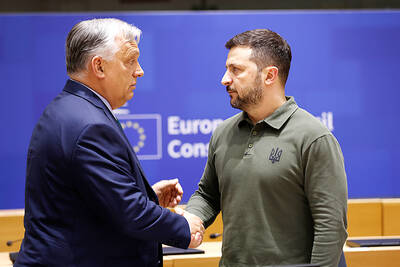
Hungarian authorities temporarily detained seven Ukrainian citizens and seized two armored cars carrying tens of millions of euros in cash across Hungary on suspicion of money laundering, officials said on Friday. The Ukrainians were released on Friday, following their detention on Thursday, but Hungarian officials held onto the cash, prompting Ukraine to accuse Hungary’s Russia-friendly government of illegally seizing the money. “We will not tolerate this state banditism,” Ukrainian Minister of Foreign Affairs Andrii Sybiha said. The seven detained Ukrainians were employees of the Ukrainian state-owned Oschadbank, who were traveling in the two armored cars that were carrying the money between Austria and
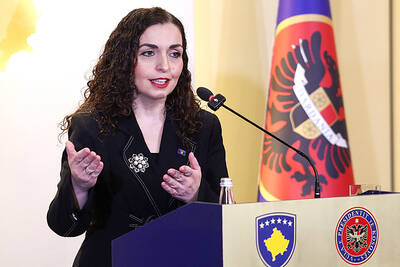
Kosovar President Vjosa Osmani on Friday after dissolving the Kosovar parliament said a snap election should be held as soon as possible to avoid another prolonged political crisis in the Balkan country at a time of global turmoil. Osmani said it is important for Kosovo to wrap up the upcoming election process and form functional institutions for political stability as the war rages in the Middle East. “Precisely because the geopolitical situation is that complex, it is important to finish this electoral process which is coming up,” she said. “It is very hard now to imagine what will happen next.” Kosovo, which declared

MORE BANS: Australia last year required sites to remove accounts held by under-16s, with a few countries pushing for similar action at an EU level and India considering its own ban Indonesia on Friday said it would ban social media access for children under 16, citing threats from online pornography, cyberbullying, online fraud and Internet addiction. “Accounts belonging to children under 16 on high-risk platforms will start to be deactivated, beginning with YouTube, TikTok, Facebook, Instagram, Threads, X, Bigo Live and Roblox,” Indonesian Minister of Communications and Digital Meutya Hafid said. “The government is stepping in so that parents no longer have to fight alone against the giants of the algorithm. Implementation will begin on March 28, 2026,” she said. The social media ban would be introduced in stages “until all platforms fulfill their
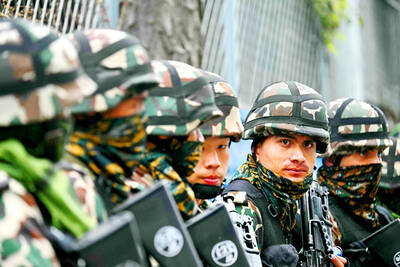
Counting was under way in Nepal yesterday, after a high-stakes parliamentary election to reshape the country’s leadership following protests last year that toppled the government. Key figures vying for power include former Nepalese prime minister K. P. Sharma Oli, rapper-turned-mayor Balendra Shah, who is bidding for the youth vote, and newly elected Nepali Congress party leader Gagan Thapa. In Kathmandu’s tea shops and city squares, people were glued to their phones, checking results as early trends flashed up — suggesting Shah’s centrist Rastriya Swatantra Party (RSP) was ahead. Nepalese Election Commission spokesman Prakash Nyupane said the counting was ongoing “in a peaceful manner”


 RSS
RSS