


Thousands of followers of a radical Shiite cleric protested a proposed US-Iraqi security deal on Friday, burning an effigy of US President George W. Bush in the same square where Iraqis beat a toppled Saddam Hussein statue five years ago.
Chanting and waving flags, Moqtada al-Sadr’s followers filled Firdous Square to protest the pact that would allow US troops to stay for three more years.
The demonstration followed two days of protests in parliament by al-Sadr loyalists, who disrupted readings of the proposed agreement.
Parliament is scheduled to vote on the pact tomorrow, but presidential spokesman Naseer al-Ani told Iraq’s Sharqiyah television late on Friday that the vote might be delayed until after the Muslim feast of Eid al-Adha early next month.
“It will need more time. Perhaps until after Eid al-Adha,” he told the Dubai-based station without explanation.
The legislature is expected to go into recess later this month ahead of Eid al-Adha, when scores of lawmakers travel to Saudi Arabia for the annual pilgrimage to Mecca.
Despite the opposition of at least three small parliamentary factions, the pact is expected to pass in the Shiite-led parliament when it comes up for a vote.
Al-Sadr, who controls a group of 30 lawmakers in the 275-seat parliament, views the deal as a surrender to US interests. But supporters say the pact will eventually lead to full sovereignty.
If al-Sadr’s group and other legislators opposed to the pact lose by a thin margin, they might attempt to turn their anti-US message into a defining issue in provincial elections on Jan. 31 and general elections late next year.
Al-Sadr’s influence in Iraq, however, has dipped from the days when militiamen loyal to him battled US forces and were seen as protectors of Shiites against Sunni militants and his anti-US message earned him and his followers strong nationalist credentials.
Al-Sadr, believed to be in Iran, was not at the protest, though his representative read a sermon he wrote that called the US “the enemy of Islam.”
“The government must know that it is the people who help it in the good and the bad times. If it throws the occupier out, all the Iraqi people will stand by it,” the sermon read, using common rhetoric for the US.
Al-Sadr said that his followers in both his movement’s armed and peaceful factions would continue to work for the removal of US forces.
The protesters placed the Bush effigy on the same pedestal where US Marines toppled the ousted dictator’s statue in one of the iconic images of the 2003 US-led invasion.
After a mass prayer, demonstrators pelted the Bush effigy with plastic water bottles and sandals. One man hit it in the face with his sandal. The effigy fell head first into the crowd and protesters jumped on it before setting it ablaze.
The uproar this week suggests that the security pact could remain divisive as the country struggles for reconciliation after years of war.
For Iraqi Prime Minister Nouri al-Maliki’s Dawa party and the Supreme Islamic Iraqi Council, its senior government partner, the margin of support is almost as important as the victory itself. A narrow passage will cast doubt on the legitimacy of the new terms governing the US troop presence.

PHISHING: The con might appear convincing, as the scam e-mails can coincide with genuine messages from Apple saying you have run out of storage For a while you have been getting messages from Apple saying “your iCloud storage is full.” They say you have exceeded your storage plan, so documents are no longer being backed up, and photos you take are not being uploaded. You have been resisting Apple’s efforts to get you to pay a minimum of £0.99 (US$1.33) a month for more storage, but it seems that you cannot keep putting off the inevitable: You have received an e-mail which says your iCloud account has been blocked, and your photos and videos would be deleted very soon. To keep them you need

For two decades, researchers observed members of the Ngogo chimpanzee group of Kibale National Park in Uganda spend their days eating fruits and leaves, resting, traveling and grooming in their tropical rainforest abode, but this stable community then fractured and descended into years of deadly violence. The researchers are now describing the first clearly documented example of a group of wild chimpanzees splitting into two separate factions, with one launching a series of coordinated attacks against the other. Adult males and infants were targeted, with 28 deaths. “Biting, pounding the victim with their hands, dragging them, kicking them — mostly adult males,
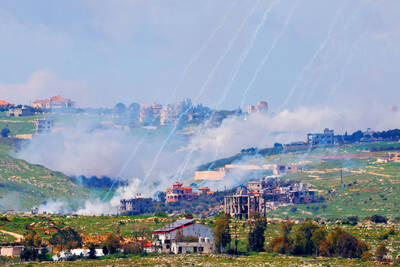
The Israeli military has demolished entire villages as part of its invasion of south Lebanon, rigging homes with explosives and razing them to the ground in massive remote detonations. The Guardian reviewed three videos posted by the Israeli military and on social media, which showed Israel carrying out mass detonations in the villages of Taybeh, Naqoura and Deir Seryan along the Israel-Lebanon border. Lebanese media has reported more mass detonations in other border villages, but satellite imagery was not readily available to verify these claims. The demolitions came after Israeli Minister of Defense Israel Katz called for the destruction of

SUPERFAN: The Japanese PM played keyboard in a Deep Purple tribute band in middle school and then switched to drums at university, she told the British rock band Legendary British rock band Deep Purple yesterday made Japanese Prime Minister Sanae Takaichi’s day with a brief visit to their high-profile superfan as they returned to the nation they first toured more than half a century ago. Takaichi’s reputation as an amateur drummer, and a fan of hard rock and heavy metal has been well documented, and she has referred to Deep Purple as one of her favorite bands along with the likes of Black Sabbath and Iron Maiden. “You are my god,” a giddy Takaichi said in English to Deep Purple drummer Ian Paice, presenting him with a set of made-in-Japan


 RSS
RSS