


Colombian President Alvaro Uribe is fueling debate over whether he will run for re-election with hints about his future and a growing list of possible successors he deems fit to uphold his security policies.
Uribe supporters and adversaries alike are trying to decipher whether he will step aside for 2010 or seek to change the Constitution to allow him another term in a country that many say he has saved from decades of conflict.
Colombian Ambassador to the UK Noemi Sanin is the latest to be named by Uribe as a possible standard bearer for his “Democratic Security” campaign and market-friendly proposals, should he decide against running.
A year and a half from the election, pundits are speculating over who might replace Uribe while the opposition squabbles over how best to challenge the man whose popularity rating constantly hovers around 80 percent.
“It is not ideal for a president to try and stay in power, but we cannot abandon these policies,” Uribe said in his latest remarks on re-election this week.
“We have to re-elect policies, not people,” he said.
But the conservative leader, who was re-elected in 2006, said a president could not “turn his back” on the people.
Sanin, a former presidential candidate herself, is one of the “competent” supporters of his policies who should be considered, Uribe said he has told members of his alliance.
The president also has given a nod to Defense Minister Juan Manuel Santos, Senator Marta Lucia Ramirez, who is a former defense minister, Cambio Radical party member German Vargas Lleras and former justice minister Carlos Holguin, among others.
In other developments, Venezuelan authorities on Tuesday deported a former Colombian senator who is wanted on charges of conspiring with right-wing paramilitaries to kidnap a reputed political rival.
Venezuelan police escorted Alvaro Araujo Noguera onto a plane destined for Colombia.
The 75-year-old one-time agriculture minister and state governor was on the run for a year-and-a-half before being captured last Thursday.

An American scientist convicted of lying to US authorities about payments from China while he was at Harvard University has rebuilt his research lab in Shenzhen, China, to pursue technology the Chinese government has identified as a national priority: embedding electronics into the human brain. Charles Lieber, 67, is among the world’s leading researchers in brain-computer interfaces. The technology has shown promise in treating conditions such as amyotrophic lateral sclerosis and restoring movement in paralyzed people. It also has potential military applications: Scientists at the Chinese People’s Liberation Army have investigated brain interfaces as a way to engineer super soldiers by boosting
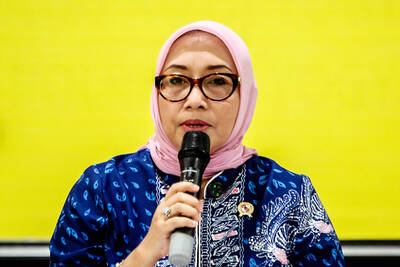
Indonesian police have arrested 13 people after shocking images of alleged abuse against small children at a daycare center went viral, sparking outrage across the nation, officials said on Monday. Police on Friday last week raided Little Aresha, a daycare center in Yogyakarta on Java island, following a report from a former employee. CCTV footage circulating on social media showed children, most younger than two, lying on the floor wearing only diapers, their hands and feet bound with rags. The police have confirmed that the footage is authentic. Police said they also found 20 children crammed into a room just 3m by 3m. “So

A highway bomb attack in a restive region of southwestern Colombia on Saturday killed 14 people and injured at least 38, the latest spate of violence ahead of next month’s presidential election. Authorities blamed the attack in the Cauca department — a conflict-ridden, coca-growing region — on dissidents of the now-disbanded FARC guerrilla army, who have been sowing violence across the country. “Those who carried out this attack ... are terrorists, fascists and drug traffickers,” Colombian President Gustavo Petro said on social media. “I want our very best soldiers to confront them,” he added. The leftist leader blamed the bombing
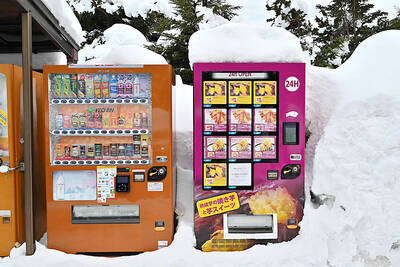
From post offices and parks to stations and even the summit of Mount Fuji, Japan’s vending machines are ubiquitous, but with the rapid pace of inflation cooling demand for their drinks, operators are being forced to rethink the business. Last month beverage giant DyDo Group Holdings announced it would remove about 20,000 vending machines — about 7 percent of their stock nationwide — by January next year, to “reconstruct a profitable network.” Pokka Sapporo Food & Beverage, based in Nagoya, also said last month it would sell its 40,000-machine operation to Osaka-based Lifedrink Co. “The strength of the vending machine


 RSS
RSS