


With their high visibility on elite college campuses, Asian Americans have picked up a nickname that makes many uncomfortable: the "model minority."
But a new report argues that Asian Americans’ reputation for academic success has obscured important variations within the group and created a false sense that all their education needs are being met.
As a group, Asian Americans have earned above-average incomes and achieved high average levels of education, said Democratic Representative David Wu at a news conference to release the report. But they are clustered both at both the high and low ends of the scale.
“The conversation in our society has had this high-income, high-education group completely overshadow this other group of folks,” Wu said. “It has been an education process to convince folks that we are not an ethnic group, every one of which has just graduated from Harvard.”
Relative to other ethnic minorities, Asian Americans have, indeed, been extremely successful by many academic measures. They substantially outscore other minority groups on average scores on the SAT college entrance exam. The report said more than 44 percent included in the group Asian American (but excluding Pacific Islanders) have earned a bachelor’s degree, 20 percentage points higher than the national average.
In the prestigious University of California system, the number of Asian-Americans enrolling each fall has shot up 59 percent in the decade since a ballot initiative ended racial preferences in admissions.
But the study notes often overlooked disparities in achievement among various Asian and Pacific Islander groups.
Just 7.5 percent of Hmong immigrants, 9.2 percent of Cambodians and 7.7 percent of Laotians had earned a bachelor’s degree in 2000, compared to 43.8 percent of Filipinos and an identical proportion of Koreans.
On standardized tests, Asians are often disproportionately represented among the highest scores, but also among the lowest — doomed by poor English skills. And while their numbers have surged at many high-profile schools, enrollment among Asian Americans and Pacific Islanders is actually increasing faster at community colleges than at four-year ones.
Jih-Fei Cheng, coordinator of the Asian and Pacific Islander Student Center at California State Polytechnic, Pomona, said the “model minority” idea is a burden for many Asian-American students, who comprise about one-third of the student body there.
The report also argues the “model minority” argument can mislead policy-makers.
“They face a number of challenges such as being invisible, people assuming they don’t have any educational needs, they don’t need services, they don’t need to be included when it comes to particular policies,” said Robert Teranishi of New York University, one of the authors of the study, a collaboration between two NYU research institutes and the College Board.
Also, he said, “there’s some emerging trends that we’ve found relating to use of mental health services, suicide rates,” indicating Asian-American students may be at particular risk.
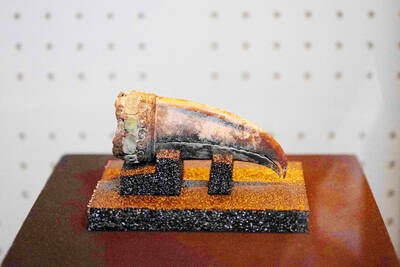
Archeologists in Peru on Thursday said they found the 5,000-year-old remains of a noblewoman at the sacred city of Caral, revealing the important role played by women in the oldest center of civilization in the Americas. “What has been discovered corresponds to a woman who apparently had elevated status, an elite woman,” archeologist David Palomino said. The mummy was found in Aspero, a sacred site within the city of Caral that was a garbage dump for more than 30 years until becoming an archeological site in the 1990s. Palomino said the carefully preserved remains, dating to 3,000BC, contained skin, part of the
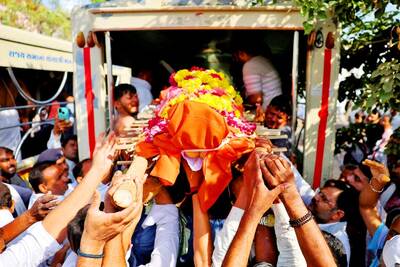
‘WATER WARFARE’: A Pakistani official called India’s suspension of a 65-year-old treaty on the sharing of waters from the Indus River ‘a cowardly, illegal move’ Pakistan yesterday canceled visas for Indian nationals, closed its airspace for all Indian-owned or operated airlines, and suspended all trade with India, including to and from any third country. The retaliatory measures follow India’s decision to suspend visas for Pakistani nationals in the aftermath of a deadly attack by shooters in Kashmir that killed 26 people, mostly tourists. The rare attack on civilians shocked and outraged India and prompted calls for action against their country’s archenemy, Pakistan. New Delhi did not publicly produce evidence connecting the attack to its neighbor, but said it had “cross-border” links to Pakistan. Pakistan denied any connection to

TRUMP EFFECT: The win capped one of the most dramatic turnarounds in Canadian political history after the Conservatives had led the Liberals by more than 20 points Canadian Prime Minister Mark Carney yesterday pledged to win US President Donald Trump’s trade war after winning Canada’s election and leading his Liberal Party to another term in power. Following a campaign dominated by Trump’s tariffs and annexation threats, Carney promised to chart “a new path forward” in a world “fundamentally changed” by a US that is newly hostile to free trade. “We are over the shock of the American betrayal, but we should never forget the lessons,” said Carney, who led the central banks of Canada and the UK before entering politics earlier this year. “We will win this trade war and
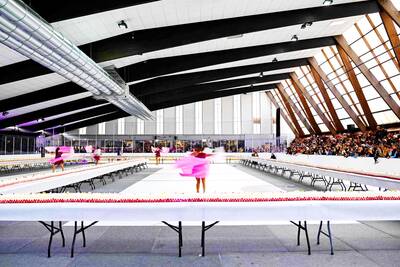
Armed with 4,000 eggs and a truckload of sugar and cream, French pastry chefs on Wednesday completed a 121.8m-long strawberry cake that they have claimed is the world’s longest ever made. Youssef El Gatou brought together 20 chefs to make the 1.2 tonne masterpiece that took a week to complete and was set out on tables in an ice rink in the Paris suburb town of Argenteuil for residents to inspect. The effort overtook a 100.48m-long strawberry cake made in the Italian town of San Mauro Torinese in 2019. El Gatou’s cake also used 350kg of strawberries, 150kg of sugar and 415kg of


 RSS
RSS