


Iranians started voting yesterday in the second round of legislative elections expected to tighten the conservatives’ grip on parliament after reformists were hurt by pre-poll disqualifications.
Around half the electorate are eligible to vote to choose members of parliament for the 82 seats in the 290-seat chamber which were not decided outright in the first round on March 14. Previously, state media reports had spoken of 81 seats.
The most closely watched competition will be in Tehran, where in the first round conservatives won all 19 of the seats decided outright. Eleven seats are still available and reformists will be hoping to pick up a handful of these.
Under Iranian election law candidates needed at least 25 percent of the vote to be elected outright in the first round. Polls for the second round run-offs opened at 8am and close at 6pm.
“The same feeling that motivated us to accomplish our duty in the first round is motivating us to vote today,” said supreme leader Ayatollah Ali Khamenei as he cast his vote in Tehran.
“There’s an old Iranian saying that the ‘the one who does the work is the one who finishes the work,’” said Khamenei, who is traditionally always one of the first to vote.
The authorities published no official figures over the share of seats after the first round, but out of the 209 MPs who were elected directly at least 130 were conservatives, more than 30 reformists and the remainder independents.
Although conservatives are assured of holding an overwhelming majority in the parliament, the new MPs are not expected to always give their fellow conservative Iranian President Mahmoud Ahmadinejad an easy ride.
Ahmadinejad has infuriated many more moderate conservatives with his expansionary economic policies — which economists blame for Iran’s high inflation — and his attacks on opponents.
“The eighth parliament [since the 1979 Islamic revolution] will not be an opposition parliament but it will be a critical parliament,” conservative analyst Amir Mohebian said.
Reformists complained bitterly after hundreds of their best candidates were disqualified in pre-election vetting for not meeting the criteria required of MPs, including loyalty to the Islamic revolution.
They also protested after the first round that the results did not reflect performance, especially in Tehran, but the complaints were discounted by electoral authorities.
The West reacted with suspicion after the conservative victory in the first round, which the US described as “cooked.”
But with an estimated 42 often well-placed reformist hopefuls competing for the remaining seats out of a total of 162 candidates they are expected to retain a respectable minority.
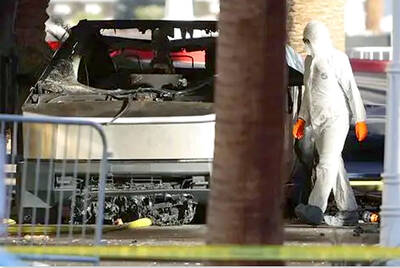
ACTIONABLE ADVICE: The majority of chatbots tested provided guidance on weapons, tactics and target selections, with Perplexity and Meta AI deemed to be the least safe From school shootings to synagogue bombings, leading artificial intelligence (AI) chatbots helped researchers plot violent attacks, according to a study published on Wednesday that highlighted the technology’s potential for real-world harm. Researchers from the nonprofit watchdog Center for Countering Digital Hate and CNN posed as 13-year-old boys in the US and Ireland to test 10 chatbots, including ChatGPT, Google Gemini, Perplexity, Deepseek and Meta AI. Eight of the chatbots assisted the make-believe attackers in more than half the responses, providing advice on “locations to target” and “weapons to use” in an attack, the study said. The chatbots had become a “powerful accelerant for
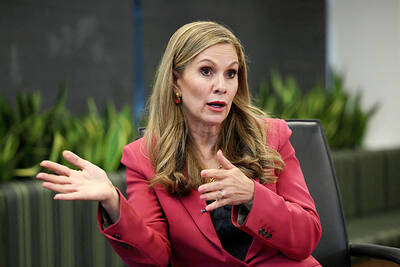
Australians were downloading virtual private networks (VPNs) in droves, while one of the world’s largest porn distributors said it was blocking users from its platforms as the country yesterday rolled out sweeping online age restriction. Australia in December became the first country to impose a nationwide ban on teenagers using social media. A separate law now requires artificial intelligence (AI)-powered chatbot services to keep certain content — including pornography, extreme violence and self-harm and eating disorder material — from minors or face fines of up to A$49.5 million (US$34.6 million). The country also joined Britain, France and dozens of US states requiring
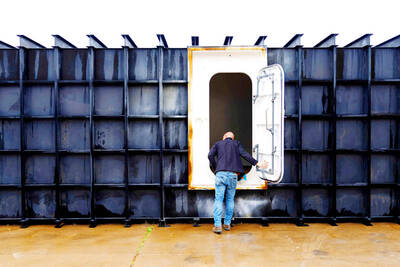
Since the war in the Middle East began nearly two weeks ago, the telephone at Ron Hubbard’s bomb shelter company in Texas has not stopped ringing. Foreign and US clients are rushing to buy his bunkers, seeking refuge in case of air raids, nuclear fallout or apocalypse. With the US and Israel pounding Iran, and Tehran retaliating with strikes across the region, Hubbard has seen demand for his product soar, mostly from Gulf nation customers in Bahrain, Qatar, Kuwait and the United Arab Emirates. “You can imagine how many people are thinking: ‘I wish I had a bomb shelter,’” Hubbard, 63, said in
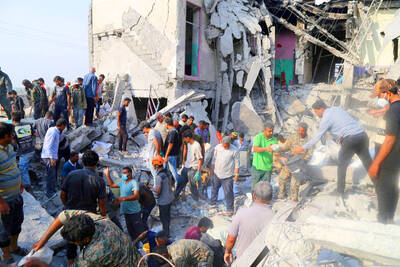
STILL IN POWER: US intelligence reports showed that the Iranian regime is not in danger of collapse and retains control of the public, casting doubt on Trump’s exit Nearly every US Senate Democrat on Wednesday signed a letter sent to US Secretary of Defense Pete Hegseth requesting a “swift investigation” of airstrikes on a girls’ school in Iran that killed scores of children and any other potential US military actions causing civilian harm. Reuters reported on Thursday last week that US military investigators believe it is likely that US forces were responsible for the Feb. 28 strike on the school, as US and Israeli forces launched attacks on Iran. “The results of this school attack are horrific. The majority of those killed in the strikes were girls between the ages


 RSS
RSS