


Dith Pran, the Cambodian-born journalist whose harrowing tale of enslavement and eventual escape from the murderous Khmer Rouge revolutionaries in 1979 became the subject of the award-winning film The Killing Fields, died on Sunday. He was 65.
Dith died at a New Jersey hospital of pancreatic cancer, according to Sydney Schanberg, his former colleague at the New York Times. Dith had been diagnosed almost three months ago.
Dith was working as an interpreter and assistant for Schanberg in Phnom Penh when the Vietnam War reached its chaotic end in April 1975 and both countries were taken over by communist forces.
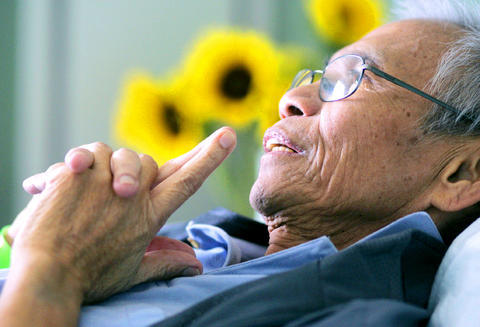
PHOTO: AP
Schanberg helped Dith's family get out but was forced to leave his friend behind after the capital fell; they were not reunited until Dith escaped four-and-a-half years later. Eventually, Dith resettled in the US and went to work as a photographer for the Times.
It was Dith who coined the term "killing fields" to describe the horrifying clusters of corpses and skeletal remains of victims he encountered on his desperate journey to freedom.
The regime of Pol Pot, bent on turning Cambodia back into a strictly agrarian society, and his communist zealots were blamed for the deaths of nearly 2 million of Cambodia's 7 million people.
"That was the phrase he [Dith] used from the very first day, during our wondrous reunion in the refugee camp," Schanberg said later.
With thousands being executed simply for manifesting signs of intellect or Western influence -- even wearing glasses or wristwatches -- Dith survived by masquerading as an uneducated peasant, toiling in the fields and subsisting on as little as a mouthful of rice a day and whatever small animals he could catch.
After Dith moved to the US, he became a goodwill ambassador for the UN High Commissioner for Refugees and founded the Dith Pran Holocaust Awareness Project, dedicated to educating people on the history of the Khmer Rouge regime.
In a letter to the staff of the Times, executive editor Bill Keller called Dith "a journalist and hero," adding, `"that last word is not one I use lightly."
Schanberg described Dith's ordeal and salvation in a 1980 magazine article titled The Death and Life of Dith Pran.
Schanberg's reporting from Phnom Penh had earned him a Pulitzer Prize in 1976.
Later a book, the magazine article became the basis for The Killing Fields, the highly successful 1984 British film starring Sam Waterston as the Times correspondent and Haing S. Ngor, another Cambodian escapee from the Khmer Rouge, as Dith.
Dith's survivors include his companion, Bette Parslow; his former wife, Meoun Ser Dith; three sons; a daughter; six grandchildren including a boy named Sydney; and two step-grandchildren.
His three brothers were killed by the Khmer Rouge.

‘IN A DIFFERENT PLACE’: The envoy first visited Shanghai, where he attended a Chinese basketball playoff match, and is to meet top officials in Beijing tomorrow US Secretary of State Antony Blinken yesterday arrived in China on his second visit in a year as the US ramps up pressure on its rival over its support for Russia while also seeking to manage tensions with Beijing. The US diplomat tomorrow is to meet China’s top brass in Beijing, where he is also expected to plead for restraint as Taiwan inaugurates president-elect William Lai (賴清德), and to raise US concerns on Chinese trade practices. However, Blinken is also seeking to stabilize ties, with tensions between the world’s two largest economies easing since his previous visit in June last year. At the

UNSETTLING IMAGES: The scene took place in front of TV crews covering the Trump trial, with a CNN anchor calling it an ‘emotional and unbelievably disturbing moment’ A man who doused himself in an accelerant and set himself on fire outside the courthouse where former US president Donald Trump is on trial has died, police said yesterday. The New York City Police Department (NYPD) said the man was declared dead by staff at an area hospital. The man was in Collect Pond Park at about 1:30pm on Friday when he took out pamphlets espousing conspiracy theories, tossed them around, then doused himself in an accelerant and set himself on fire, officials and witnesses said. A large number of police officers were nearby when it happened. Some officers and bystanders rushed

Beijing is continuing to commit genocide and crimes against humanity against Uyghurs and other Muslim minorities in its western Xinjiang province, U.S. Secretary of State Antony Blinken said in a report published on Monday, ahead of his planned visit to China this week. The State Department’s annual human rights report, which documents abuses recorded all over the world during the previous calendar year, repeated language from previous years on the treatment of Muslims in Xinjiang, but the publication raises the issue ahead of delicate talks, including on the war in Ukraine and global trade, between the top U.S. diplomat and Chinese
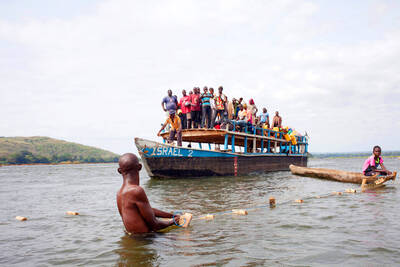
RIVER TRAGEDY: Local fishers and residents helped rescue people after the vessel capsized, while motorbike taxis evacuated some of the injured At least 58 people going to a funeral died after their overloaded river boat capsized in the Central African Republic’s (CAR) capital, Bangui, the head of civil protection said on Saturday. “We were able to extract 58 lifeless bodies,” Thomas Djimasse told Radio Guira. “We don’t know the total number of people who are underwater. According to witnesses and videos on social media, the wooden boat was carrying more than 300 people — some standing and others perched on wooden structures — when it sank on the Mpoko River on Friday. The vessel was heading to the funeral of a village chief in


 RSS
RSS