


China has proven a reliable punching bag, and potential vote-getter, for US presidential candidates: The fast-growing country's massive factories, staffed by underpaid workers, fill US stores with tainted food and dangerous toys, voters are told.
Candidates accuse China's government of crushing dissent and befriending thug rulers in Sudan and Myanmar; Beijing's currency manipulation and trade distortions, they say, make it impossible for US companies to compete.
As a crucial primary on Tuesday in the industrial, midwestern US state of Ohio approaches, Senator Hillary Clinton and Democratic presidential front-runner Senator Barack Obama are each working to convince voters that they are the stronger candidate to confront China.
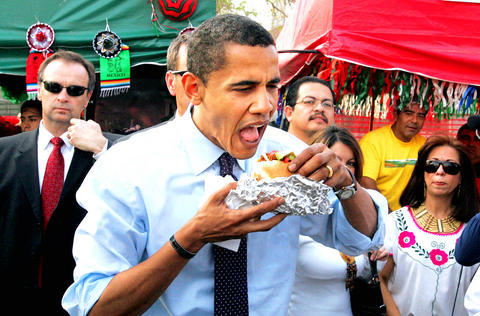
PHOTO: AP
The campaign China-bashing offers another side to what US President George W. Bush calls the "complicated" relationship with Beijing. His administration has balanced criticism with a recognition of China as an important trading partner and as a world power whose cooperation is needed to settle nuclear standoffs with Iran and North Korea.
Voters are wary of China's rise. With US recession fears growing, many Americans are more likely to think about jobs lost to China than about the low prices they pay for Chinese products. Their view of China's power can also be exaggerated: A recent survey found that four in 10 Americans believed China, not the US, was the world's top economic power.
Candidates are trying to tap into that unease. Yet, despite the tough talk, whoever wins the White House could take a more moderate approach The next president will need Chinese help to confront a host of global issues important to the US.
Clinton, in a foreign policy speech this week, dealt with voter discomfort with China. "Today, China's steel comes here and our jobs go there," she said. "We play by the rules and they manipulate their currency. We get tainted fish and lead-laced toys and poisoned pet food in return."
Obama has recently called China "the biggest beneficiary and the biggest problem that we have with respect to trade."
He spoke of Ohio workers watching equipment being "unbolted from the floors of factories and shipped to China, resulting in devastating job losses and communities completely falling apart."
In Ohio, where thousands of manufacturing jobs have disappeared this decade, the complaints on China will appeal to voters.
"China is very front and center," Senator Sherrod Brown, an Democrat from the state, said. "My guess is both candidates would acknowledge that trade is a bigger issue in Ohio than even they knew."
China's economic and trade policies have long been criticized by US lawmakers and manufacturers, especially as a huge US trade deficit with China has grown. The trade gap has been blamed for contributing to the loss of 3 million manufacturing jobs in the US since 2000.
Dozens of bills in Congress would punish China for what critics see as unfair trade practices.
Ralph Cossa, president of the Pacific Forum CSIS think tank, said that whatever the candidates say about China during the campaign, Bush's successor will find a way to improve ties with China.
As Obama and Clinton fight for the right to face presumed Republican nominee Senator John McCain, China is closely watching how it is portrayed by the candidates.
Chinese Foreign Minister Yang Jiechi (
Asked if US-China relations could be hurt by domestic US politics, Yang said it is a "mainstream consensus" among Democrats and Republicans to "further grow the relationship with China."
Recently, McCain has measured his comments on China, criticizing its pollution and efforts on climate change.
He also has taken a tough line, saying the US "must take note" of China's "warlike rhetoric" toward US ally Taiwan.
China's close economic and diplomatic relations with "pariah states" such as Myanmar, Sudan and Zimbabwe will result in tensions, McCain wrote in the journal Foreign Affairs.

ROCKY RELATIONS: The figures on residents come as Chinese tourist numbers drop following Beijing’s warnings to avoid traveling to Japan The number of Chinese residents in Japan has continued to rise, even as ties between the two countries have become increasingly fractious, data released on Friday showed. As of the end of December last year, the number of Chinese residents had increased by 6.5 percent from the previous year to 930,428. Chinese people accounted for 22.6 percent of all foreign residents in Japan, making them by far the largest group, Japanese Ministry of Justice data showed. Beijing has criticized Tokyo in increasingly strident terms since Japanese Prime Minister Sanae Takaichi last year suggested that a military conflict around Taiwan could
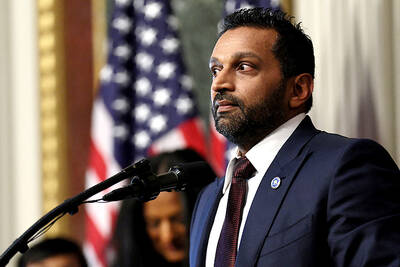
A pro-Iran hacking group claimed to breach FBI Director Kash Patel’s personal e-mail inbox and posted some of the contents online. The e-mails provided by the hacking group include travel details, correspondence with leasing agents in Washington and global entry, and loyalty account numbers. The e-mail address the hackers claim to have compromised has been previously tied to Patel’s personal details, and the leaked e-mails contain photos of Patel and others, in addition to correspondence with family members and colleagues. “The FBI is aware of malicious actors targeting Director Patel’s personal email information,” the agency said in a statement on
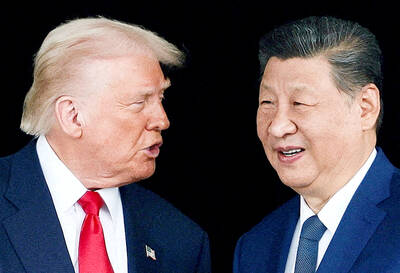
RIVALRY: ‘We know that these are merely symbolic investigations initiated by China, which is in fact the world’s most profligate disrupter of supply chains,’ a US official said China has started a pair of investigations into US trade practices, retaliating against similar probes by US President Donald Trump’s administration as the superpowers stake out positions before an expected presidential summit in May. The move, announced by the Chinese Ministry of Commerce on Friday, is a direct mirror of steps Trump took to revive his tariff agenda after the US Supreme Court last month struck down some of his duties. “China expresses its strong dissatisfaction and firm opposition to these actions,” a ministry spokesperson said in a statement, referring to the so-called Section 301 investigations initiated on March 11.

When a hiker fell from a 55m waterfall in wild New Zealand bush, rescuers were forced to evacuate the badly hurt woman without her dog, which could not be found. After strangers raised thousands of dollars for a search, border collie Molly was flown to safety by a helicopter pilot who was determined to reunite the pet and the owner. A week earlier, an emergency rescue helicopter found the woman with bruises and lacerations after a fall at a rocky spot at the waterfall on the South Island’s West Coast. She was airlifted on March 24, but they were forced to


 RSS
RSS